Pakistan and Iran Banana and Apple Import Export Potential
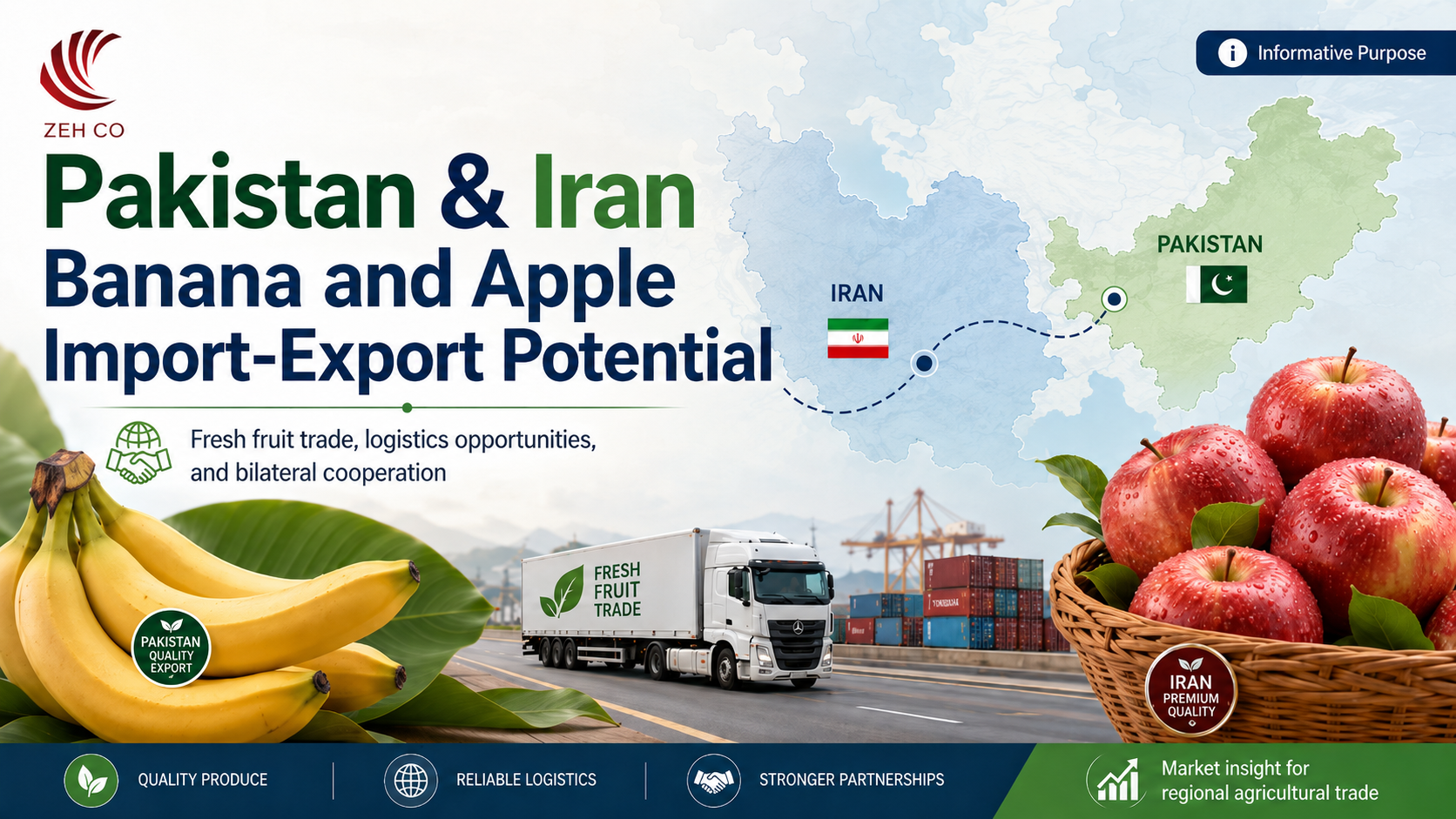
Pakistan and Iran are two neighboring markets with strong agricultural production, growing food demand, and natural land-route connectivity. For fresh fruit trade, bananas and apples offer an important opportunity because both products match the seasonal needs, price sensitivity, and consumer demand of the region. Pakistan has potential to export bananas to Iran, while Iran has strong potential to supply apples to Pakistan and nearby markets through Pakistan’s distribution network.
Pakistan and Iran have already set a larger bilateral trade target of $10 billion by 2028, compared with around $3.1 billion in FY2024, showing that both governments are trying to expand formal trade channels, border markets, and regional connectivity. In agriculture specifically, both sides also agreed to increase agriculture goods trade to $3 billion within two years, with focus on customs facilitation, warehousing, cold chain systems, and better border infrastructure.
Pakistan’s Banana Export Potential to Iran
Pakistan is a natural banana supplier for Iran because of short land distance, competitive prices, and established banana production in Sindh. Pakistani bananas are already known in regional markets because they are affordable, available in commercial volumes, and suitable for nearby land-route export where transit time is shorter than sea freight.
Iran has already imported bananas from Pakistan in measurable value. According to UN Comtrade-based data, Iran’s imports of fresh or dried bananas and plantains from Pakistan were around US$28.55 million in 2022. This shows that banana trade between both countries is not only possible but already exists as a practical commercial route.
Another positive sign is that Pakistan’s government included bananas among the food items allowed for export to Iran by land route under eased trade rules in 2026. The same decision also covered rice, seafood, potatoes, meat, onions, maize, citrus fruits, tomatoes, and frozen chicken. For exporters, this confirms that bananas are considered a priority food commodity in Pakistan–Iran land trade.
The main opportunity for Pakistani banana exporters is to target Iranian wholesalers, fresh fruit markets, supermarkets, and Ramadan-season buyers. Bananas are consumed daily, but demand increases during fasting seasons because the fruit is affordable, energy-rich, and easy to distribute. With proper grading, clean packing, and fast border handling, Pakistan can increase its share in Iran’s banana import market.
Iran’s Apple Export Potential to Pakistan
While Pakistan can export bananas to Iran, apples create the opposite opportunity. Iran is already a strong apple supplier, and Pakistan has become an attractive market for Iranian apples. In 2024, Pakistan imported apples and pears mainly from Iran, with imports valued around US$7.53 million, followed by Afghanistan.
Iranian apples are competitive in Pakistan because of shorter transit distance, suitable taste profile, and strong demand for Red Delicious-style apples. Fresh produce industry reporting in 2025 also noted increasing Pakistani demand for Iranian apples, mainly because Iranian apples benefit from geographic proximity, competitive prices, shorter transit time, and consumer preference for Iranian Red Delicious apples.
This makes Iran-to-Pakistan apple trade a strong import opportunity for Pakistani wholesalers and distributors. Pakistan can import Iranian apples during supply gaps, distribute them in major fruit markets such as Karachi, Lahore, Islamabad, Faisalabad, Multan, Quetta, and Peshawar, and also explore onward supply to Gulf or Central Asian buyers where market conditions allow.
Why Banana and Apple Trade Makes Sense
Bananas and apples are complementary products between Pakistan and Iran. Pakistan’s advantage is tropical and subtropical fruit production, especially bananas, mangoes, citrus, and dates. Iran’s advantage is temperate fruit production, especially apples, stone fruits, nuts, and some vegetables. This means both countries can trade according to their natural production strengths instead of competing directly.
Pakistan’s fruit and vegetable export sector is already growing. TDAP reported that Pakistan’s fruit exports increased from US$283 million to US$343 million, while vegetable exports increased from US$300 million to US$430 million in FY2023-24. This growth gives Pakistan a stronger base to diversify beyond traditional export items such as mangoes, kinnow, onions, potatoes, and dates.
For Iran, apples are a mature export product, while banana production is limited compared with tropical countries. This creates space for Pakistani bananas. For Pakistan, domestic apple production exists, especially in Balochistan and northern areas, but imported Iranian apples can fill price and quality gaps when local supply is limited or expensive.
Border Trade and Logistics Advantage
The biggest advantage in Pakistan–Iran fruit trade is land connectivity. Compared with distant sea shipments, land-route trade can reduce transit time and help maintain freshness. Faster movement is especially important for bananas because they require careful handling, controlled ripening, and quick distribution.
Both countries have been working on border markets and trade facilitation. Pakistan and Iran have discussed crossing points, border markets, and improvements in transit trade, including routes such as Taftan, Gabd-Rimdan, and Mand-Pishin. For fresh fruit exporters, these developments are important because better border infrastructure can reduce delays, product damage, and informal trade losses.
Cold chain investment is the key. Bananas need proper harvesting maturity, ventilation, loading control, and careful ripening management. Apples need cold storage, strong cartons, and consistent grading. The traders who invest in professional packing, reefer transport, and market-specific documentation will be in a better position than informal suppliers.
Challenges in Pakistan–Iran Fruit Trade
The opportunity is strong, but exporters must understand the challenges. Pakistan–Iran trade has faced issues such as sanctions pressure, lack of formal banking channels, smuggling, payment difficulty, documentation delays, and non-tariff barriers. These problems are more serious for fresh fruit because delays can directly damage quality and reduce value.
Payment is one of the biggest practical issues. Because formal banking channels are limited, both countries have discussed barter trade and alternative payment arrangements. Pakistan has also used exemptions from standard banking instrument requirements for certain food exports to Iran, while still requiring exporters to ensure proceeds are repatriated within the required timeframe.
Exporters should therefore work only with verified buyers, clear contracts, proper inspection, confirmed payment terms, and documented shipment procedures. For perishable goods, even a small delay at the border can reduce profit, so shipment timing and customs preparation must be handled carefully.
Strategy for Pakistani Exporters and Importers
For banana exports to Iran, Pakistani exporters should focus on consistent quality, professional cartons, pre-shipment inspection, and direct relationships with Iranian importers. Sindh-based banana supply can be collected, graded, packed, and moved through land routes with proper temperature and ventilation planning.
For apple imports from Iran, Pakistani importers should focus on Red Delicious, Golden Delicious, and other market-friendly Iranian apple varieties. The best opportunity is in wholesale distribution, supermarket supply, and seasonal gap filling when Pakistani local apples are expensive or limited.
For companies like ZEH CO International, the opportunity is to build a two-way fruit trade model: export Pakistani bananas and other fresh produce to Iran, while importing or sourcing Iranian apples for Pakistani buyers when market demand is strong. This creates better truck utilization, stronger buyer relationships, and a more balanced regional trade cycle.
Conclusion
Pakistan and Iran have strong potential to grow banana and apple import-export trade. Pakistan is well positioned to export bananas to Iran because of nearby production, short land routes, and existing trade demand. Iran is well positioned to export apples to Pakistan because of competitive pricing, strong quality, and rising Pakistani demand.
The future of this trade depends on better cold chain systems, faster customs clearance, formal payment solutions, and trusted B2B partnerships. With the right logistics and buyer verification, bananas and apples can become important products in the growing Pakistan–Iran fresh fruit corridor.