How Pakistan Dominates Middle East Rice Exports with Premium Basmati and IRRI Varieties
Meta Title: Pakistan Rice Export to Middle East | ZEH Co
Meta Description: Learn why Pakistan dominates rice exports to the Middle East with Basmati, IRRI, Sella, Steam and bulk rice supply from ZEH Co.
Focus Keyword: pakistan rice export to middle east
Introduction
Pakistan rice export to Middle East markets has grown strong because of one clear advantage: Pakistan can supply both premium aromatic Basmati rice and affordable long grain non-Basmati rice in large quantities. From royal kitchens and restaurants to supermarkets, catering companies, food distributors and government procurement, Middle Eastern buyers depend on rice as a daily staple.
Countries such as the UAE, Saudi Arabia, Qatar, Oman, Kuwait, Bahrain, Iraq, Iran, Yemen, Jordan, Lebanon and Turkey import rice for retail, wholesale, hospitality, food service and industrial use. Pakistan is well positioned to serve these markets because of its rich rice-growing regions, experienced milling industry, export-ready packaging, and strong logistics through Karachi Port.
For international buyers, choosing the right Pakistani rice supplier is not only about price. It is about consistency, grain quality, aroma, cooking performance, moisture control, packing, documentation and shipment reliability. This is where ZEH Co, a Pakistan-based B2B export company established in 2011, supports buyers with reliable sourcing from field to table.
Why Middle East Countries Prefer Pakistani Rice
Rice is part of everyday food culture across the Middle East. Dishes such as biryani, kabsa, mandi, machboos, pulao and mixed rice meals require grains that cook well, remain separate, and deliver good aroma and texture. Pakistani Basmati rice is highly valued for these qualities.
At the same time, the Middle East is not one single market. Premium retail buyers may need extra-long grain Basmati, while food service companies may prefer Sella or Steam rice for stable cooking. Wholesale distributors and bulk buyers may require IRRI-6, IRRI-9 or KS-282 rice for price-sensitive consumers.
Pakistan dominates this space because it can offer different rice varieties for different market needs. Whether a buyer needs premium Basmati for branded retail packs or economical long grain rice for bulk distribution, Pakistan has a strong export basket.
Main Pakistani Rice Varieties Exported to the Middle East
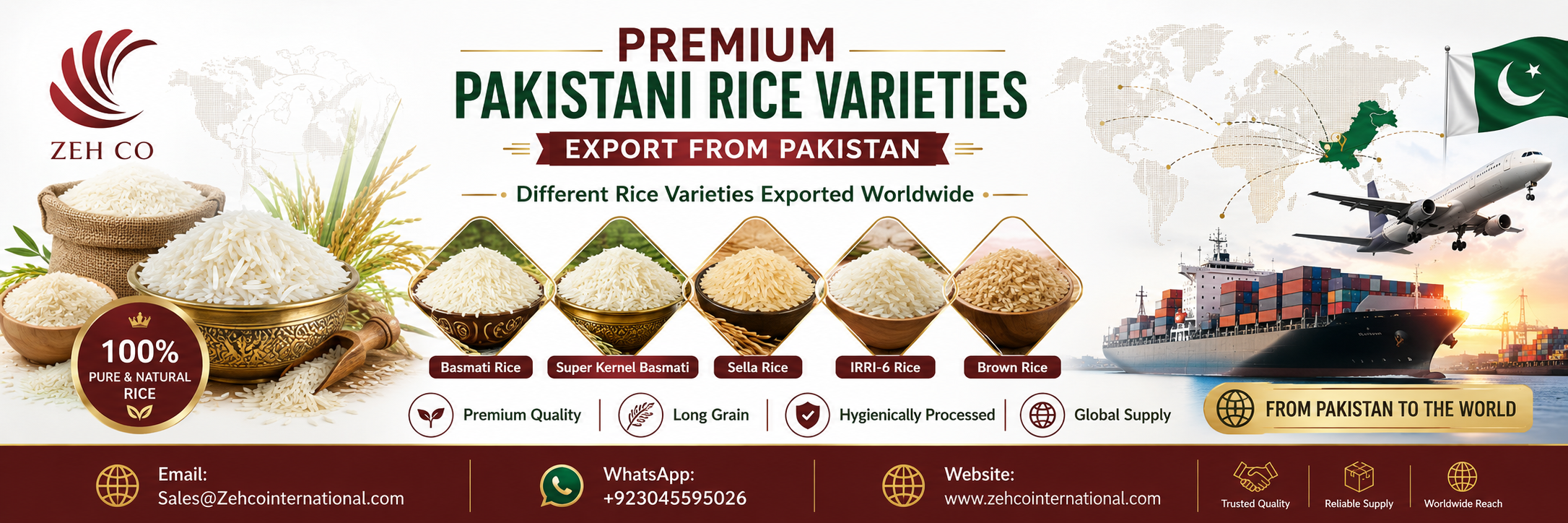
1121 Basmati Rice
1121 Basmati rice is one of Pakistan’s most popular export varieties. It is known for its extra-long grain, attractive appearance and excellent cooking quality. Middle Eastern buyers often use 1121 Basmati for biryani, mandi, kabsa, hotel kitchens, restaurants and premium retail brands.
This variety is commonly exported as white rice, Sella rice, parboiled rice and steam rice. For buyers looking for a premium product with strong presentation, 1121 Basmati is one of the leading choices.
Super Kernel Basmati Rice
Super Kernel Basmati, also known as Super Basmati, is one of Pakistan’s most respected aromatic rice varieties. It is popular because of its fragrance, soft texture and traditional Basmati character.
Buyers in the UAE, Saudi Arabia, Qatar, Oman and Kuwait often prefer Super Kernel Basmati for premium food service and retail markets. It is especially suitable for customers who want authentic Pakistani Basmati rice with strong aroma and reliable cooking performance.
PK-386 Basmati Rice
PK-386 is a traditional Pakistani Basmati variety widely used in export markets. It offers good grain quality and is often selected by buyers who want a balance between price and Basmati-style characteristics.
This variety is suitable for wholesale markets, restaurants, ethnic grocery stores and distributors serving South Asian and Middle Eastern communities.
PK-385 / Basmati 385
PK-385, also known as Basmati 385, is another recognized Pakistani rice variety. It is used in international markets where buyers need traditional long grain rice with dependable cooking quality.
For importers looking for alternatives to higher-priced premium Basmati, PK-385 can be a practical option.
D-98 Basmati / PK-198
D-98, also known as PK-198, is a Sindh-origin Basmati variety. It is known for its aroma and regional identity. Some buyers prefer D-98 because it offers a distinctive Pakistani rice profile and can perform well in wholesale and retail channels.
This variety is often selected by importers who understand rice origins and want to offer their customers a specific Pakistani Basmati type.
Brown Basmati Rice
Brown Basmati rice is used in health-focused and specialty food markets. Since it retains the bran layer, it is considered a whole grain option and is popular among buyers targeting health-conscious consumers.
In markets such as the UAE, Qatar, Saudi Arabia and Turkey, brown rice can be positioned for supermarkets, organic-style stores and premium food brands.
IRRI-6 Long Grain Rice
IRRI-6 is one of Pakistan’s most exported non-Basmati rice varieties. It is widely used for bulk supply because of its availability and competitive pricing.
Middle East importers often purchase IRRI-6 for wholesale sacks, catering supply, labor camps, food distribution and price-sensitive retail markets. It is a strong option for buyers who need large volumes at practical prices.
IRRI-9 Long Grain Rice
IRRI-9 is another important non-Basmati variety from Pakistan. It generally offers better grain appearance than lower-cost options while still remaining affordable.
For Middle East buyers who need long grain rice but do not want premium Basmati pricing, IRRI-9 can be a good choice for wholesale and food service channels.
KS-282 Rice
KS-282 is a long grain non-Basmati rice variety used for bulk export. It is suitable for buyers who need steady supply, acceptable cooking quality and competitive pricing.
It is often requested by importers serving commodity rice markets, wholesale distributors and food service buyers.
Popular Rice Processing Forms for Export
Middle East buyers usually select rice not only by variety, but also by processing type. ZEH Co can help buyers source rice in different export forms depending on cooking style, price target and market demand.
Common export forms include:
- White Rice: Polished rice suitable for retail, wholesale and food service.
- Parboiled Rice: Rice partially boiled before milling, often firmer after cooking.
- Sella Rice: A popular parboiled form used widely in Gulf markets for biryani, mandi and catering.
- Steam Rice: Processed with steam for better cooking stability and grain appearance.
- Brown Rice: Less processed rice with bran layer retained.
- Broken Rice: Used for food manufacturing, economical retail and industrial use.
- Sortex Clean Rice: Rice passed through color sorting machines to remove impurities and discolored grains.
- Double Polished Rice: Rice polished for a cleaner, brighter and more refined appearance.
These options allow importers to match rice supply with the exact needs of their customers.
ZEH Co: Leading Pakistani Rice Exporter to Middle East Countries
ZEH Co is a Pakistani B2B export company established in 2011 and serving wholesale buyers in more than 100 countries. The company supplies multiple Pakistani export products, including rice, grains, Himalayan pink salt, fresh fruits and vegetables, leather, textiles, gloves and humanitarian wool blankets.
As a leading Pakistani rice exporter, ZEH Co supports buyers in UAE, Saudi Arabia, Qatar, Oman, Kuwait, Bahrain, Iraq, Iran, Yemen, Jordan, Lebanon and Turkey with reliable bulk rice sourcing. The company helps importers select the right rice variety, processing type, packing format and shipping term according to their market.
ZEH Co’s rice export portfolio can support demand for:
- 1121 Basmati Rice
- Super Kernel Basmati Rice
- PK-386 Basmati Rice
- PK-385 / Basmati 385
- D-98 / PK-198 Basmati Rice
- Brown Basmati Rice
- IRRI-6 Long Grain Rice
- IRRI-9 Long Grain Rice
- KS-282 Rice
- White Rice
- Sella Rice
- Steam Rice
- Parboiled Rice
- Broken Rice
- Sortex Clean Rice
- Double Polished Rice
From Fields to Table: ZEH Co’s Sourcing Power
Rice quality starts at the field level. The final result depends on seed variety, crop region, harvesting, drying, storage, milling, polishing, sorting and packaging. ZEH Co’s sourcing power comes from its ability to connect field-level supply with export-ready processing and international buyer requirements.
For procurement managers, this matters because rice quality can vary from one source to another. Buyers need clear specifications before shipment, including grain length, broken percentage, moisture level, crop year, polish level and packing size.
ZEH Co helps buyers manage these details from sourcing to final delivery. This field-to-table approach gives importers more confidence because the rice is selected, processed and packed according to market needs before shipment.
Export Packaging Options for Middle East Buyers
Packaging is a major part of rice export success. A good product can lose value if it is packed in weak bags or unsuitable formats. Middle East buyers often require strong, export-grade packaging that can handle shipping, storage and distribution.
Common packaging options include:
- 1 kg retail packs
- 2 kg retail packs
- 5 kg retail packs
- 10 kg retail packs
- 25 kg PP bags
- 50 kg PP bags
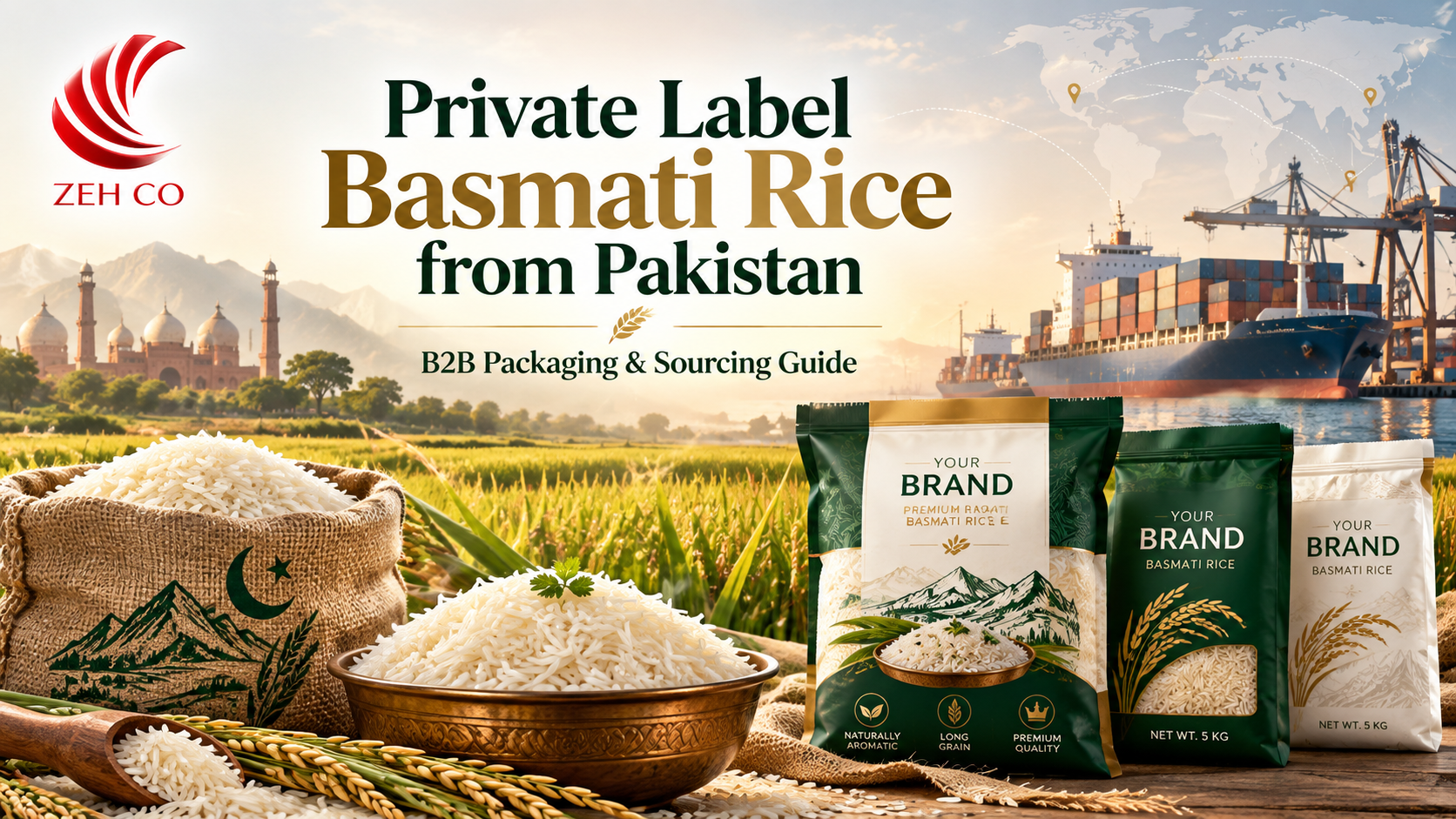
- Private label bags
- Bulk FCL container shipments
Retail buyers may prefer branded consumer packs, while wholesalers and food service buyers usually request 25 kg or 50 kg bags. ZEH Co can support private label rice packaging for buyers who want to build their own brand in the Middle East.
Shipping Terms and Documentation
ZEH Co supports common international trade terms including FOB Karachi, CIF and DDP, depending on buyer requirements.
FOB Karachi is suitable for experienced importers who arrange their own freight. CIF is useful for buyers who want freight included up to the destination port. DDP may be suitable for buyers needing more complete delivery support, depending on destination country rules.
Export documents may include:
- Commercial invoice
- Packing list
- Certificate of origin
- Phytosanitary certificate
- Fumigation certificate
- Quality analysis report
- Moisture certificate
- Bill of lading
Proper documentation helps importers clear goods smoothly and avoid delays at destination ports.
What Buyers Should Confirm Before Placing a Rice Order
Before placing a bulk order, importers should confirm all important specifications in writing. This reduces confusion and helps both buyer and exporter maintain quality expectations.
Buyers should confirm:
- Rice variety
- Processing type
- Crop year
- Grain length
- Broken percentage
- Moisture level
- Sortex or non-Sortex quality
- Polish level
- Packing size
- Private label requirements
- Destination country
- Shipping term
- Required documents
This is especially important for Middle East buyers because every market has different consumer preferences. UAE buyers may want premium branded Basmati packs, while Saudi food service companies may need Sella rice for large kitchens. Iraq, Yemen and Oman buyers may focus more on bulk long grain rice, while Qatar and Kuwait may need both premium and wholesale grades.