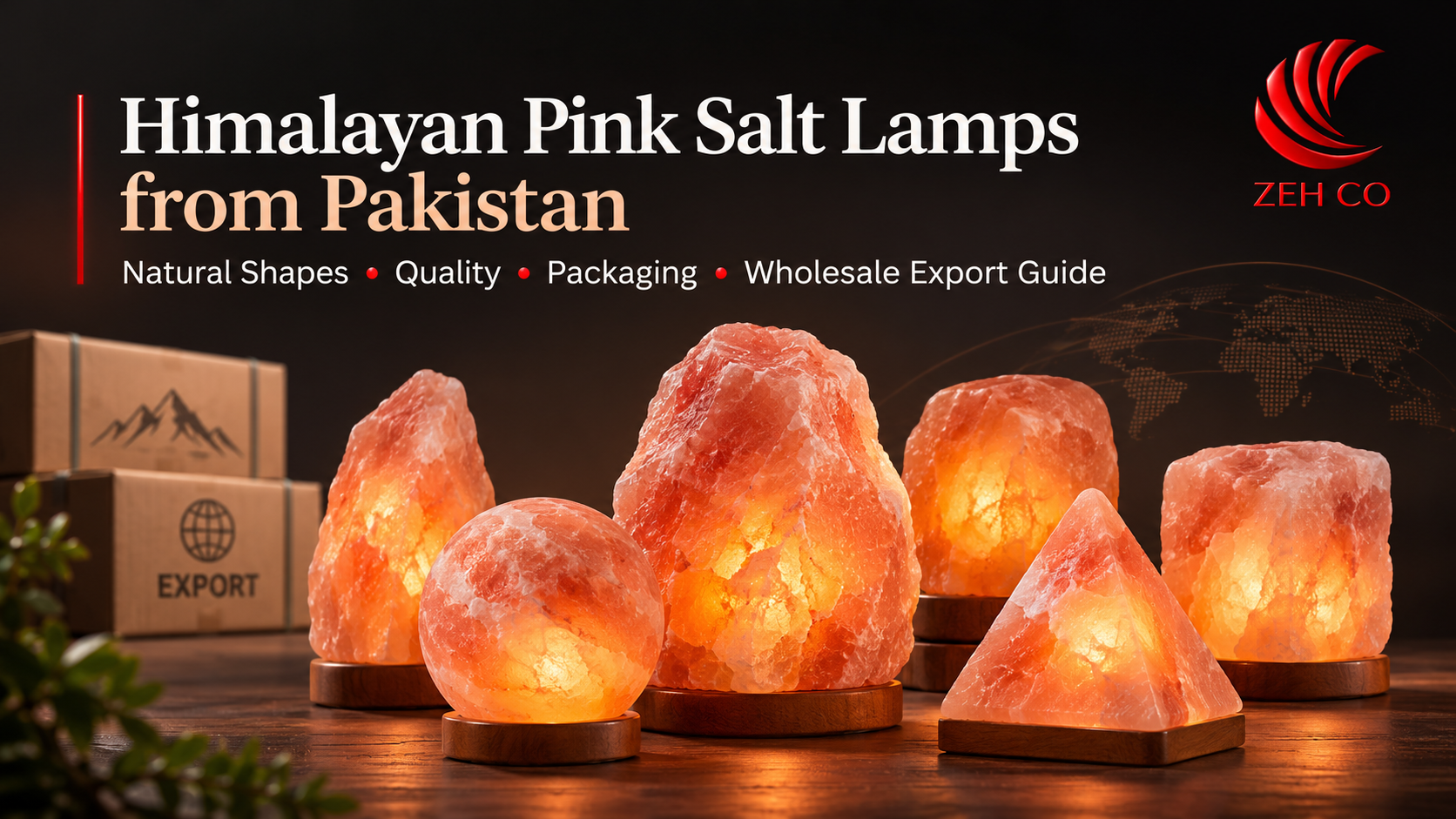
Himalayan pink salt lamps from Pakistan are decorative lighting products manufactured from natural rock salt crystals. Their warm amber appearance, distinctive mineral patterns and individually carved shapes make them suitable for home décor retailers, gift wholesalers, hospitality suppliers and private label distributors. However, successful international sourcing requires more than selecting an attractive photograph. Importers must evaluate crystal quality, weight consistency, lamp stability, electrical components, protective packaging and destination-market requirements before placing a commercial order.
For wholesale buyers, natural variation is part of the product's appeal, but uncontrolled variation can create pricing disputes, inconsistent retail presentation and customer complaints. This guide explains how to prepare a clear purchasing specification and manage the principal risks associated with exporting salt lamps from Pakistan.
Understanding Himalayan Pink Salt Lamp Products
Decorative salt lamps are commonly made from rock salt associated with Pakistan's Salt Range. Individual crystal pieces are selected, shaped and prepared for display using a suitable base and lighting arrangement. The resulting products may range from rough natural formations to more uniform carved designs.
Natural, Carved and Decorative Variants
- Natural-shape lamps: Irregular salt formations with visible mineral texture and individual silhouettes.
- Carved lamps: Products shaped into spheres, pyramids, geometric forms or other agreed decorative designs.
- USB-powered lamps: Low-voltage decorative models requiring confirmation of their electrical specifications, accessories and intended power source.
- Tealight holders: Salt-crystal products designed to accommodate a candle rather than an electrical bulb; these require appropriate heat and flame safety considerations.
- Private label products: Salt lamps supplied with buyer-approved retail cartons, barcodes, instructions and branding, subject to agreed production capabilities.
Buyers should distinguish between the mineral component and the finished lighting product. A suitable salt crystal does not automatically mean that the assembled lamp is electrically compliant or ready for retail sale in every country.
Weight Categories, Dimensions and Natural Variations
Wholesale suppliers may offer lamps in commercial weight bands such as 1–2 kg, 2–3 kg, 4–6 kg, 5–7 kg and 6–9 kg. These are indicative purchasing categories rather than universal standards. The buyer and supplier should agree on the minimum and maximum weight, dimensional expectations and permissible variation for every SKU.
Natural salt crystals differ in shape, transparency, texture and coloration. Light pink, peach, orange and darker reddish formations can occur within an assortment. Buyers seeking a consistent retail presentation should approve a representative color range using photographs taken under neutral lighting, together with illuminated product photographs.
A purchase specification should clarify whether the weight includes the wooden base, electrical components and accessories. It should also identify whether dimensions refer to the salt crystal alone or to the complete assembled product.
Product Construction and Quality Control
Crystal Integrity, Finishing and Base Stability
Inspectors should check each lamp for substantial cracks, unstable edges, excessive chipping and damage around any opening made for the light fitting. Natural surface lines are not necessarily defects, but structural weaknesses that could lead to breakage during lifting or normal use require rejection or separate assessment.
The base should support the lamp securely on a level surface. Buyers should specify acceptable base materials, surface finish, attachment method and workmanship. Particular attention should be given to heavier models because an attractive crystal can still become unsafe if its center of gravity is poorly supported.
Electrical Components and Destination-Market Safety
For electrically powered models, request the proposed voltage or USB input specification, light source, cable length, switch type, plug configuration and instructions for safe use. Components should be compatible with the complete assembled design and the intended destination market. Electrical requirements cannot be determined from the mineral weight alone.
Moisture is especially important. Rock salt can absorb moisture from humid surroundings, potentially creating salty surface deposits or liquid. Poor placement of electrical parts may expose the user to electrical hazards. Importers should therefore verify the design, insulation, component positioning and applicable conformity documentation before shipment.
Do not assume that a salt lamp automatically carries CE, UKCA or another approval merely because its seller provides a general certificate. Requirements depend on the finished product, electrical system, destination and intended method of sale. Independent testing or technical review may be necessary.
Samples, Inspection and Acceptance Criteria
Before approving volume production, request physical samples representing the intended styles and weight bands. Evaluate the product both illuminated and unlit, including its appearance in standard retail lighting. Check the crystal's condition, base stability, electrical assembly where applicable, packaging protection and actual packed weight.
For a larger order, establish a written inspection plan. It should identify the sample size, inspection stages, critical safety defects, acceptable cosmetic variations and actions required for nonconforming products. A reference sample and approved specification sheet can reduce disagreement between an importer and its supplier.
A certificate of analysis may describe a specific mineral sample, but it is not a substitute for testing the assembled electrical product. Where composition or origin evidence is required, request documentation relevant to the actual supplied material and confirm which facility or lot it covers.
Export Packaging and Moisture Protection
Salt lamps are heavy, brittle products that require individual cushioning. Appropriate export packing may involve protective wrapping, fitted inserts, strong retail boxes and reinforced master cartons. The design should prevent crystal-to-crystal contact, excessive movement and concentrated pressure on the lamp base or electrical fitting.
Where moisture exposure is anticipated, packaging materials and storage procedures should be selected accordingly. Protective wrapping must also be removed before use where required by the product instructions. Cartons should identify the SKU, quantity, gross weight, handling direction and any relevant fragility or moisture precautions.
Buyers should request carton dimensions, unit net weight, packed gross weight, pallet configuration where applicable and actual packing photographs. Transport planning must account for both shipment weight and volume rather than relying only on the advertised weight of the salt crystal.
Export Documentation and Shipping Terms
Typical commercial shipping documents may include a commercial invoice, packing list, transport document, agreed origin documentation and any other records required by the buyer or destination authorities. The correct tariff classification and customs requirements should be confirmed for the specific product configuration, especially when electrical components are included.
FOB Karachi may suit importers who manage the main international carriage. CIF can be considered when the seller arranges the agreed ocean freight and insurance to the named destination port. DDP should be offered only where import clearance, tax responsibilities, regulatory obligations and local delivery can be performed legally and commercially.
Transit time, freight, insurance, destination handling and customs costs should be quoted against a defined route and shipment specification. Heavy natural stone-like merchandise deserves particular attention to breakage exposure and cargo handling conditions.
Private Label Opportunities and Responsible Marketing
Importers developing a retail range can request branded cartons, product identification labels, multilingual instructions, approved lifestyle photography and consistent assortment planning. Supplier capabilities, minimum quantities, artwork approval procedures and packaging costs should be confirmed before any branded order.
Marketing claims require care. Himalayan salt lamps can be presented as decorative lighting products with a distinctive natural appearance. Claims that they purify indoor air, treat medical conditions or produce meaningful therapeutic effects should not be used without reliable supporting evidence and appropriate regulatory review.
For electric lamps, customer-facing instructions should explain suitable placement, moisture precautions, basic cleaning, electrical handling and safe use around children and pets. Candle models need their own flame and heat warnings rather than instructions copied from electrical products.
What to Include in a Wholesale RFQ
A useful request for quotation should communicate the expected order and acceptance requirements from the beginning. Buyers can provide the following information:
- Required lamp types, approximate quantities and preferred weight categories.
- Target crystal colors, shape preferences and acceptable natural variation.
- Crystal dimensions, base material, finish and stability requirements.
- Electrical configuration or candle-holder requirements, including destination country.
- Private label artwork, retail box requirements and instruction languages.
- Sample requirements, inspection method and conformity evidence needed.
- Carton specifications, destination port or address and preferred Incoterm.
- Requested delivery window, payment terms and documentation requirements.
Compare quotations on the same specifications. A lower ex-factory price may be offset by poor cushioning, unsuitable electrical fittings, inconsistent grading or a high incidence of breakage. Written acceptance criteria make supplier comparisons more commercially meaningful.
Source Himalayan Pink Salt Lamps from Pakistan with Confidence
ZEH Co International works with international wholesale buyers on Pakistan-origin sourcing and export requirements. Buyers considering Himalayan pink salt lamps from Pakistan can submit a detailed RFQ covering product styles, expected volume, destination, packaging preferences and any required documentation. Product availability, production arrangements, sample specifications and applicable supplier certifications should be verified for the proposed order.
The strongest procurement decisions balance visual appeal with repeatable quality, verified electrical safety, suitable packaging and realistic shipping arrangements. Clear specifications, representative samples and documented approvals help importers build a dependable decorative salt product range while limiting avoidable commercial risks.