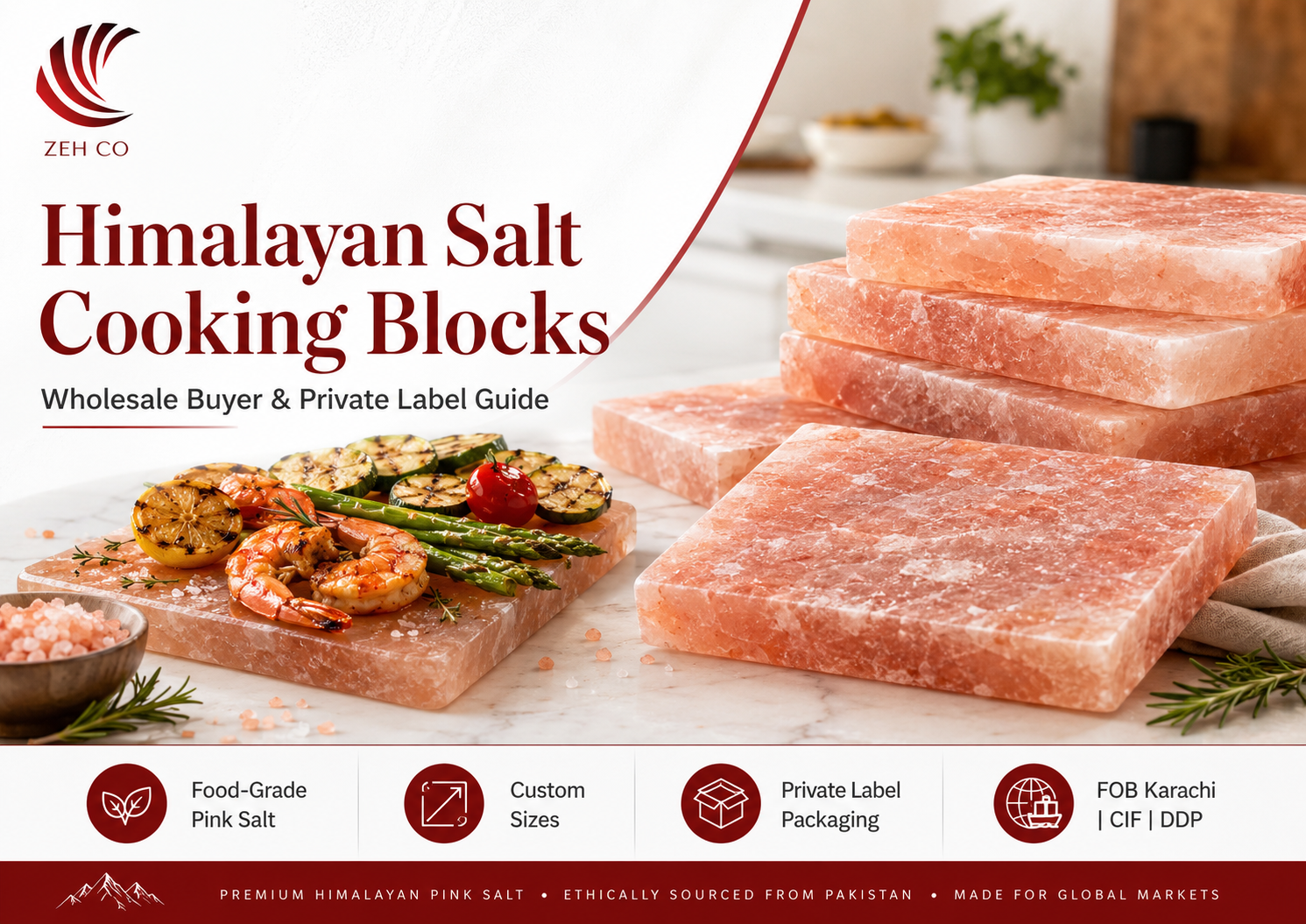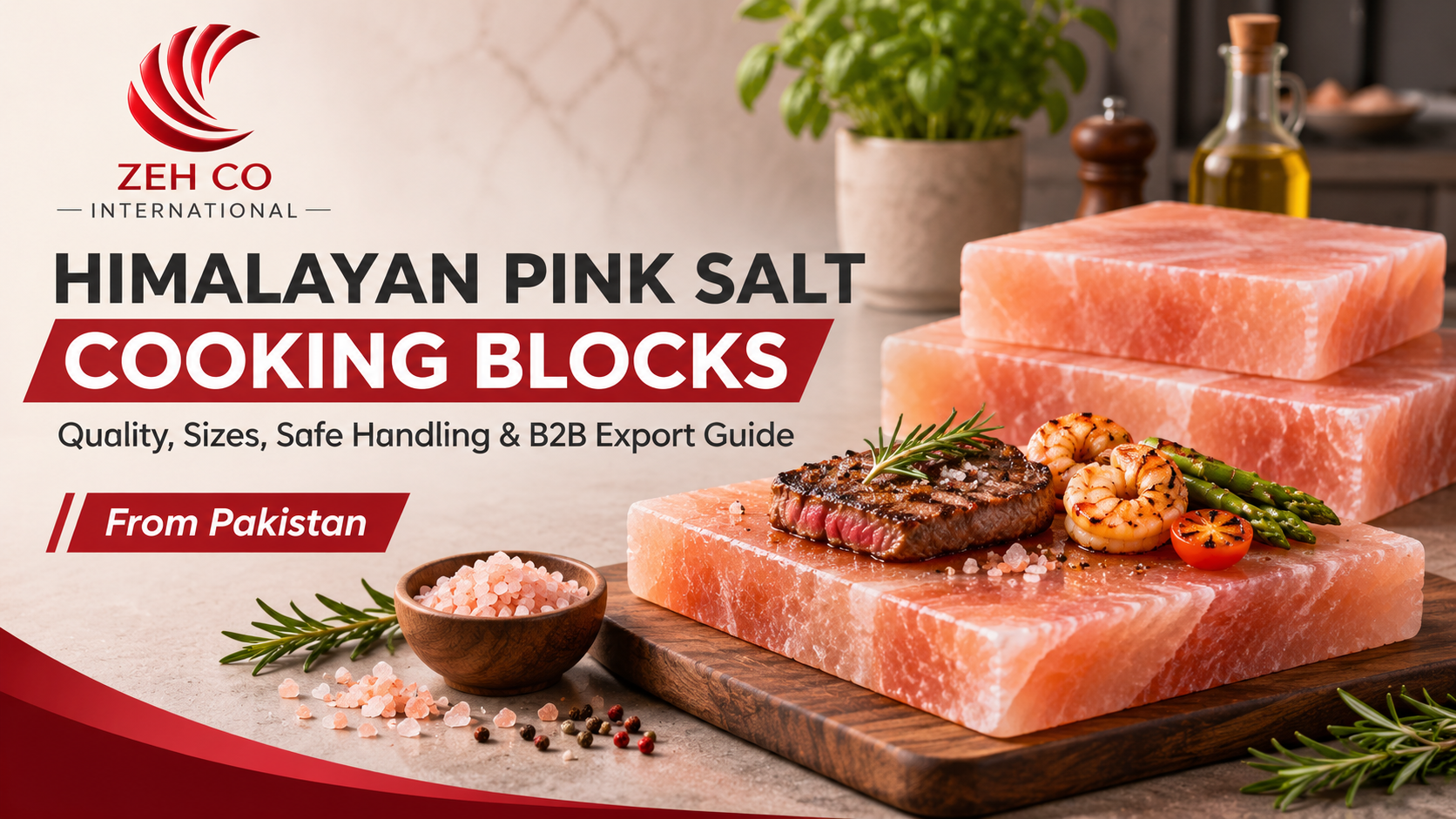
Himalayan pink salt cooking blocks are solid pieces of natural rock salt shaped into slabs, plates and other culinary formats. Unlike loose edible salt, these products are designed to provide a physical surface for preparing or presenting food. Restaurants, specialty kitchenware distributors, hospitality suppliers and private label brands may purchase them for heated cooking applications or chilled food presentation, depending on the product's suitability and instructions.
For international buyers, sourcing Himalayan pink salt cooking blocks from Pakistan involves more than selecting an attractive pink color. The physical integrity of the stone, dimensions, workmanship, hygiene controls, thermal-use guidance and protective packaging all influence whether a shipment meets commercial expectations. This guide explains how importers can establish specifications, evaluate suppliers and manage the practical risks of buying salt slabs in bulk.
What Are Himalayan Pink Salt Cooking Blocks?
These blocks are manufactured by cutting and shaping rock salt sourced from Pakistan's Salt Range. Selected pieces are processed into rectangular, square, round or other agreed shapes. A cooking block generally offers a relatively flat surface, while a presentation plate may prioritize appearance, finish and convenient handling. The appropriate construction depends on whether the product is intended for heating, chilling or serving at ambient temperature.
Rock salt naturally varies in color, crystal structure and visible inclusions. Pink, light orange, amber and pale translucent areas can occur within one piece. These differences are not necessarily manufacturing defects, but they should be addressed in an agreed visual acceptance standard. Buyers should not assume that visually similar blocks will have identical mechanical strength or thermal performance.
Himalayan Pink Salt Cooking Blocks: Sizes and Specifications
Dimensions, thickness and weight
Before requesting a quotation, define the required length, width and thickness in millimeters or inches. Common commercial formats include smaller individual serving slabs and larger rectangular cooking surfaces, but available dimensions must be confirmed with the supplier. Specify permissible dimensional tolerances, edge profiles and whether the blocks must fit a separate metal tray, wooden holder or retail gift box.
Weight is particularly important because salt is dense and natural variation can affect the finished piece. Ask for an estimated and acceptable net-weight range per block rather than assuming every item of the same nominal size weighs exactly the same. Confirm the total packed weight when assessing freight, warehouse handling and retail delivery requirements.
Surface finish and visual grading
Buyers should describe whether they require smooth or finely finished faces, rounded corners, uniform thickness and polished-looking edges. A visual specification can distinguish acceptable natural veins and minor color differences from unacceptable chips, major fractures, loose mineral particles or visibly unstable sections. Reference samples and photographs can help both parties apply a consistent grading approach.
Quality Control and Food-Contact Considerations
Quality inspection should begin before cutting and continue through shaping, finishing, cleaning and final packing. A practical inspection plan checks dimensions, appearance, edge quality, structural defects, residue, cleanliness and packaging integrity. Products intended for repeated heating warrant additional attention to cracks, layered weaknesses and the manufacturer's validated heating instructions.
Importers should request appropriate technical documentation for the proposed source and batch. Depending on the destination market and intended use, this may include a certificate of analysis, relevant contaminant testing, traceability information or food-contact suitability documentation. A general salt test report does not automatically establish that a finished cooking block is suitable for every thermal or culinary application.
Food-contact requirements differ between countries. For example, European Union food-contact rules establish general safety principles for materials and articles intended to contact food, with additional requirements depending on material classification and national rules. The buyer and supplier should verify how the finished salt product is classified and what supporting evidence is required before making a compliance claim.
Similarly, ISO 9001:2015 or ISO 22000 credentials should be examined for the actual certified organization, site, scope and validity. A company's general certification must not be interpreted as independent proof that a particular cooking block or production batch meets every applicable food-safety requirement.
Heating, Cooling and Safe Product Handling
Gradual heating and thermal stress
Salt cooking blocks may crack or fracture when exposed to rapid temperature changes. Moisture, existing fissures, uneven heating and the natural characteristics of individual pieces can influence this risk. Buyers should require product-specific instructions covering first use, suitable heat sources, gradual temperature changes, handling tools and cooling procedures. Do not advertise a universal maximum cooking temperature without verified evidence for the actual product.
Some salt slabs are intended for heated cooking, while others are better suited to chilled presentation or ambient serving. Importers should keep these applications distinct in product listings. A serving plate should not be promoted for direct stovetop or grill use unless the manufacturer has validated that use and supplied appropriate instructions.
Cleaning, moisture and storage
Salt gradually dissolves on contact with water. Many supplier care instructions therefore recommend allowing the block to cool completely, removing food residues with minimal moisture, drying thoroughly and storing it away from humidity. Immersion in water, aggressive washing and heating a damp slab can damage the product or increase fracture risk. Any approved cleaning procedure must also address safe handling after contact with raw foods and prevention of cross-contamination.
Natural salt surfaces can change color and develop small fissures through use. Nevertheless, a block showing significant cracks, instability, contamination or damage should not remain in service. Retail brands should provide realistic lifespan expectations rather than promising that a cooking block will last indefinitely.
Packaging Requirements for Bulk Export
Cooking blocks are heavy and vulnerable to damage from impact, rubbing and poor load distribution. A shipment should use protective contact surfaces, suitable cushioning, moisture protection and sufficiently strong cartons. Packaging design should prevent neighboring slabs from striking each other and protect exposed corners during loading, inland transport, warehousing and international delivery.
For retail-ready orders, buyers can discuss individual boxes, multilingual handling instructions, barcode placement and private label artwork. Packaging materials that contact the cooking surface should be selected with the intended food use in mind. The final carton design should be tested against the actual product dimensions and shipping method rather than relying on an unverified standard packing quantity.
Exporters should provide carton dimensions, net and gross weight, pieces per carton, pallet configuration where applicable and handling requirements. These details allow buyers to estimate landed logistics costs and plan safe storage. Trial packing and representative photographs are useful before approving larger quantities.
Samples, Pre-Shipment Inspection and Buyer Approval
Samples help importers assess appearance, workmanship, surface feel, edge finishing and packaging quality. A responsible evaluation should compare the supplied sample with the written specification and, where relevant, include controlled use testing consistent with the supplier's safety instructions. Samples should represent the proposed production method rather than a specially selected appearance that cannot be maintained commercially.
Before mass dispatch, agree on an inspection checklist and acceptance criteria for dimensions, cosmetic defects, major cracks, unit weight, packing condition and batch traceability. Buyers may request photographs, inspection records, testing evidence or an independent pre-shipment inspection. The purchase agreement should define how rejected or transit-damaged units will be handled.
Export Documentation, Freight and Commercial Terms
International shipments commonly require a commercial invoice, packing list, transport document and other origin or customs documentation appropriate to the destination. Product classification, import restrictions, customs duties, food-contact documentation and any testing obligations must be confirmed with the importer or licensed customs adviser. Requirements may differ for retail kitchenware and other forms of edible salt.
ZEH Co International can discuss commercial quotations based on FOB Karachi, CIF and, where operationally feasible, DDP arrangements. The exact scope of freight, insurance, import clearance, duties and taxes must be stated in the quotation using agreed Incoterms and named places. DDP should not be offered unless the required destination-country customs and tax arrangements can actually be fulfilled.
Because individual cooking blocks are relatively heavy and fragile, buyers should evaluate shipping cost per saleable unit rather than comparing product prices alone. Transit breakage, protective packaging, handling charges, sampling, inspection and customs expenses can materially influence the delivered cost.
How to Request an Accurate B2B Quotation
A clear request for quotation helps avoid delays and unsuitable offers. International buyers should ideally provide the following information:
- Intended application: direct cooking, chilled presentation or general serving.
- Required dimensions, thickness, shape and acceptable weight range.
- Preferred pink color range, surface finish and edge treatment.
- Expected order quantity and sample requirements.
- Food-contact, laboratory testing and destination-market documentation needs.
- Individual protection, carton specifications and private label requirements.
- Destination country, delivery port or address and preferred shipping term.
- Inspection expectations, delivery schedule and payment preferences.
Buyers should also specify whether accessories such as trays or holders are required. These items may introduce separate product specifications, supplier approvals and regulatory considerations.
Common Procurement Risks and How to Reduce Them
The most frequent commercial risks include inconsistent dimensions, excessive visual variation, hidden fractures, poor cushioning, moisture exposure and unclear use instructions. Another significant risk is relying on broad marketing statements about purity, health benefits or heat resistance without product-specific evidence. Importers can reduce these problems through approved samples, written tolerances, documented testing where appropriate and a defined claims process.
For repeat orders, retain the approved specification, inspection photographs, packaging drawings and relevant batch records. Consistent documentation makes it easier to investigate differences between shipments and helps suppliers improve production controls over time.
Conclusion: Sourcing Himalayan Pink Salt Cooking Blocks from Pakistan
Himalayan pink salt cooking blocks offer opportunities for importers serving specialty foodservice, kitchenware and private label markets. Successful sourcing depends on matching the physical product to its intended use, confirming suitable quality evidence, applying sensible handling instructions and protecting every piece throughout transport.
ZEH Co International supports international B2B sourcing discussions for Pakistani Himalayan pink salt products. Buyers can submit their preferred dimensions, quantities, quality expectations, destination and commercial terms to request a tailored assessment and quotation. Clear specifications and realistic compliance checks provide the strongest foundation for a dependable wholesale supply relationship.