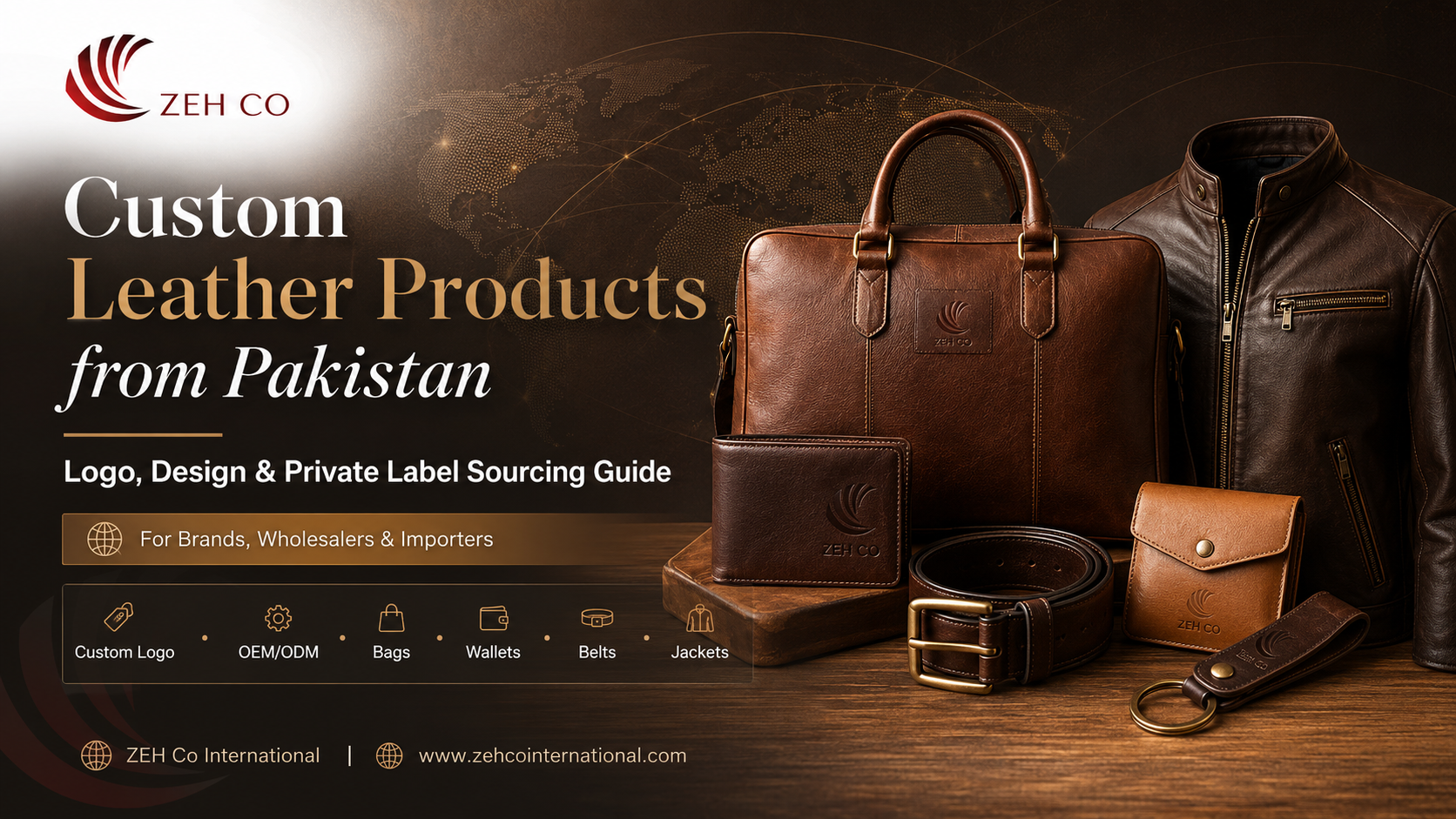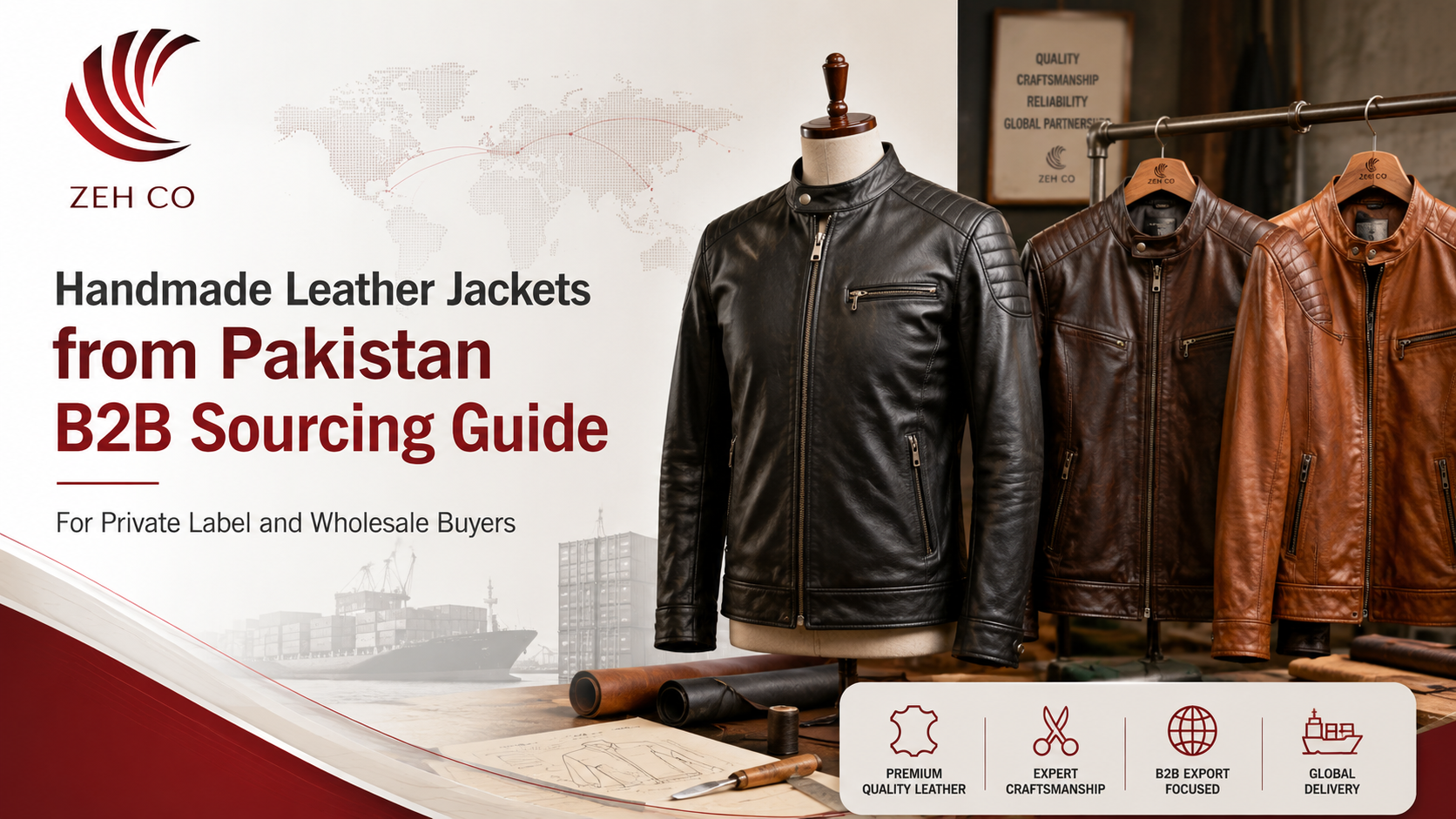
Handmade leather jackets Pakistan sourcing is an important opportunity for international fashion brands, wholesalers, boutique retailers and private-label buyers looking for authentic leather craftsmanship combined with export-oriented manufacturing. Pakistan has a long-established leather industry supported by tanning, cutting, stitching, finishing and garment manufacturing skills. For B2B buyers, the real value is not only in obtaining a leather jacket at a competitive price, but in developing a consistent product with controlled leather quality, accurate sizing, strong stitching, reliable hardware and repeatable production standards.
Why Buyers Source Handmade Leather Jackets from Pakistan
Pakistan is known internationally for its leather and garment manufacturing capabilities. The country produces hides, finished leather, garments, gloves, footwear and various leather accessories for global markets. This manufacturing base gives international buyers access to experienced leather workers, pattern makers, stitching teams and finishing specialists who can produce both classic and customized jacket styles.
Handmade leather jackets can be especially attractive to private-label brands because buyers can develop unique products rather than purchasing generic ready-made inventory. A buyer may specify leather type, thickness, color, lining, zipper style, pocket layout, collar design, embroidery, labels and packaging according to their own brand concept.
For wholesalers, handmade production also allows greater flexibility in design development and smaller style adjustments. However, buyers should confirm manufacturing capacity because handmade work must still be supported by structured production planning when orders increase in volume.
Main Leather Types Used for Handmade Jackets
Cowhide Leather
Cowhide is commonly used for durable leather jackets because of its strength and relatively robust structure. It can be suitable for biker jackets, work-inspired fashion, heavy outerwear and styles where buyers want a substantial feel.
International buyers should specify whether they need a heavier rugged finish or a softer garment-grade cowhide. Thickness, tanning method and finishing can significantly affect comfort, weight and appearance.
Sheepskin Leather
Sheepskin is popular for fashion jackets because it is generally softer and lighter than heavier cowhide. It is often selected for casual jackets, fashion collections and products where drape and comfort are important.
Buyers should evaluate softness, surface consistency and tear strength because lightweight leather still needs sufficient durability for the intended garment construction.
Goatskin Leather
Goatskin offers a useful balance between durability and flexibility. It may be selected for vintage-style jackets, casual outerwear and fashion products where buyers want a leather that feels lighter than heavy cowhide while retaining good strength.
Because natural grain can vary, buyers should confirm how much surface variation is acceptable for their brand positioning. Premium fashion programs may require tighter selection than general wholesale orders.
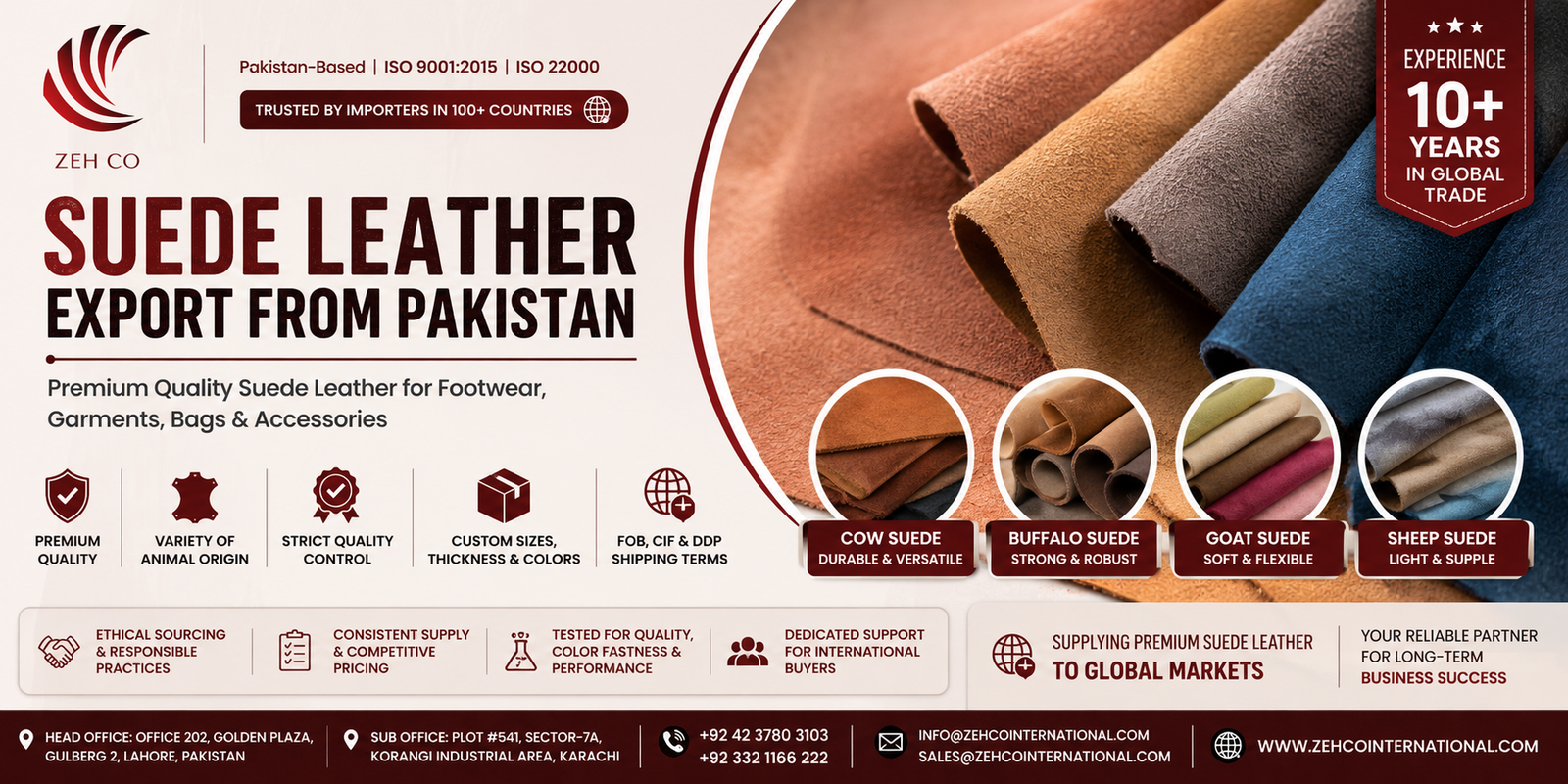
Suede Leather
Suede is used for softer and more fashion-oriented jacket designs. It provides a distinctive texture but requires careful handling because the surface can be more sensitive to marks and moisture than some smooth finished leathers.
International buyers considering suede jackets should clearly define color consistency, nap direction, finishing and packaging requirements.
What Makes a Leather Jacket Truly Handmade
The term handmade can mean different things in the apparel industry. In professional leather garment production, handmade usually refers to a process that includes significant manual craftsmanship at important production stages, even if industrial sewing machines and cutting equipment are also used.
Typical handmade or craftsmanship-intensive stages may include:
- Manual leather inspection and skin selection
- Pattern positioning on leather panels
- Manual cutting for selected styles
- Edge preparation and skiving
- Detailed stitching operations
- Pocket and collar assembly
- Hardware installation
- Hand finishing and polishing
- Final quality inspection
For international buyers, the most important question is not whether every stitch is literally performed by hand. The real issue is whether the jacket benefits from skilled craftsmanship, controlled material selection and careful finishing.
Pattern Making and Sample Development
Successful private-label leather jacket production usually begins with a prototype. Buyers can provide a technical pack, reference garment, measurements, sketch or design concept. The manufacturer then develops the pattern and prepares a sample for review.
A first sample should be evaluated for:
- Overall silhouette
- Chest and body measurements
- Sleeve length
- Shoulder width
- Armhole shape
- Collar construction
- Pocket placement
- Zipper alignment
- Leather feel and thickness
- Lining fit
Buyers should approve a final reference sample before bulk production. This approved sample becomes the benchmark for manufacturing and inspection.
Private Label and OEM Leather Jacket Manufacturing
One of the strongest advantages of sourcing handmade leather jackets from Pakistan is the ability to produce customized products under a buyer's own brand. OEM and private-label programs can include both product and packaging customization.
Common options include:
- Custom leather colors
- Brand-specific jacket patterns
- Embossed leather logos
- Metal logo badges
- Custom zipper pulls
- Woven neck labels
- Size labels
- Care labels
- Custom lining prints
- Embroidery
- Screen printing
- Retail hangtags
- Branded polybags or garment covers
- Private-label cartons
Buyers should submit accurate artwork and branding specifications before production. Logo placement, dimensions and finishing should be approved on a sample to avoid costly corrections after bulk manufacturing.
Popular Handmade Leather Jacket Styles for Wholesale Buyers
Classic Biker Jackets
Biker jackets remain one of the most recognized leather garment categories. Typical features may include asymmetric zippers, snap collars, multiple pockets, waist belts or quilted panels.
Wholesale buyers should confirm whether the jacket is intended as fashion outerwear or actual motorcycle protective wear. Fashion biker jackets should not be marketed as protective motorcycle equipment unless they have appropriate construction and testing for that purpose.
Café Racer Jackets
Café racer jackets are popular because of their clean and minimal appearance. They often use a straight front zipper, stand collar and streamlined pocket layout.
This design can work well for modern private-label collections because it suits multiple consumer markets and can be produced in different leather finishes.
Bomber Jackets
Leather bomber jackets often feature ribbed cuffs, ribbed waistbands and relaxed construction. Buyers can choose smooth leather, distressed finishes or vintage-inspired treatments depending on their target market.
Aviator and Flight Jackets
Aviator-style leather jackets may include heavier leather, warm lining and larger collars. Some premium versions use shearling or faux-fur elements depending on buyer specifications.
Minimal Fashion Jackets
Contemporary fashion brands may prefer clean silhouettes with fewer pockets, subtle hardware and lighter leather. These designs rely heavily on precise pattern making and good leather selection because minimal construction leaves fewer decorative elements to hide imperfections.
Leather Thickness and Garment Weight
Leather thickness affects durability, flexibility and final garment weight. Heavy leather may create a strong and rugged jacket but can be uncomfortable for customers seeking lightweight fashion wear. Thin leather improves softness and drape but requires suitable quality to maintain durability.
International buyers should request a defined thickness range rather than using only terms such as thin, medium or heavy. A physical sample is the best reference when product feel is important.
Finished jacket weight should also be considered because it affects international freight cost, particularly for air shipments and e-commerce distribution.
Importance of Jacket Lining
The lining affects comfort, appearance and durability. Buyers can select materials such as polyester, satin-type fabrics, cotton blends or quilted insulation depending on the jacket style and climate.
For private-label orders, custom printed linings can create a strong premium brand identity. However, lining should not be selected on appearance alone. It should also withstand normal garment movement and be properly secured at seams, pockets and sleeve openings.
Zippers, Buttons and Hardware Quality
Hardware quality is a major factor in leather jacket performance. A premium leather jacket can generate customer complaints if the zipper fails, snaps loosen or buckles discolor.
Buyers should specify preferred zipper quality, metal finish and hardware color. Options may include antique brass, gunmetal, silver, matte black or other finishes depending on design.
For repeat orders, hardware should remain consistent unless the buyer approves changes. Substituting a lower-grade zipper or different metal finish can alter both performance and brand presentation.
Stitching Quality in Handmade Leather Jackets
Leather garment stitching requires greater precision than many textile garments because needle holes remain visible. Incorrect stitching cannot always be removed and resewn without leaving marks.
Quality inspection should evaluate stitch consistency, seam strength, skipped stitches, thread tension and symmetry between corresponding areas of the jacket.
Stress areas such as pockets, armholes, shoulders and zipper ends should be carefully constructed. Buyers should also confirm thread color and whether visible topstitching is part of the design.
Leather Finishing Options
Finishing determines much of the jacket's final character. Buyers can choose from smooth, matte, semi-gloss, distressed, vintage or other specialized finishes depending on production capability.
Distressed and vintage jackets require particularly careful approval because visual variation is often intentional. The buyer should establish an acceptable range using reference samples or detailed photographs so that natural variation is not mistaken for a production defect.
Quality Control Before Export
Handmade leather jackets should undergo structured inspection before packing. Natural leather variation is expected, but serious defects should be identified before shipment.
A practical inspection may include:
- Correct leather type and color
- Leather thickness consistency
- Measurement accuracy
- Stitching quality
- Zipper performance
- Snap and button attachment
- Pocket alignment
- Lining condition
- Label placement
- Logo accuracy
- Surface defects
- Correct size assortment
- Packaging accuracy
For large orders, buyers may request pre-shipment inspection or independent third-party inspection. Inspection criteria should be agreed in advance so both parties understand what constitutes an acceptable garment.
Managing Natural Leather Variation
Leather is a natural material, so no two hides are completely identical. Grain patterns, minor scars and surface texture can vary. Premium production depends on selecting appropriate areas of the skin for visible garment panels.
International buyers should define how much natural variation their market accepts. Some heritage or vintage brands appreciate natural character, while luxury fashion brands may demand cleaner and more uniform surfaces.
This requirement directly affects leather utilization and final product cost. Tight cosmetic standards may increase wastage because a larger portion of each hide cannot be used.
Wholesale Packaging for Leather Jackets
Proper packaging protects leather from dust, moisture, compression and surface damage during transportation. Jackets should be packed clean and dry, with hardware positioned carefully to reduce marking.
Packaging options may include:
- Individual protective polybags
- Garment bags
- Branded bags
- Tissue wrapping
- Hangtags
- Size stickers
- Barcode labels
- Export cartons
Buyers should avoid excessive compression where possible because long-term folding can create unwanted creases. Carton dimensions and packing quantities should be optimized to balance garment protection with freight efficiency.
How to Prepare a Handmade Leather Jacket RFQ
A professional request for quotation should contain enough detail for the supplier to calculate an accurate price. Buyers should include:
- Jacket style or reference image
- Required leather type
- Leather thickness
- Leather color and finish
- Size range
- Quantity per size
- Lining specification
- Zipper and hardware requirements
- Logo and branding instructions
- Packaging requirements
- Required samples
- Total order quantity
- Destination country and port
- Preferred Incoterm
- Target delivery date
Providing complete specifications prevents misleading price comparisons. A low-cost quotation may use different leather, thinner material, cheaper hardware or simplified construction.
Minimum Order Quantity and Sampling
MOQ depends on jacket design, leather availability, color customization, hardware and branding requirements. Standard colors and existing patterns may support lower quantities than completely new private-label developments.
Buyers launching a new brand should discuss sampling and pilot quantities before committing to large production. A controlled first order allows the buyer to evaluate fit, quality, packaging and market response.
Repeat orders can then be scaled with greater confidence once specifications are established.
FOB, CIF and DDP Buying Options
International buyers can structure leather jacket purchases according to their logistics capability. FOB Karachi can be suitable for importers using their own freight forwarders. CIF allows freight and insurance to be arranged to an agreed destination port under the relevant commercial terms. DDP may be available for selected destinations depending on customs, tax and delivery feasibility.
Buyers should compare quotations using the same Incoterm because freight, duties, insurance and local delivery can significantly affect landed cost.
Why International Buyers Work with ZEH Co
ZEH Co is a Pakistan-based B2B export company established in 2011 and serving international importers, wholesalers and procurement buyers. Its product portfolio includes leather products, leather hides, textiles, gloves, fresh agricultural products, grains and Himalayan salt.
For leather jacket sourcing, ZEH Co can discuss buyer requirements covering leather selection, product design, private labeling, sizing, packaging and export logistics. Orders can be developed for wholesalers, retailers, fashion brands and international private-label businesses.
ZEH Co offers commercial arrangements including FOB Karachi, CIF and DDP, subject to destination and feasibility. The company also holds ISO 9001:2015 and ISO 22000 certifications. International buyers can submit sourcing inquiries through https://zehcointernational.com/.
Conclusion: Sourcing Handmade Leather Jackets Pakistan
Successful sourcing of handmade leather jackets Pakistan requires careful attention to leather quality, craftsmanship, fit, stitching, hardware, finishing and consistent production control. International buyers should treat every jacket program as a defined product specification rather than purchasing only from photographs or general descriptions.
Pakistan's established leather manufacturing base makes it a strong sourcing destination for private-label and wholesale leather jackets. By approving samples, defining measurable specifications and working with an export-focused supplier, buyers can develop leather products that meet their brand positioning and customer expectations. ZEH Co works with international B2B buyers seeking customized leather products from Pakistan and can discuss jacket sourcing requirements through https://zehcointernational.com/.