For footwear factories, fashion brands, leather goods manufacturers and wholesale distributors, suede leather export from Pakistan offers an important sourcing option for soft, textured leather used across multiple product categories. Successful international purchasing, however, requires much more than requesting a price per square foot. Buyers should define the animal origin, thickness, surface character, color, softness, grading tolerance, testing requirements and final application before comparing suppliers. A technically clear specification helps importers obtain more consistent material and reduces problems during cutting, stitching and production.
Pakistan has an established leather-processing and manufacturing sector serving both domestic and international markets. Suede can be prepared from different types of hides and skins, while the final appearance and performance depend on raw material selection, tanning, splitting, buffing, dyeing and finishing. For B2B buyers, understanding these variables is essential because leather that performs well for a casual shoe may not be suitable for a lightweight garment, handbag panel or protective product.
Why Buyers Consider Suede Leather Export from Pakistan
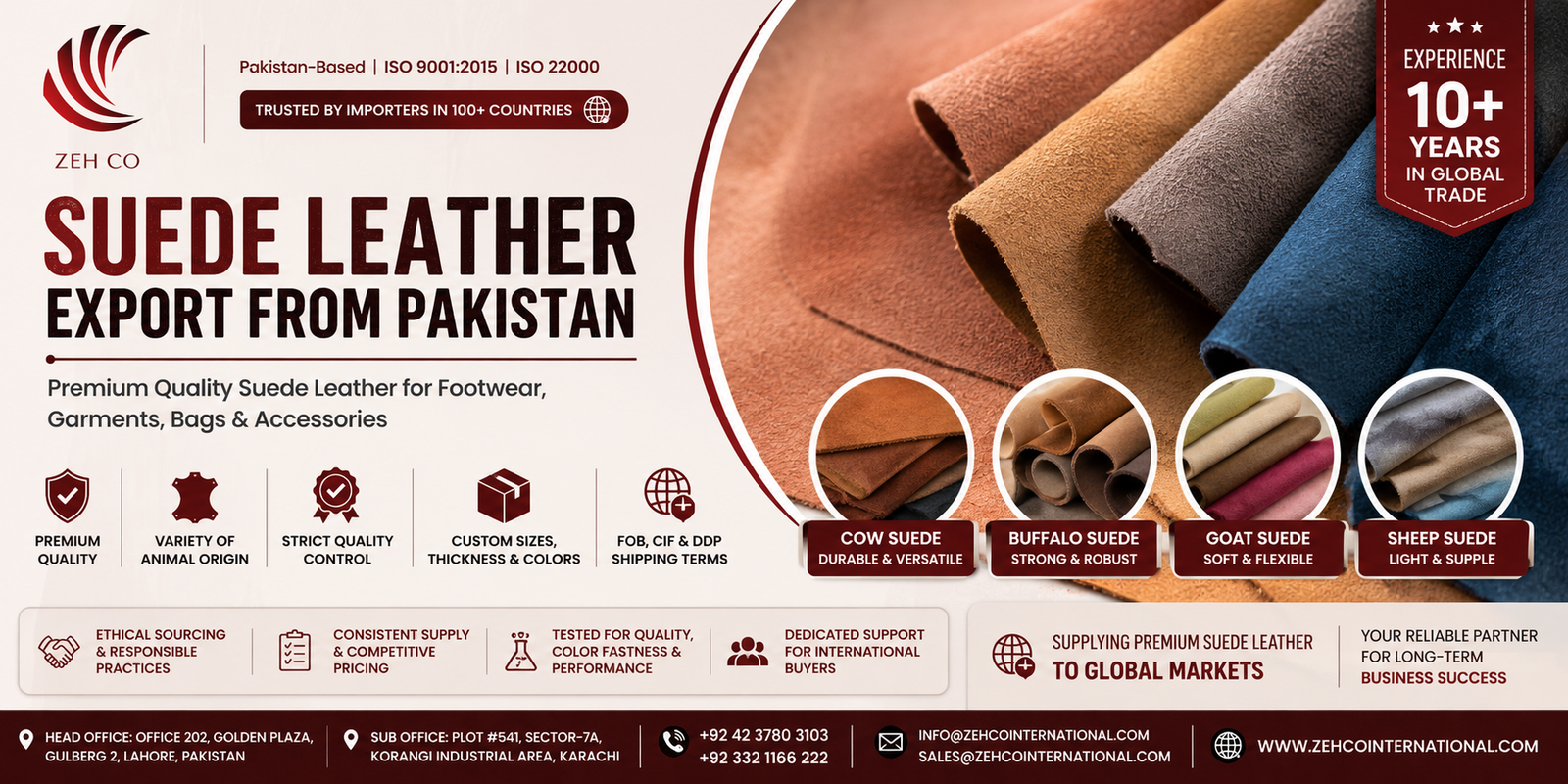
International manufacturers often source leather from countries where raw material availability and leather-processing capabilities exist within the same supply chain. Pakistan provides access to cattle, buffalo, goat and sheep-based leather production, creating sourcing opportunities for buyers with different performance and price requirements.
Suede is valued for its distinctive nap, soft touch and matte appearance. It can be used in footwear uppers, jackets, fashion garments, gloves, handbags, wallets, belts, trims, upholstery components and lifestyle accessories. The correct leather specification depends on the intended product, so professional importers normally purchase against measurable technical parameters rather than simply requesting "premium suede."
ZEH Co works with international B2B buyers, wholesalers and procurement organizations sourcing Pakistani products for overseas markets. Commercial shipments can be discussed under FOB Karachi, CIF and DDP arrangements where commercially and operationally feasible.
What Is Suede Leather?
Suede is leather with a raised fibrous surface created through controlled processing and abrasion. Unlike smooth finished leather, which emphasizes the outer grain surface, suede is valued primarily for its soft, velvety nap. Its appearance can vary from fine and uniform to more pronounced and rustic depending on the raw material and processing method.
Buyers should distinguish between different suede constructions because the term can describe materials with different structures. Split suede, for example, is produced from the flesh split created when a thicker hide is divided into layers. Other suede-type finishes may be produced from skins or leather processed specifically to achieve a fine napped surface.
This distinction matters commercially. Strength, thickness, stretch, appearance, cutting yield and price can vary substantially between leather types even when samples initially look similar.
Common Suede Leather Types for B2B Buyers
Cow Suede Leather
Cow-based suede is useful where manufacturers need a balance of durability, available surface area and commercial scalability. Depending on thickness and processing, it can be considered for footwear, bags, jackets, work-related products and other leather goods.
Footwear and bag manufacturers should pay attention to thickness consistency and tensile performance because different sections of a hide naturally behave differently. Buyers producing larger panels may also place greater importance on usable cutting area and defect distribution.
Buffalo Suede Leather
Buffalo-derived leather may offer heavier substance and a more robust character depending on processing. It can be relevant for footwear, bags and products where a stronger or more substantial leather is desired. Buyers should specify the required handle because heavy substance alone does not determine whether a particular suede will work for a finished product.
Goat Suede Leather
Goat suede can be attractive for fashion-oriented applications where a relatively fine appearance, flexibility and manageable weight are important. Potential applications include footwear, gloves, garments, bags and smaller accessories.
Because individual goat skins are smaller than cattle hides, cutting patterns and required component dimensions should be considered when calculating yield. A low purchase price is not beneficial if the manufacturer's pattern cannot be efficiently placed on the available skin area.
Sheep Suede Leather
Sheep-based suede may be selected for applications emphasizing softness, flexibility and lighter weight. Garment manufacturers in particular should discuss drape, thickness and handle before bulk purchasing because these characteristics strongly influence how a finished jacket or clothing article feels.
Specify the End Use Before Requesting a Quotation
One of the most effective ways to improve a suede leather inquiry is to tell the supplier exactly what will be manufactured. "Suede for shoes" is more useful than simply requesting suede, but even that can be refined further. A buyer producing casual sneakers may need different flexibility, thickness and colorfastness than a factory making heavy boots.
Similarly, garment leather should generally be evaluated differently from handbag leather. A jacket manufacturer may prioritize softness, low weight, drape and shade consistency, while a bag manufacturer may prioritize structure, abrasion performance and cutting yield.
Providing the intended application allows the sourcing team to identify a more appropriate material rather than quoting an available leather that happens to match only the requested color.
Key Specifications International Buyers Should Define
A professional purchase specification should establish objective criteria wherever possible. This helps buyers compare quotations from different suppliers and provides a reference for quality inspection.
- Animal origin: cow, buffalo, goat or sheep.
- Leather construction or suede type required.
- Target thickness and acceptable tolerance.
- Required average skin or hide size.
- Color and approved shade reference.
- Nap length and surface appearance.
- Softness or required handle.
- Grade and acceptable defect level.
- Required quantity in square feet, square meters or pieces.
- End use such as footwear, garment, bag or glove manufacturing.
- Physical or chemical testing requirements.
- Packing preferences and destination port.
Buyers that provide these details at the beginning of the inquiry can usually evaluate supplier capability more effectively than buyers requesting only catalog photos and a general price.
Thickness Control and Why It Matters
Thickness is a critical specification because it influences flexibility, strength, sewing performance and the appearance of the finished product. A leather that is too heavy may make a garment uncomfortable, while leather that is too thin may not provide sufficient structure for footwear or bags.
International buyers should define both a target thickness and an acceptable tolerance. Requiring an unrealistic zero-variation specification is generally not practical for natural leather, but uncontrolled variation can create production problems.
Thickness should also be considered together with temper and softness. Two suede articles with similar measured thickness can behave differently during folding, lasting, stitching or assembly because tanning and finishing influence physical performance.
Understanding Suede Nap Quality
The nap is one of the most visually important characteristics of suede. Buyers usually look for an appearance suitable for their target product and brand positioning. Factors such as fiber length, buffing, dyeing and finishing can influence how the surface looks when brushed in different directions.
A more uniform nap may be preferred for premium footwear and fashion products because shade differences can become visible when panels are assembled. Other buyers may intentionally request a more natural or rustic surface.
Before mass production, buyers should approve physical samples under consistent lighting conditions. Digital photographs are useful for initial communication but are not sufficient for evaluating tactile properties, exact color or nap behavior.
Color Matching for Bulk Suede Orders
Color consistency is particularly important with suede because the direction of the nap can change the way light reflects from the surface. A color may therefore appear lighter or darker depending on viewing angle.
For repeat orders, buyers should maintain an approved physical color standard and clearly identify it in purchase documentation. When internationally recognized color references are used, a physical approved sample can still be useful because leather texture influences visual perception.
Manufacturers should also plan cutting and production carefully when minor lot-to-lot shade variation is commercially acceptable. Components intended for the same finished article should ideally be managed in a way that minimizes visible mismatch.
Leather Grading and Defect Tolerance
Natural leather cannot be evaluated in the same way as a synthetic sheet produced from a continuous industrial roll. Animal skins may contain scars, scratches, healed marks, grain variations and other natural characteristics.
The commercial issue is not whether every skin is completely free of variation but how much usable cutting area the buyer receives for the agreed price and grade. Buyers should therefore define which defects are unacceptable and which can be placed outside critical cutting areas.
A handbag manufacturer requiring large clean panels may need a more restrictive grading standard than a manufacturer cutting small wallet components. Evaluating material according to actual cutting requirements gives a more useful picture of value than simply comparing nominal grades.
Quality Control Tests for Suede Leather
Testing requirements should be aligned with the final product and destination market. A footwear manufacturer, garment brand and industrial glove producer may require different performance criteria.
Depending on the application, buyers may request evaluation of properties such as tensile strength, tear strength, color fastness, rubbing behavior, flex resistance, thickness, substance and dimensional performance. Chemical compliance requirements may also apply based on destination regulations and the buyer's restricted substance policy.
Importers should communicate required test methods and acceptance limits before production. Asking for compliance only after goods are finished can create avoidable disputes and delays.
Sampling Before a Commercial Suede Leather Order
Sampling is one of the most important stages of leather procurement. A buyer should use samples to evaluate not only appearance but also manufacturing suitability.
For footwear, the sample can be tested through cutting, stitching, folding and prototype production. Garment manufacturers can assess drape, weight, softness and sewing behavior. Bag factories can review structure, edge appearance, bonding and component consistency.
A successful sample does not eliminate the need for a bulk specification. The approved sample should become a reference against which commercial production is compared, while measurable tolerances should be documented for characteristics that naturally vary.
How to Evaluate Price Correctly
Suede leather quotations may be offered based on area, piece count or another agreed commercial unit. Buyers should avoid comparing quotations until they confirm that the suppliers are offering similar specifications.
A cheaper leather with lower usable area can ultimately cost more per finished product. Cutting yield, rejection rate, thickness consistency and defect distribution should therefore be considered alongside the invoice price.
Manufacturers can calculate a more realistic material cost by comparing the quantity of acceptable finished components obtained from a given area of leather. This approach is especially useful for footwear, bag and accessory factories purchasing leather repeatedly.
Packing Suede Leather for Export
Export packing should protect leather from moisture, contamination, excessive pressure and handling damage during international transportation. The exact method depends on the leather type, shipment volume, buyer preference and mode of transport.
Buyers should confirm how individual colors, grades or lots will be identified. Proper lot labeling is especially useful when multiple shades or specifications are shipped in the same consignment.
A packing list should correspond clearly with the commercial shipment so that receiving teams can verify quantity and organize warehouse inventory efficiently.
FOB Karachi, CIF and DDP Shipping Options
FOB Karachi
FOB Karachi can suit importers that already work with nominated shipping lines or freight forwarders. The buyer controls the main international freight arrangement while the exporter handles the agreed responsibilities in Pakistan under the applicable sales contract.
CIF Shipment
CIF can be useful for buyers wanting the exporter to arrange freight and insurance to the agreed destination port. Importers should still calculate destination charges, customs clearance, duties and inland transportation when comparing landed cost.
DDP Supply
DDP may be discussed for destinations where customs, import procedures and delivery arrangements make the structure practical. Buyers should provide the complete destination and order specifications so feasibility can be assessed before quotation.
Documentation for International Leather Shipments
Documentation requirements depend on the product, destination and contractual terms. Standard commercial export documentation may include a commercial invoice, packing list, transport document and certificate of origin where required.
Additional documentation or testing may be necessary depending on destination regulations and buyer requirements. International importers should confirm applicable customs classification, duties and regulatory obligations with their customs broker or relevant authority before shipment.
This is particularly important when a buyer handles several types of leather because customs treatment may differ depending on the degree of processing and the precise product classification.
Questions to Send with a Suede Leather RFQ
A detailed request for quotation helps suppliers respond faster and makes offers easier to compare. International buyers can include the following information:
- Required animal origin.
- Finished product to be manufactured.
- Required thickness and tolerance.
- Target color or color reference.
- Required average size.
- Preferred nap and softness characteristics.
- Required grade.
- Order quantity and expected purchasing frequency.
- Testing or compliance requirements.
- Destination country and port.
- Preferred Incoterm.
- Requested sample quantity before bulk production.
A buyer purchasing for an ongoing production program should also indicate expected monthly, quarterly or annual demand. This allows the exporter to evaluate whether the required specification can be supplied consistently rather than only for a single trial shipment.
Private Label Manufacturers and Suede Leather Procurement
Private label footwear, garment and accessories businesses often outsource finished-product manufacturing while purchasing materials according to their own specification. In these supply chains, leather consistency becomes important because a brand's approved sample must often be reproduced across repeat production runs.
Brands should maintain technical records for approved leather, including thickness, color, feel, physical testing requirements and supplier references. This can reduce dependence on subjective descriptions when new batches are ordered.
For brands developing a new collection, it can also be useful to request several suede options at different price and performance levels before finalizing the product specification.
Why Procurement Managers Should Focus on Consistency
A single attractive shipment does not automatically establish a reliable supply chain. Professional buyers should evaluate whether the supplier can maintain specifications across repeat orders.
Consistency affects factory planning, cutting yield, customer approvals and product returns. A manufacturer that repeatedly changes leather characteristics may be forced to adjust machinery, patterns, finishing or quality standards between batches.
Long-term sourcing relationships therefore work best when buyer and supplier use documented specifications, approved samples and clear inspection criteria. Price remains important, but predictable quality can have greater impact on total manufacturing cost.
Sourcing Suede Leather Through ZEH Co
ZEH Co is a Pakistan-based B2B export company established in 2011, working with international importers, wholesale buyers and procurement organizations across multiple product sectors. The company can discuss sourcing requirements for Pakistani suede and other leather materials according to buyer specifications.
Buyers should provide details including animal type, thickness, color, required grade, estimated quantity, final application, destination country and preferred shipping terms. Sample requirements and required quality tests should also be communicated before a commercial order is finalized.
Depending on the transaction and destination, commercial terms can be discussed on FOB Karachi, CIF or DDP basis. International buyers can review ZEH Co's broader export portfolio and submit sourcing inquiries through https://zehcointernational.com/.
Conclusion: Building a Reliable Suede Supply Chain from Pakistan
Successful suede leather export from Pakistan depends on matching the correct leather specification to the buyer's finished product. Animal origin, thickness, nap, softness, color consistency, usable area, defect tolerance and testing requirements all influence the actual value of a shipment.
International buyers can reduce procurement risk by defining measurable specifications, approving physical samples, conducting production trials where necessary and evaluating suppliers according to repeat-order consistency rather than price alone. For footwear companies, garment manufacturers, leather goods factories, private label brands and wholesale importers seeking Pakistani suede leather, ZEH Co can assist with B2B sourcing discussions, export coordination and shipment options based on individual purchasing requirements.