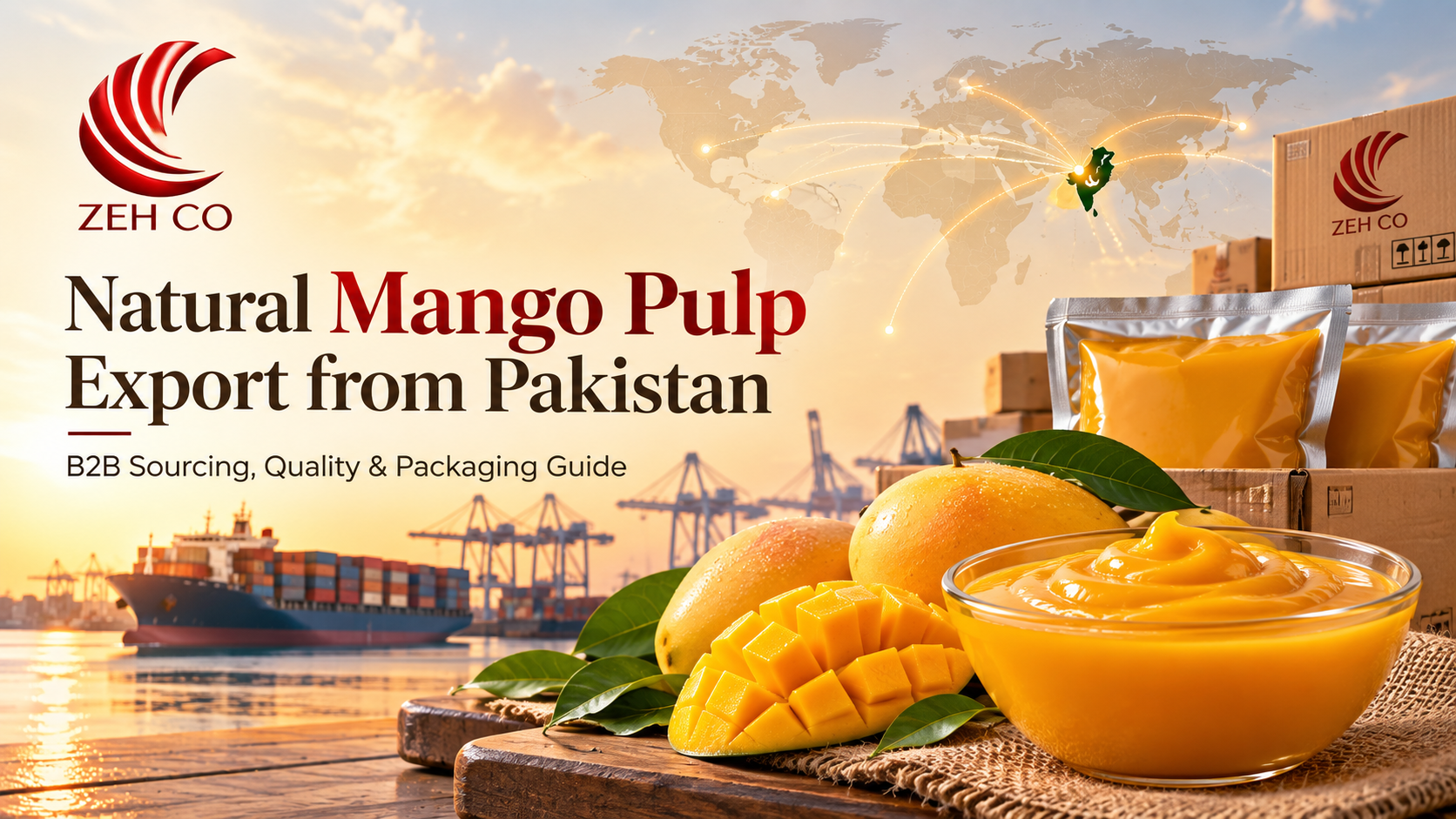
Pakistan is internationally recognized for aromatic and naturally sweet mango varieties, creating significant opportunities for mango pulp export from Pakistan to beverage manufacturers, food processors, distributors and private-label brands. Converting ripe mangoes into pulp also allows commercial buyers to source mango ingredients beyond the limited fresh-fruit season. For international importers, however, successful sourcing requires more than comparing price per kilogram. Variety selection, Brix, processing method, microbiological control, packaging, documentation and logistics all influence the suitability of mango pulp for industrial production.
ZEH Co supports international wholesale and commercial buyers sourcing products from Pakistan, with export arrangements available under FOB Karachi, CIF and, where commercially feasible, DDP terms. Buyers planning regular mango pulp imports should establish their technical specification before requesting quotations so suppliers can match the product to the intended manufacturing application.
Why Mango Pulp Export from Pakistan Has B2B Potential
Pakistan produces mangoes with distinct flavor, aroma, color and sweetness profiles. While premium fresh mangoes are exported for retail consumption, processing suitable fruit into pulp creates another valuable export channel. Mango pulp can be used as an ingredient by companies that require consistent fruit input without managing the ripening, peeling, deseeding and wastage associated with whole mangoes.
For a food manufacturer, pulp can simplify production planning because the ingredient arrives in a processed format ready for further formulation. Depending on the processing and packaging method, commercial mango pulp may also offer a substantially longer usable storage period than fresh fruit.
Typical international buyers include:
- Juice and nectar manufacturers
- Smoothie and beverage brands
- Ice cream and frozen dessert manufacturers
- Yogurt and dairy processors
- Bakery and confectionery companies
- Jam, sauce and dessert manufacturers
- Foodservice distributors
- Ingredient importers and wholesalers
- Private-label food and beverage companies
Selecting the Right Pakistani Mango Variety for Pulp
The mango variety can materially affect aroma, sweetness, color, fiber content and final product character. International buyers should therefore avoid treating all mango pulp as an identical commodity.
Chaunsa Mango Pulp
Chaunsa is known for its strong aroma, sweetness and distinctive mango flavor. Pulp produced from suitable Chaunsa fruit can be attractive to buyers developing premium beverages, desserts, dairy products and other applications where recognizable mango flavor is important.
Sindhri Mango Pulp
Sindhri mangoes are another important Pakistani variety and can provide good color, sweetness and fruit character for processing. Buyers requiring larger commercial volumes may discuss Sindhri-based pulp availability during the relevant processing season.
Blended or Specification-Based Mango Pulp
Some industrial buyers are more concerned with technical parameters than a single named variety. In such cases, the commercial requirement may focus on Brix, acidity, color, viscosity, flavor profile and microbiological specifications. A specification-based approach can be useful for beverage or food manufacturers that require consistency between production batches.
Important Quality Parameters for Bulk Mango Pulp
A professional B2B purchase should be based on an agreed specification sheet rather than appearance alone. The parameters required will depend on the buyer's country, manufacturing process and finished product.
Brix and Natural Soluble Solids
Brix is one of the most frequently discussed parameters when sourcing fruit pulp because it provides an indication of soluble solids, including naturally occurring fruit sugars. The acceptable level should be agreed between buyer and supplier before production. Buyers should also clarify whether they require natural single-strength pulp or another processed specification.
Acidity and pH
Acidity and pH can influence taste, formulation and processing behavior. Beverage and dairy manufacturers in particular may need these parameters to remain within defined tolerances so that each production batch performs consistently.
Color, Flavor and Aroma
The pulp should retain the expected sensory characteristics of the mango variety and processing method. Buyers can request a representative sample before confirming a commercial order. Sample evaluation is especially useful when the pulp will be used in premium beverages, desserts or branded retail products where flavor consistency is important.
Texture and Fiber Content
Different applications require different textures. A beverage producer may prefer pulp with controlled fiber and viscosity, while another manufacturer may intentionally want a heavier fruit texture. The required filtration, refining and finishing process should therefore be included in the purchase specification.
Microbiological and Food-Safety Requirements
Commercial buyers should establish acceptable microbiological limits and request relevant testing documentation for the shipment. Requirements can include parameters relating to yeast, mold, total microbial load and specified pathogens, depending on the product, destination and buyer's internal food-safety program.
Importers should also communicate any requirements concerning pesticide residues, contaminants, additives, preservatives or other regulatory parameters before the order is processed.
Natural Mango Pulp, Puree and Concentrate: Understand the Difference
Terminology is important in international food trade. Mango pulp or puree generally refers to the edible mango flesh that has been processed into a smooth product after removal of peel, seed and unsuitable material. Concentrated mango products undergo additional processing to remove part of the naturally present water and increase soluble solids.
Buyers should not request simply "mango pulp" if their production line requires a specific concentration or formulation. A purchase inquiry should clearly state whether the requirement is for natural single-strength pulp, puree, concentrated product or a customized industrial specification.
Aseptic Mango Pulp for Industrial Buyers
Aseptic processing is widely used in the fruit-processing industry for commercial pulp because properly processed product can be packed into sterile packaging designed for extended storage without relying on the same frozen logistics required by frozen pulp.
For bulk shipments, aseptic pulp is commonly packed in sterile multilayer bags placed inside protective drums. Exact net weight, drum construction and pallet configuration should be confirmed with the supplier because packaging formats can vary according to processing plant, customer specification and destination requirements.
Before ordering, buyers should request details covering:
- Net weight per drum or package
- Number of drums per pallet
- Number of drums or total net weight per container
- Aseptic bag specification
- Drum material and condition
- Production date and batch identification
- Shelf-life conditions
- Storage instructions
- Container loading plan
Frozen Mango Pulp as an Alternative
Frozen mango pulp is another commercial option, particularly for buyers whose manufacturing process, distribution system and storage facilities already operate through a frozen supply chain. Unlike aseptically packed shelf-stable pulp, frozen product requires controlled frozen storage and transportation throughout the logistics chain.
The buyer should calculate total landed cost rather than comparing product price alone. Frozen storage, refrigerated transportation, destination handling and energy costs can materially affect the economics of the shipment.
Packaging Options for Wholesale Mango Pulp
Packaging should be selected according to order volume and end use. Industrial buyers generally prefer bulk formats, while distributors and foodservice companies may require smaller packs.
Possible commercial formats can include:
- Aseptic bags in drums for industrial processing
- Bag-in-box packaging for foodservice or intermediate volumes
- Frozen bulk packaging
- Cans or other food-grade packs where required
- Customized private-label packaging subject to order volume and specification
Export packaging must protect the product throughout inland handling, container loading, ocean freight and destination distribution. Importers should request photographs or packaging specifications before shipment when container integrity and stacking requirements are critical.
Documentation International Mango Pulp Importers Should Check
Documentation requirements vary by destination, product classification and importing country's food regulations. Buyers should confirm requirements with their customs broker or competent authority before shipment rather than relying on documentation used for another market.
A commercial shipment may require documents such as:
- Commercial invoice
- Packing list
- Bill of lading or transport document
- Certificate of origin where required
- Certificate of Analysis
- Health or sanitary documentation where applicable
- Food-safety or processing certificates requested by the buyer
- Product specification sheet
- Batch or lot identification documents
- Additional destination-specific certificates
ZEH Co states ISO 9001:2015 and ISO 22000 certifications within its company profile. For any particular shipment or manufacturing source, buyers should confirm which certificates and supporting documents apply to the specific product being purchased.
Certificate of Analysis for Mango Pulp
A Certificate of Analysis, commonly referred to as a COA, is particularly important for industrial ingredient buyers. It enables the purchaser to compare tested batch parameters against the agreed purchase specification.
Depending on the commercial specification, a mango pulp COA may report information relating to Brix, acidity, pH, sensory characteristics and microbiological parameters. The exact test panel should be agreed before production so the supplier understands what the buyer's quality-control department will require when the shipment arrives.
Container Planning and Shipping from Pakistan
Bulk mango pulp shipments should be planned on the basis of net product weight, packaging configuration, palletization and container payload limitations. Buyers should request a loading plan before confirming a full-container order because the number of drums that can be loaded depends on drum size, pallet arrangement and transportation requirements.
ZEH Co offers export arrangements including FOB Karachi, CIF and DDP, subject to destination and commercial feasibility. FOB may suit experienced importers that control their own international freight, while CIF can allow the supplier to arrange freight and insurance to the agreed destination port. DDP requirements should be evaluated individually because customs duties, local taxes, licensing and destination delivery rules differ significantly between countries.
How B2B Buyers Should Request a Mango Pulp Quotation
A detailed inquiry allows an exporter to provide a much more accurate quotation. Instead of requesting only "price for mango pulp," procurement teams should include their technical and commercial requirements.
A professional RFQ should ideally specify:
- Required mango variety or acceptable alternatives
- Natural pulp, puree or concentrate requirement
- Required Brix or product specification
- Required packaging format
- Quantity in kilograms, metric tons or containers
- Required destination port or delivery city
- Preferred Incoterm such as FOB, CIF or DDP
- Required certificates and laboratory testing
- Private-label or customized packaging requirements
- Target delivery schedule
- Sample requirement before bulk order
This information reduces repeated communication and allows the exporter to calculate product, packaging and freight costs against the actual requirement.
Sampling Before a Commercial Mango Pulp Order
Sampling is particularly valuable for food manufacturers because two commercially acceptable pulps can still produce different results in the finished product. A buyer may evaluate sweetness, aroma, color, texture and compatibility with existing recipes before approving bulk production.
When receiving a sample, procurement and quality-control teams should record the sample batch information and compare it with the specifications expected for commercial production. If a sample is approved, the purchase order should identify the agreed reference parameters to reduce uncertainty when the bulk lot is produced.
Private Label and Contract Supply Opportunities
Beyond industrial drums, some international buyers require mango products under their own brand. Private-label arrangements may include customized packaging, labels, carton markings and destination-specific information, subject to minimum commercial quantities and manufacturing capabilities.
Importers considering private-label mango products should prepare artwork and regulatory text early. Ingredient declarations, nutritional information, country-of-origin statements, importer details, date coding and language requirements can differ by destination market.
Why Supplier Evaluation Matters
Price is important, but an unreliable ingredient shipment can interrupt an entire food-production schedule. Procurement teams should therefore evaluate the exporter's ability to communicate specifications accurately, arrange testing, maintain traceability, prepare documentation and coordinate international shipment.
Before placing repeat orders, buyers can evaluate suppliers based on:
- Response quality and technical understanding
- Product and batch traceability
- Sample consistency
- Packaging quality
- Laboratory documentation
- Export documentation accuracy
- Production and shipment scheduling
- Ability to support repeat bulk orders
Planning Repeat Mango Pulp Supply
Mango production is seasonal even when processed pulp can be stored and supplied beyond the fresh-fruit harvest. Buyers with annual consumption forecasts should communicate expected volumes in advance. Forward planning helps exporters coordinate raw material procurement, processing capacity, packaging and inventory requirements.
Large beverage or food manufacturers may benefit from discussing annual or periodic purchasing schedules rather than sourcing only when stock reaches a critical level. This can improve continuity and provide more time for shipment planning, testing and documentation.
Conclusion: Sourcing Mango Pulp from Pakistan
Mango pulp export from Pakistan provides international beverage companies, food manufacturers, distributors and ingredient importers with access to mango products derived from well-known Pakistani varieties such as Chaunsa and Sindhri. Successful B2B sourcing depends on defining the required variety, Brix, acidity, texture, microbiological criteria, packaging format, documentation and shipping terms before confirming an order.
ZEH Co works with international wholesale and commercial buyers sourcing products from Pakistan and can coordinate export quotations based on buyer specifications, quantity, packaging and destination. Importers seeking natural mango pulp should provide their required technical specification, order volume, destination port and preferred Incoterm when requesting a quotation so that the commercial offer can be prepared against the actual purchasing requirement.