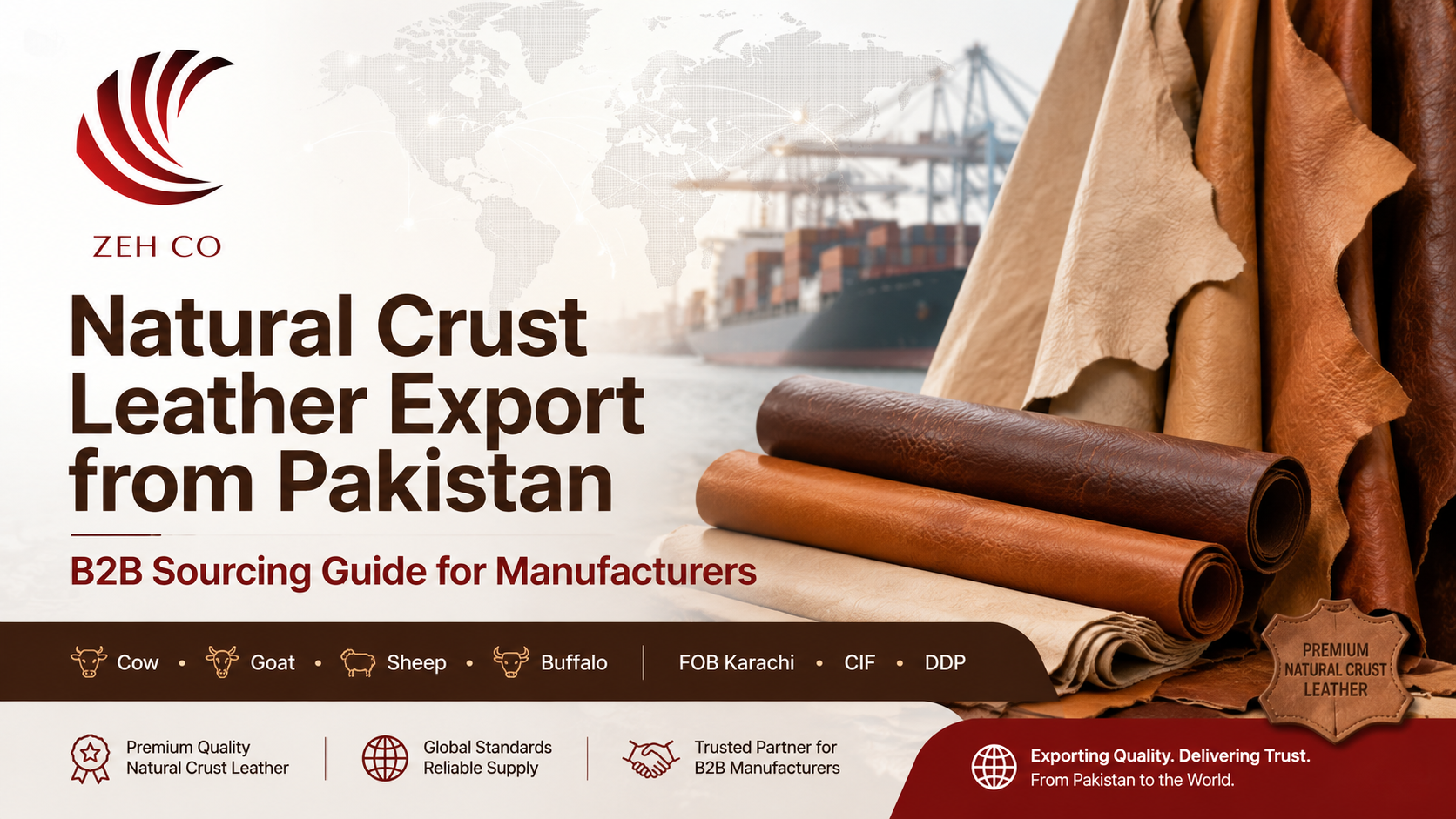
International footwear, bag, belt, garment and upholstery manufacturers increasingly look for flexible leather sourcing options that allow them to control final color, finish and performance characteristics. Natural crust leather export from Pakistan provides such buyers with an intermediate leather material that can be selected according to animal origin, thickness, surface quality, tanning process and end-use requirements. For manufacturers that prefer to carry out final finishing themselves or through specialized finishing facilities, crust leather can provide greater production flexibility than purchasing fully finished leather.
Pakistan has an established leather-processing industry supported by livestock availability, tanning expertise and manufacturing clusters serving domestic and export markets. ZEH Co works with international importers and manufacturers seeking Pakistani leather and hides under commercial shipment arrangements including FOB Karachi, CIF and suitable DDP transactions.
What Is Natural Crust Leather?
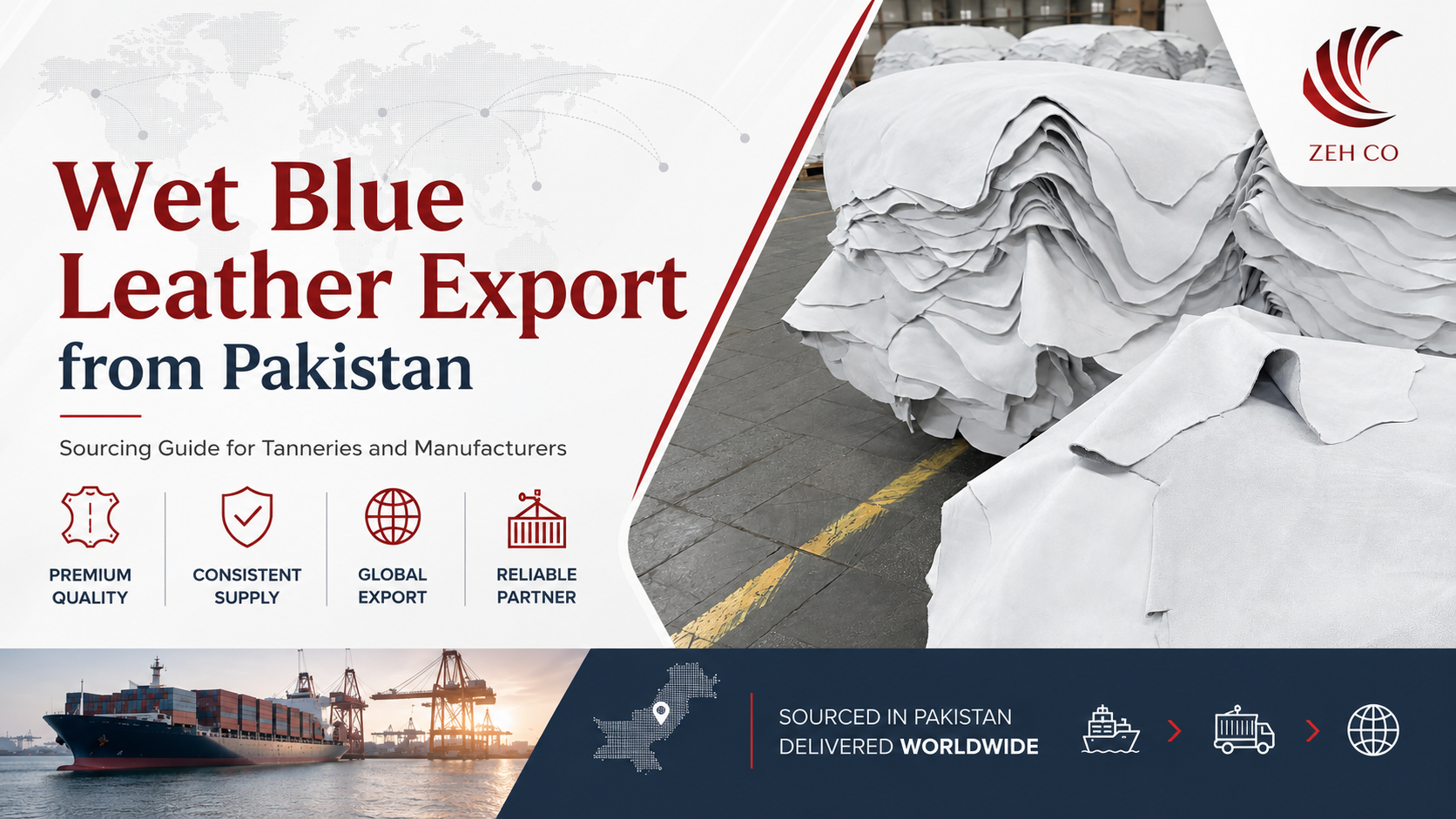
Crust leather is leather that has passed through major tanning and post-tanning stages but has not yet received the complete surface finishing normally associated with finished leather. Depending on the manufacturing process, crust leather may already have undergone operations such as tanning, dyeing, drying, setting and other preparation steps while still remaining ready for additional finishing.
This makes crust leather particularly useful for manufacturers and finishing houses that want greater control over final appearance. Buyers can select material and later apply their own colors, coatings, embossing, polishing or other finishing processes according to the requirements of a footwear collection, handbag line, furniture program or fashion accessory range.
Why Buyers Source Natural Crust Leather from Pakistan
Leather buyers rarely evaluate a sourcing country on price alone. They normally consider raw material availability, tanning capability, consistency, customization, communication and the supplier's ability to prepare leather according to technical specifications.
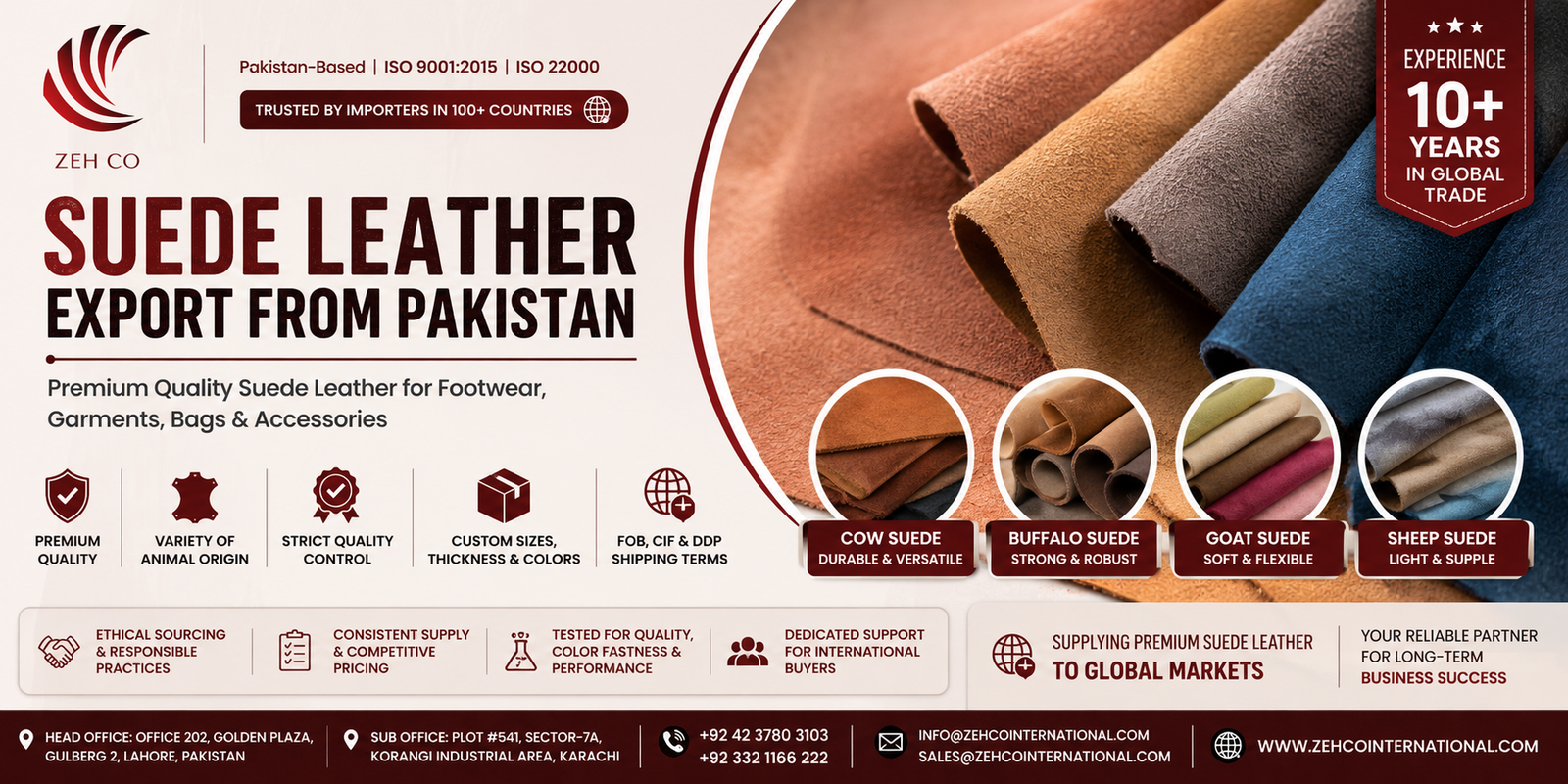
Pakistan supplies several leather categories suitable for different manufacturing applications. Depending on sourcing requirements, buyers may work with cow, buffalo, goat or sheep leather. Each has different structural and commercial characteristics, making the correct material selection important before price negotiations begin.
For international buyers, sourcing crust leather from Pakistan can provide several advantages:
- Access to multiple animal leather categories
- Custom thickness and sorting requirements
- Selection according to end-use application
- Opportunity for bulk wholesale procurement
- Potential for repeat production specifications
- International shipping through Karachi
- Commercial terms including FOB, CIF and destination-based arrangements
Natural Crust Leather Export from Pakistan by Animal Type
Cow Crust Leather
Cow leather is widely used across the global leather manufacturing sector because of its strength, relatively large hide area and broad range of applications. Depending on thickness and finishing requirements, cow crust leather can be suitable for footwear uppers, bags, belts, leather goods, furniture and selected garment applications.
Buyers should clearly identify whether they need full hides, sides, specific selections or another cutting format because material utilization affects production yield and final product cost.
Goat Crust Leather
Goat leather is generally selected where flexibility, lighter weight and a distinctive natural grain are desirable. It may be used in footwear, fashion accessories, gloves, small leather goods and certain garment applications.
Manufacturers sourcing goat crust should communicate acceptable size ranges, thickness, grain expectations and defect tolerances because smaller skins require a different yield calculation from larger cow hides.
Sheep Crust Leather
Sheep leather can be relevant to buyers manufacturing softer leather articles, garments, fashion products and accessories. Because softness and feel can be important for these applications, buyers should specify the required handle and physical characteristics rather than buying solely according to square-foot price.
Buffalo Crust Leather
Buffalo leather may be considered for products requiring a heavier or more pronounced leather character. Depending on processing and thickness, it can be used in footwear, bags, belts and other durable leather products.
Thickness Is a Critical Buying Specification
Thickness is one of the most important specifications in a crust leather order. A bag manufacturer and a footwear manufacturer may both purchase cow crust leather but require significantly different thickness ranges.
Buyers should specify the required thickness and permitted tolerance before production. A supplier may measure leather in millimeters, so international buyers should ensure their purchase order uses a clear and consistent measurement system.
Examples of applications where thickness requirements can differ include:
- Footwear uppers
- Boot manufacturing
- Handbags
- Wallets
- Belts
- Leather garments
- Furniture upholstery
- Automotive-related leather applications
The intended use should always be communicated because simply asking for "medium thickness crust leather" is not precise enough for professional sourcing.
How Leather Grading Affects Price and Manufacturing Yield
Two leather shipments with the same total area can provide very different production yields. Natural marks, scratches, scars, holes, grain damage and other surface characteristics affect where manufacturers can cut finished components.
Higher selections generally allow buyers to cut a greater proportion of visible product components from each hide or skin. Lower selections may still be commercially suitable when components are small, defects can be avoided during cutting or the final product uses distressed or heavily finished surfaces.
Importers should therefore evaluate leather according to usable yield rather than simply comparing the lowest price per square foot.
Define Defect Tolerances Before Ordering
A professional purchase specification should define acceptable quality levels and the intended application. Buyers may also request representative photographs, physical samples or pre-shipment inspection arrangements before approving a commercial order.
This is especially important for private-label manufacturers whose finished goods must maintain consistent appearance across large production runs.
Surface Character and Finishing Potential
One of the primary advantages of crust leather is the ability to control the subsequent finishing process. Depending on the material and buyer requirements, crust leather can later be developed into different visual and tactile effects.
Finishing possibilities may include:
- Pigmented finishes
- Natural-looking finishes
- Matte surfaces
- Gloss effects
- Embossed patterns
- Pull-up effects
- Vintage or distressed appearances
- Fashion colors
However, not every crust article is suitable for every final finish. Buyers should explain the intended finished product to the supplier so that the appropriate base leather can be selected.
Physical Testing and Technical Requirements
Manufacturers supplying international brands often operate according to defined material testing protocols. Depending on the final product, buyers may need to evaluate leather for physical or chemical performance before approving bulk production.
Required testing may relate to factors such as:
- Tear strength
- Tensile performance
- Flexing behavior
- Color-related performance after finishing
- Substance restrictions
- Moisture characteristics
- Thickness consistency
The specific testing program should come from the buyer's product requirements or destination-market compliance system. Importers working for major brands should share testing protocols before production rather than requesting compliance evidence only after the shipment is completed.
How Leather Area Is Calculated
Leather is commonly traded according to surface area rather than simply by kilogram. For this reason, buyers should clearly establish the measurement basis used for commercial invoicing.
A purchase order should identify:
- Required total area
- Preferred average hide or skin size
- Permitted size variation
- Measurement unit
- Whether individual area markings are required
- Acceptable quantity tolerance
These details help buyers calculate expected component yield and compare suppliers more accurately.
Sampling Before a Bulk Crust Leather Order
Sampling is strongly recommended when developing a new leather article. A physical sample allows manufacturers to test whether the leather works with their cutting, finishing and production processes.
Before confirming a large purchase, buyers can evaluate:
- Thickness
- Handle and softness
- Grain character
- Surface cleanliness
- Final finishing response
- Cutting yield
- Suitability for the intended product
Once a sample has been approved, its characteristics can be converted into a reference standard for repeat orders. This reduces misunderstanding and provides both buyer and supplier with a clearer quality benchmark.
Packaging Natural Crust Leather for Export
Export packaging should protect leather against contamination, excessive moisture exposure and physical damage during handling and transportation. The exact packing format depends on leather type, quantity and buyer requirements.
Buyers should communicate any particular requirements relating to bundles, palletization, wrapping, labeling and warehouse handling before shipment.
Commercial markings may include:
- Product description
- Leather type
- Grade or selection
- Thickness
- Bundle identification
- Quantity or area
- Purchase order reference
- Country of origin
- Buyer-specific shipping marks
Documents for International Leather Shipments
Exact documentation depends on the importing country and sales contract, but international crust leather shipments may involve commercial and logistics documents required for customs clearance and transport.
Importers should determine destination-specific requirements before shipment. Typical documentation may include:
- Commercial invoice
- Packing list
- Bill of lading or airway bill
- Certificate of origin where required
- Applicable inspection or testing documentation
- Destination-specific customs documentation
Buyers should also verify the applicable HS classification with their customs broker because classification can depend on the tanning stage, leather type and processing condition.
FOB Karachi, CIF and DDP Options for Leather Buyers
FOB Karachi
FOB Karachi can suit experienced importers that already have preferred freight forwarders or shipping arrangements. The buyer can control the main international freight while coordinating export preparation with the supplier.
CIF Shipping
CIF may be preferable for buyers wanting the exporter to arrange international ocean freight and insurance to the agreed destination port. Buyers should still review destination charges separately when calculating total landed cost.
DDP Supply
Where commercially and legally feasible, DDP can be considered for buyers seeking a delivered arrangement. Exact destination, import requirements, duties, taxes and inland transportation conditions must be evaluated before a DDP quotation can be confirmed.
Information Buyers Should Include in an RFQ
The quality of a leather quotation depends directly on the quality of the buyer's inquiry. Instead of requesting only a price for "cow crust," procurement managers should provide a detailed RFQ.
A useful crust leather inquiry should include:
- Animal type: cow, buffalo, goat or sheep
- Intended end product
- Required thickness and tolerance
- Preferred hide or skin size
- Required selection or quality level
- Color or crust condition
- Required total square footage
- Testing requirements
- Packaging instructions
- Destination port and country
- Preferred FOB, CIF or DDP quotation
- Target shipment schedule
This information enables suppliers to identify a commercially suitable leather article rather than quoting a generic product that may not perform correctly in the buyer's production line.
Why Source Crust Leather Through ZEH Co?
ZEH Co is a Pakistan-based B2B export company established in 2011, supplying international importers, wholesalers and procurement professionals across multiple product categories. The company serves buyers in more than 100 countries and provides international trading options including FOB Karachi, CIF and DDP, subject to product and destination requirements.
ZEH Co can work with leather buyers to define specifications before commercial sourcing. This may include leather type, thickness, selection, quantity, packing and shipment requirements. The objective is to connect the requested leather specification with the manufacturer's actual production requirements rather than treating all crust leather as a single standard commodity.
ZEH Co holds ISO 9001:2015 certification and works with international buyers across markets including the UAE, China, Germany, Italy, the UK, USA, Russia, South Korea, Vietnam and Turkey.
Conclusion: Build a Reliable Natural Crust Leather Supply Program
Successful natural crust leather export from Pakistan depends on aligning the leather specification with the manufacturer's intended finished product. Animal type, thickness, selection, hide size, surface quality, testing requirements and packaging can all affect manufacturing yield and final product performance.
International buyers should therefore compare suppliers using measurable specifications instead of selecting material only by price per square foot. Sampling and specification approval before bulk production can further reduce quality disputes and improve repeat-order consistency.
Looking for natural cow, goat, sheep or buffalo crust leather from Pakistan? Send ZEH Co your required leather type, thickness, approximate quantity, end-use application, destination port and preferred shipping term. Our team can review your sourcing requirements and prepare a B2B quotation for suitable FOB Karachi, CIF or destination-based supply arrangements.