```html
Black suede leather from Pakistan is an important sourcing option for international footwear manufacturers, handbag producers, apparel brands and leather goods wholesalers. Its soft texture, distinctive matte appearance and versatile design applications make it attractive for premium and everyday products. However, successful wholesale procurement requires careful evaluation of leather thickness, surface nap, dye penetration, colour consistency and usable cutting yield. This guide explains how global B2B buyers can assess Pakistani black suede leather, establish measurable quality standards and prepare reliable bulk import orders.
What Makes Black Suede Leather from Pakistan Suitable for Manufacturing?
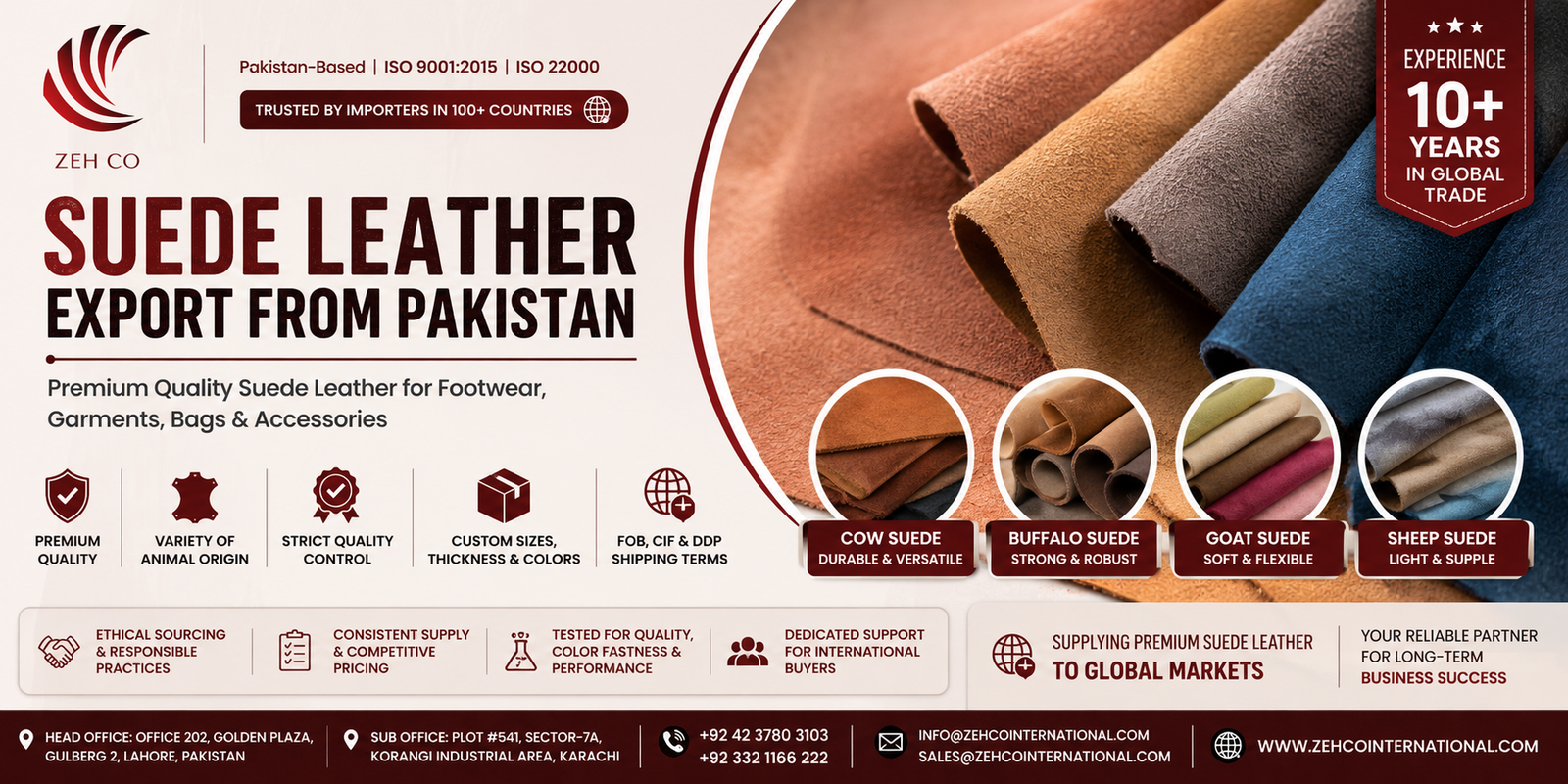
Pakistan has an established leather production industry supported by hide and skin processing, tanning, finishing and export operations. Manufacturers can source different types of suede depending on the animal origin, tanning process, finishing technique and intended finished product.
Unlike smooth finished leather, suede has a raised fibrous surface that creates a soft, velvety appearance. This nap may be developed from the flesh side of leather or from a split layer, depending on the construction. Buyers should confirm whether the offered material is full-grain reverse suede, split suede or another specified leather type because these distinctions affect performance, price and cutting characteristics.
Black is especially popular for footwear, bags and fashion collections because it provides a versatile appearance. Nevertheless, a consistent black shade can be technically demanding: surface direction, nap height and lighting can all influence perceived colour. Therefore, the approved sample should establish both the colour and the expected surface texture.
Understanding Black Suede Leather Quality Grades
Premium Selection for Visible Components
Premium-selection suede should offer relatively uniform nap, limited visible defects, controlled thickness variation and satisfactory shade consistency within an approved production lot. These qualities are important for visible footwear uppers, luxury handbags and coordinated accessory collections. Importers should define the acceptable number and size of defects instead of relying solely on labels such as Grade A or premium quality.
Commercial Grade for General Manufacturing
Commercial-grade suede may permit more natural marks, localised nap variation and a lower cutting yield. It can still be suitable for footwear panels, accessories or smaller leather components when the usable sections meet the manufacturer's requirements. Procurement teams should compare the effective cost of usable leather rather than judging suppliers only by the advertised price per square foot.
Selection and Grading Agreements
There is no universal supplier-independent definition of Grade A, B or C that automatically guarantees identical leather quality. The buyer and exporter should agree on physical reference samples, defect limits, measurement methods, acceptable area utilisation and inspection procedures. This prevents disputes when the delivered lot contains natural variations.
Thickness Specifications for Black Suede Leather
Thickness directly influences flexibility, stitching performance, structure and finished-product weight. The following ranges are illustrative development references rather than universal requirements; the correct thickness depends on construction, leather type and product design.
- 0.6–0.9 mm: Potentially suitable for lightweight leather garments, linings and selected soft accessories.
- 0.9–1.2 mm: May be evaluated for handbags, fashion accessories and flexible footwear components.
- 1.2–1.5 mm: Can be considered for structured footwear uppers and selected heavier accessories.
- Above 1.5 mm: May be appropriate for certain reinforced or heavy-duty constructions where flexibility requirements permit.
Manufacturers should verify whether their cutting, skiving and stitching machinery can process the chosen leather consistently. Thickness measurements can be specified using ISO 2589, which describes a method for determining leather thickness. Buyers should agree on measurement locations, permitted tolerances and the treatment of naturally thinner edge areas.
Nap Consistency and Surface Appearance
Why Suede Nap Matters
Nap refers to the raised surface fibres responsible for suede's characteristic softness and visual depth. When the fibres are brushed in different directions, light reflection changes and the material may appear lighter or darker. This directional effect is normal, but uncontrolled variation between skins can create a mismatched appearance in finished products.
Footwear manufacturers should examine paired components under consistent lighting and brushing conditions. Handbag manufacturers should review whether front panels, side panels and straps display an acceptable visual match. Standardised sample photographs can support communication, but they should not replace a retained physical reference.
Common Suede Surface Defects
- Uneven nap length or excessive variation in fibre density.
- Visible scratches, scars or irregular surface patches.
- Localised areas with weak or loose fibre structure.
- Unexpected differences in texture between skins.
- Excessive dust, loose fibres or finishing residues.
- Colour patches that remain visible after consistent brushing.
Buyers should distinguish normal leather characteristics from defects that interfere with cutting, appearance or final-product performance. An agreed visual inspection method and representative defect samples make this distinction more objective.
Black Suede Leather Colour Fastness and Dye Quality
Colour transfer is a critical consideration when sourcing black suede. Dark pigments or dyes may stain light-coloured socks, garments, handbag linings or adjacent components when rubbing resistance is inadequate. A dark appearance alone does not demonstrate sufficient dye fixation or rubbing performance.
Dry and Wet Rubbing Tests
ISO 11640 provides a recognised method for evaluating leather colour fastness to repeated rubbing using wool felt. Buyers can request testing under relevant conditions and establish minimum acceptable ratings for colour change and staining. Different finished products may require different acceptance criteria.
Wet rubbing performance deserves particular attention for footwear and handbags exposed to moisture or perspiration. Suppliers should provide actual test results rather than making unsupported claims such as guaranteed non-bleeding or permanently colourfast.
Shade Matching for Repeat Orders
Buyers should retain an approved black colour reference from the original sample batch. For subsequent orders, shade matching should be checked under agreed lighting conditions with the nap brushed consistently. A repeat-order specification should document whether limited shade variation between production lots is acceptable.
Applications of Wholesale Black Suede Leather
Footwear and Boot Manufacturing
Footwear producers commonly evaluate suede for casual shoes, boots, loafers and selected fashion uppers. Their priorities may include controlled thickness, sufficient strength, flexibility, colour fastness and consistent panel appearance. Footwear intended for frequent outdoor exposure may also require specified water resistance or protective finishing.
Handbags, Wallets and Fashion Accessories
Leather goods manufacturers can incorporate black suede into handbags, clutches, wallets, belts and decorative panels. These applications require attention to edge finishing, reinforcement, lining interaction and resistance to colour transfer. Product prototypes should be evaluated before approving large-volume production.
Leather Garments and Apparel
Suede jackets and fashion garments generally require a soft handle, suitable drape and manageable finished weight. Buyers should evaluate garment comfort, panel matching, seam behaviour and colour transfer under realistic use conditions. Leather that performs well in footwear may not automatically be suitable for apparel.
How International Buyers Should Inspect Bulk Suede Leather
Bulk inspection should take place against an agreed technical specification. The inspection plan may include composition and leather-type verification, thickness measurements, usable area, visible defects, nap uniformity, shade consistency and the relevant laboratory test results.
Sampling should represent different bundles or production lots rather than only the best pieces presented by the supplier. For measured area, the buyer should define the agreed measurement system, unit of sale and applicable tolerance. Any area excluded because of defects should be handled according to the purchase agreement.
When consistency is particularly important, buyers may arrange an independent third-party inspection before shipment. Inspection findings should identify the inspected lot, sample size, nonconformities and required corrective actions.
Wholesale Pricing and Purchasing Considerations
Black suede leather prices depend on animal origin, leather construction, tanning and finishing processes, thickness, selection grade, dye requirements, usable cutting yield and order volume. Importers should therefore compare quotations with equivalent specifications rather than choosing the lowest quoted unit price.
Leather may be quoted per square foot, square metre or piece, depending on market practice and the transaction. Buyers should confirm whether the quoted area is measured before or after finishing and how it will be verified at dispatch.
A lower-priced lot with substantial cutting losses may ultimately cost more than higher-selection leather with better usable yield. Manufacturers can evaluate this through trial cutting or a cutting-yield assessment based on their actual product patterns.
Packing and Shipping Black Suede Leather from Pakistan
Suede leather should be packed to limit moisture exposure, crushing, surface contamination and excessive friction during transport. Appropriate methods depend on the size, finish and condition of the hides or skins. Protective layers, suitable bundle dimensions and clear batch identification can help preserve traceability.
Importers should confirm the correct customs classification, country-of-origin requirements, commercial invoice, packing list and any additional documentation applicable to the destination. Requirements differ between finished leather, partly processed leather and particular animal-origin materials. Buyers must also check destination-market chemical restrictions and applicable product regulations.
FOB Karachi, CIF and DDP Arrangements
ZEH Co International can discuss quotations under FOB Karachi, CIF and DDP arrangements, subject to destination, shipment feasibility and agreed responsibilities. FOB generally places the main-carriage arrangement with the buyer once delivery obligations are fulfilled at the named shipment port. CIF includes the seller's contractual responsibility for freight and specified cargo insurance to the named destination port, while DDP can include broader seller obligations relating to import clearance and duties.
The chosen Incoterm should always include the named location and an agreed Incoterms 2020 reference. Buyers should request written clarification of freight, insurance, destination handling, customs charges and delivery responsibilities before confirming an order.
How to Request a Black Suede Leather Export Quotation
A complete buyer inquiry allows the exporter to evaluate technical feasibility and prepare a more accurate commercial offer. Include the animal origin, suede type, intended application, required thickness range, colour reference, grade expectations, minimum testing requirements and approximate total quantity.
Buyers should also provide the destination country, preferred port or delivery address, required delivery period, packing preferences and selected shipping term. Where possible, an approved physical sample or technical reference should accompany the inquiry.
Before releasing a significant purchase order, international importers should request a representative sample and confirm whether the offered production can consistently meet the approved specification.
Source Black Suede Leather from Pakistan with ZEH Co International
Black suede leather from Pakistan can support a wide range of footwear, fashion and leather accessory manufacturing programmes when procurement is built around clear specifications and verifiable quality criteria. Buyers should prioritise nap consistency, measured thickness, rubbing fastness, usable cutting yield and dependable packing rather than depending on appearance or general grade descriptions alone.
ZEH Co International, established in 2011, supports international B2B sourcing and export inquiries from Pakistan. The company lists ISO 9001:2015 and ISO 22000 certifications and works with buyers across multiple international markets. Product-specific specifications, laboratory testing, quantities and shipping arrangements should be confirmed for each order.
For wholesale requirements, contact ZEH Co International through https://zehcointernational.com/ with your black suede leather specifications, target quantity and destination. The team can review your sourcing inquiry and discuss sample availability, commercial terms and suitable export arrangements.
```