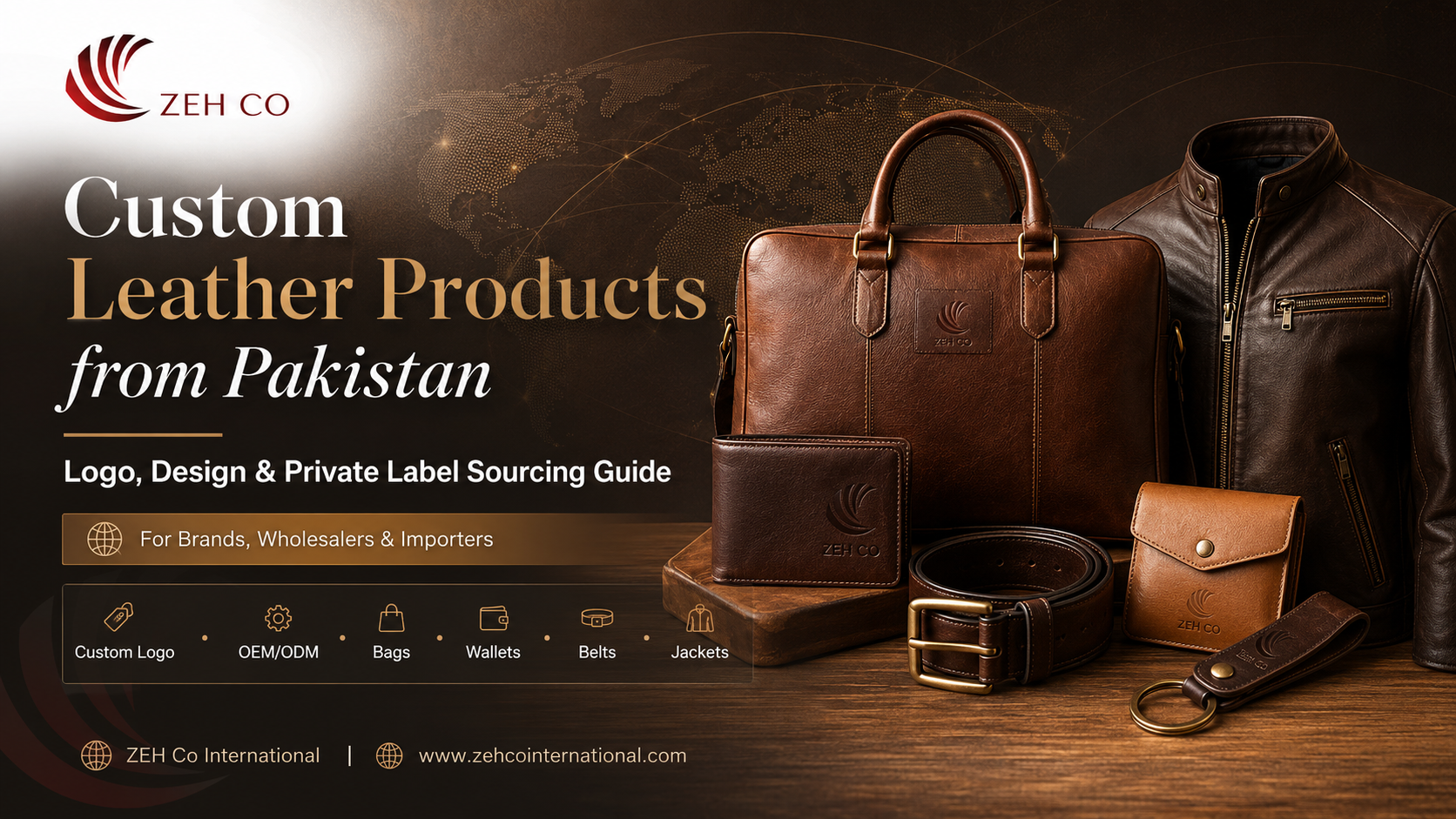
International brands increasingly look for manufacturing partners that can produce products according to their own identity rather than supplying standard catalog items. Custom leather products Pakistan sourcing allows wholesalers, private label brands, retailers and distributors to develop leather jackets, bags, wallets, belts and accessories with customized materials, dimensions, colors, logos, hardware and packaging. For B2B buyers, the most important part of a custom order is not simply choosing a leather product; it is creating a clear production specification that can be consistently reproduced across samples and bulk manufacturing.
Pakistan has a well-established leather sector supported by tanneries, skilled stitching units, leather goods workshops and export-oriented manufacturers. This gives international buyers access to different leather types, craftsmanship methods and customization possibilities. However, successful private label sourcing requires close coordination between the buyer and manufacturer from the initial design stage through sampling, production, quality control and final packing.
Why Source Custom Leather Products Pakistan Manufacturers Can Produce?
Custom manufacturing allows a buyer to create products specifically for a target market instead of competing with generic leather goods available from multiple suppliers. A private label importer may request a particular leather finish, custom pocket structure, unique dimensions, branded metal hardware, engraved logos, special stitching or exclusive packaging.
This approach is useful for fashion brands, corporate merchandise companies, motorcycle apparel brands, gift suppliers, online retailers and wholesale distributors. By developing an original specification, buyers can differentiate their product range while maintaining control over brand presentation.
Pakistan's leather manufacturing ecosystem can support both traditional handmade leather goods and more structured factory production. Depending on the product and order volume, buyers may source items ranging from small accessories to more complex garments and travel goods.
Leather Products Available for Custom Logo and Design Orders
International buyers can develop many types of customized leather goods. The exact manufacturing capability depends on the supplier, machinery, leather type and order volume.
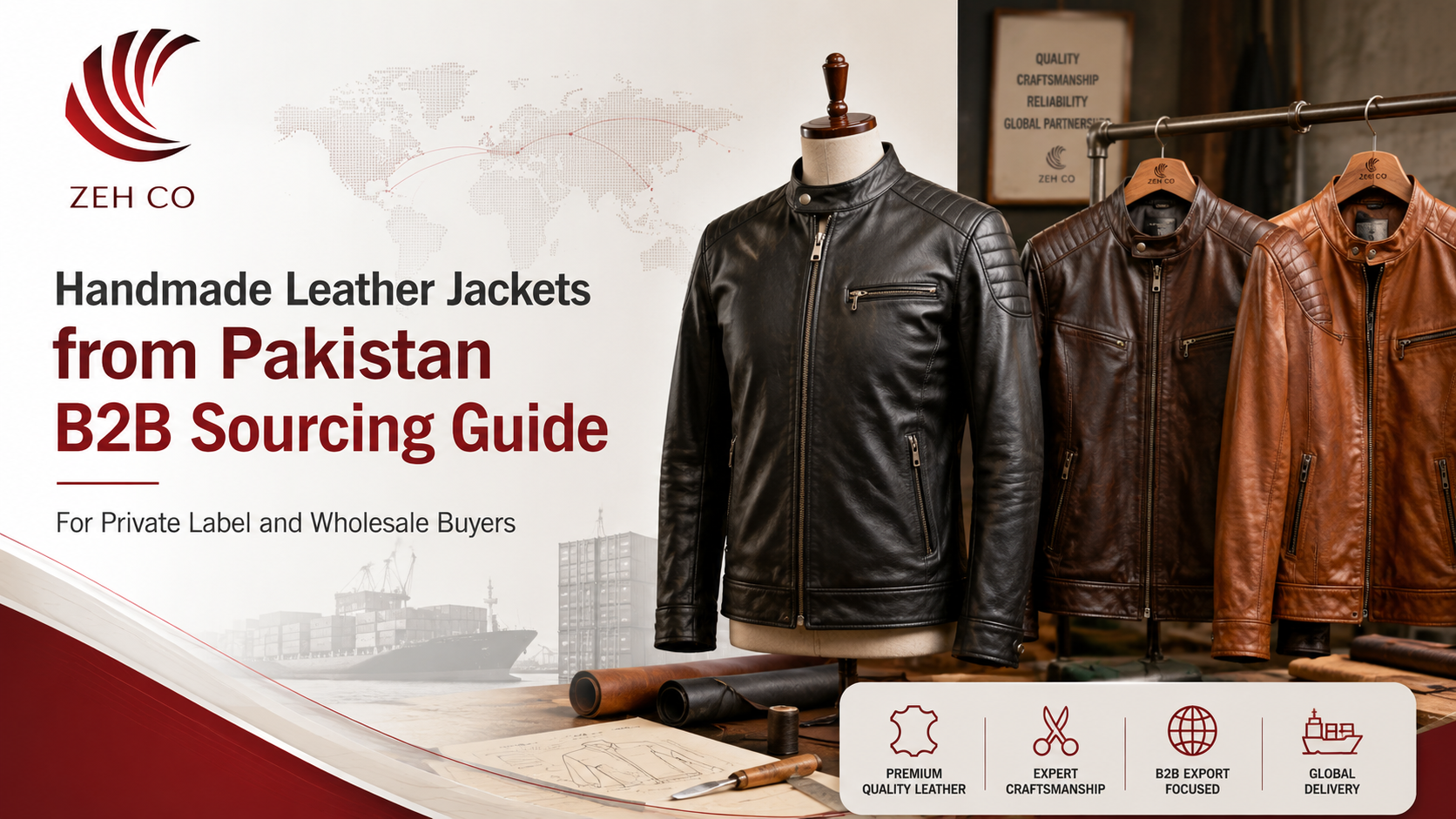
- Leather jackets: fashion jackets, biker jackets, bomber jackets, varsity styles and customized outerwear.
- Leather bags: backpacks, duffel bags, laptop bags, messenger bags, travel bags, handbags and briefcases.
- Leather wallets: bifold wallets, card holders, passport covers, money clips and travel wallets.
- Leather belts: dress belts, casual belts and branded corporate or retail collections.
- Leather accessories: key holders, luggage tags, organizers, document covers, notebooks and cases.
- Motorcycle leather products: riding jackets, protective garments, gloves and related accessories where production capabilities permit.
- Corporate leather gifts: branded business accessories designed for companies, events and promotional campaigns.
Buyers should always confirm whether a manufacturer specializes in the intended product category. A supplier experienced in wallets may not necessarily have the same technical capability for structured handbags or leather motorcycle garments.
How to Submit a Custom Leather Product Design Request
A clear design request significantly reduces sample revisions and production misunderstandings. Instead of sending a general instruction such as “make this bag with our logo,” professional buyers should prepare a detailed technical brief.
Provide Product Dimensions
Specify the required length, width, height and relevant internal dimensions. For garments, buyers should provide measurement charts for each size. For bags and wallets, include measurements for compartments, handles, straps and pockets wherever important.
Share Reference Images or Technical Drawings
Reference images help communicate the intended style, but technical drawings are even more useful. Buyers can provide front, back, side and internal views along with annotations explaining important construction details.
If a buyer is developing an original design, the manufacturer can use the supplied artwork and measurements to create a development sample. Buyers should ensure that designs submitted for production are owned by them or legally authorized for their use.
Specify Leather Type and Finish
The appearance and performance of the final product depend heavily on the chosen leather. Buyers may request different characteristics depending on their market positioning.
- smooth finished leather;
- full-grain or top-grain styles where available;
- suede leather;
- nubuck-style finishes;
- distressed or vintage finishes;
- soft garment leather;
- heavier leather for structured goods;
- specific colors based on samples or color references.
Because leather is a natural material, some variation in grain and shade may occur. Buyers should agree on acceptable tolerances before bulk production.
Custom Logo Options for Leather Products
Branding is one of the most important elements of private label leather sourcing. Different logo methods create different visual effects and cost structures.
Embossed Logo
Embossing presses a logo or brand name into the leather surface. It creates a clean and professional appearance and is widely used on wallets, bags, belts and accessories.
Debossed Logo
Debossing creates a recessed impression in the leather. It can provide a subtle premium appearance suitable for minimalist brands.
Foil Logo
Foil stamping can add metallic or colored branding to the product surface. Gold, silver and other finishes may be used depending on the leather type and application.
Metal Logo Plate
For handbags, travel goods and premium accessories, buyers may request a custom metal logo badge or name plate. Hardware color, plating and shape should be included in the specification.
Printed Logo
Printing can be suitable for certain leather surfaces, lining materials or packaging components. The manufacturer should test adhesion and durability before bulk production.
Custom Zippers, Pullers and Hardware
Private label buyers can also request branded zipper pullers, buckles, buttons or metal accessories. These details often require separate mold development and may carry higher minimum order quantities than standard hardware.
Custom Colors, Stitching and Hardware
Leather product customization extends well beyond the logo. Buyers can often request specific thread colors, lining materials, zipper finishes, buckles, snaps, magnetic closures and other components.
For example, a private label travel bag could use brown leather, antique brass hardware, a branded cotton lining, contrast stitching and an embossed logo. A minimalist wallet collection might use black leather, tone-on-tone stitching and subtle debossed branding.
Buyers should approve all visible components during sampling because small material changes can significantly affect the final appearance of a premium leather product.
Private Label Packaging for Leather Goods
Packaging plays an important role in how a leather product is presented to retail customers. A good OEM sourcing program should consider packaging at the beginning of development rather than after production is complete.
Depending on order quantity and buyer requirements, packaging may include:
- custom printed boxes;
- branded dust bags;
- hang tags;
- barcode labels;
- size and care labels;
- printed tissue paper;
- poly bags;
- carton markings;
- retail-ready packaging.
Buyers selling through e-commerce platforms may also need specific barcode, SKU and carton labeling requirements. These should be communicated before packing begins.
Sample Development Before Bulk Production
Sampling is one of the most important stages when sourcing custom leather products. A sample allows the buyer to evaluate construction, leather quality, dimensions, logo position, hardware, lining, stitching and overall appearance before approving mass production.
Prototype Sample
The first prototype is used to convert the buyer's design concept into a physical product. It may require adjustments to proportions, pocket placement, leather thickness or construction methods.
Revised Sample
If changes are required, the buyer should provide a clearly numbered list of revisions. Written comments combined with marked photographs are usually more effective than general instructions.
Pre-Production Sample
For larger orders, buyers may request a final pre-production sample made using approved materials, colors, logos and components. This sample can become the reference standard for production inspection.
What Information Should Be Included in an RFQ?
International buyers requesting a quotation for custom leather products should provide sufficient information for the manufacturer to calculate material consumption, labor, components and packaging accurately.
- product category;
- reference image or technical drawing;
- dimensions or size chart;
- preferred leather type;
- required color;
- lining specification;
- hardware requirements;
- logo method and dimensions;
- estimated order quantity;
- packaging requirements;
- destination country or port;
- required delivery term;
- sample requirement;
- target quality level.
Providing complete information makes quotations more reliable and reduces the likelihood of price changes after development begins.
Minimum Order Quantities for Custom Leather Goods
MOQ depends on the product, customization level, leather availability and components. Simple logo customization using existing designs may require lower quantities than completely new product development.
Custom metal hardware, special leather colors, unique packaging and exclusive components can increase minimum quantities because suppliers may need to order materials specifically for the project.
Startup brands should discuss trial-order options with suppliers. In some cases, buyers can begin with standard materials and customized logos before moving to fully exclusive components as order volume grows.
Quality Control for Custom Leather Products
Quality control should compare production against the approved specification rather than relying only on visual appearance. International buyers should define inspection criteria before bulk manufacturing.
Important checks can include:
- product measurements;
- leather color and finish consistency;
- logo position and clarity;
- stitch density and alignment;
- zipper function;
- buckle and snap performance;
- lining construction;
- pocket dimensions;
- handle and strap attachment;
- surface defects;
- packaging accuracy;
- carton quantities and markings.
For higher-value orders, buyers may arrange third-party pre-shipment inspection or request detailed inspection reports before shipment.
Protecting Brand Consistency Across Repeat Orders
One challenge in private label manufacturing is ensuring that repeat orders remain consistent. Buyers should maintain an approved specification sheet covering leather, color, dimensions, hardware, thread, logos, labels and packaging.
The approved pre-production sample can also act as a physical benchmark for future production. If materials change because of availability, the manufacturer should obtain approval before substitution.
Brands placing repeated orders should track any changes in leather shade, texture, hardware plating or construction. This is especially important when products are sold as part of a continuing retail collection.
OEM Versus ODM Leather Product Sourcing
Buyers should understand the difference between OEM and ODM manufacturing when discussing custom leather production.
OEM Leather Manufacturing
In an OEM arrangement, the buyer usually provides the design, dimensions, logo and technical requirements. The manufacturer produces the goods according to those specifications.
ODM Leather Manufacturing
In an ODM arrangement, the manufacturer may provide an existing design that the buyer can modify with different leather, colors, branding, hardware or packaging.
OEM is generally suitable for brands developing exclusive products, while ODM may be more practical for wholesalers and startup brands seeking faster development using established patterns.
Shipping Custom Leather Products from Pakistan
Shipping terms should be agreed during quotation. ZEH Co can discuss commercial arrangements including FOB Karachi, CIF and DDP depending on the destination, product, order volume and operational feasibility.
Before shipment, buyers should confirm carton dimensions, gross weight, net weight, total quantity and required documentation. Leather products should also be packed to protect against moisture, crushing and surface damage during international transportation.
For high-value leather goods, packaging quality is especially important because scratches, hardware contact and improper stacking can reduce the retail value of otherwise acceptable products.
Who Can Benefit from Private Label Leather Manufacturing?
Custom leather production is suitable for a wide range of international B2B buyers, including:
- fashion brands;
- private label retailers;
- online stores;
- Amazon and marketplace sellers;
- department store suppliers;
- corporate gift companies;
- motorcycle apparel brands;
- wholesale distributors;
- travel accessory brands;
- promotional merchandise companies.
Each buyer category may require a different combination of pricing, packaging, minimum quantities and customization, so sourcing should be structured around the intended sales channel.
Why Work with ZEH Co for Custom Leather Product Sourcing?
ZEH Co is a Pakistan-based B2B export company established in 2011, working with international importers, wholesalers and procurement buyers. The company supports sourcing across leather and hides, leather products, textiles, agricultural products, Himalayan salt and other Pakistani export categories.
For customized leather products, buyers can submit their logo files, design references, product dimensions, preferred leather, colors, quantity and packaging requirements for evaluation. Clear specifications help determine suitable manufacturing options, sampling requirements and commercial terms.
Buyers looking for private label or OEM leather products can visit https://zehcointernational.com/ and provide their product brief for B2B sourcing discussions.
Conclusion: Sourcing Custom Leather Products Pakistan Suppliers Can Manufacture
Successful custom leather products Pakistan sourcing depends on careful product development rather than simply adding a logo to a standard item. Buyers should define dimensions, leather type, colors, stitching, hardware, branding, packaging and quality expectations before production begins. A properly approved sample and detailed specification can significantly reduce misunderstandings during bulk manufacturing.
For international brands, wholesalers and distributors, Pakistan offers opportunities to develop private label leather jackets, bags, wallets, belts and accessories for different market segments. By working through a structured OEM or ODM process, buyers can create products that reflect their own brand identity while maintaining consistent manufacturing standards. ZEH Co can assist international B2B buyers with product sourcing, customization discussions, export coordination and suitable shipping arrangements from Pakistan.