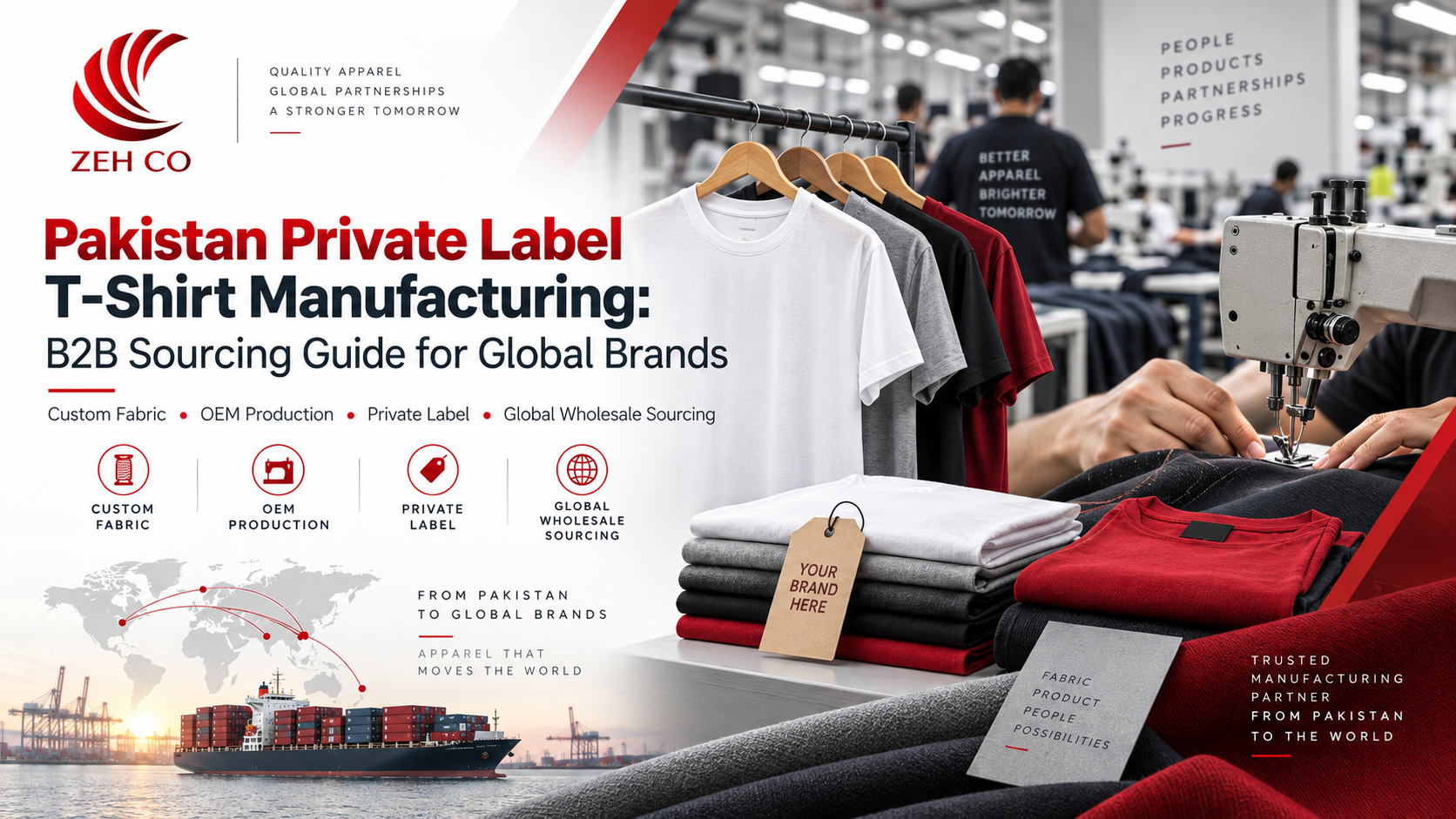
International fashion brands, wholesalers, promotional companies and apparel distributors increasingly consider Pakistan private label T-shirts when developing customized clothing collections. Pakistan has a large textile and garment manufacturing base capable of supporting fabric production, dyeing, cutting, stitching, printing, embroidery, finishing and export packing. For B2B buyers, the key advantage is the ability to develop T-shirts according to specific fabric, GSM, fit, color, branding and packaging requirements rather than purchasing only generic stock products.
ZEH Co supports international buyers sourcing textile and apparel products from Pakistan. Buyers can develop custom T-shirts for retail brands, promotional programs, corporate uniforms, sportswear collections, streetwear labels and wholesale distribution according to their target market and commercial requirements.
Why Source Pakistan Private Label T-Shirts?
Private label sourcing allows buyers to sell apparel under their own brand while controlling important product specifications. Pakistan's textile supply chain is especially relevant because cotton spinning, knitting, dyeing and garment manufacturing can be connected within the same manufacturing ecosystem.
For importers, this can simplify sourcing compared with purchasing fabric and garment production from completely separate markets. Depending on the project, buyers may request basic promotional T-shirts, premium heavyweight streetwear styles, performance-oriented garments or fashion-fit products.
- Custom fabric selection: Cotton, cotton blends and other suitable fabrics can be developed according to buyer requirements.
- Multiple GSM options: Fabric weight can be selected according to climate, market position and end use.
- OEM production: Manufacturers can work from technical packs, samples or buyer-developed designs.
- Private labeling: Neck labels, woven labels, printed labels and hang tags can support brand identity.
- Custom decoration: Screen printing, embroidery, heat transfer and other techniques can be considered.
- Export packaging: Retail-ready and wholesale packaging can be developed for international distribution.
Choosing the Right T-Shirt Fabric
Fabric selection is one of the most important decisions when developing a private label T-shirt. Buyers should not evaluate only the appearance of a sample because fiber composition, knitting structure, fabric weight and finishing can affect comfort, shrinkage, print performance and durability.
100% Cotton T-Shirts
Cotton T-shirts are widely used for fashion, casualwear, promotional clothing and retail collections. Buyers may request different cotton qualities depending on their target price point and desired hand feel.
Important specifications can include yarn count, fabric GSM, knitting structure, shrinkage tolerance, colorfastness and finishing. Brands positioning themselves in a premium market may place greater emphasis on softness, dimensional stability and surface quality.
Cotton-Polyester Blends
Blended fabrics can provide different performance characteristics compared with pure cotton. Depending on the ratio and construction, blends may offer easier care, reduced wrinkling or different moisture-handling properties.
Buyers should specify the exact fiber composition required rather than simply requesting a "blend" because material ratios can substantially affect feel, cost and performance.
Performance and Sports T-Shirt Fabrics
Sportswear buyers may require lightweight synthetic or blended fabrics designed for training, teamwear or activewear. In such cases, buyers should define moisture management, stretch, breathability and printing requirements during product development.
Understanding GSM for Private Label T-Shirts
GSM means grams per square meter and is commonly used to describe fabric weight. It is an important specification because a lightweight summer T-shirt and a heavyweight streetwear T-shirt should not be developed using the same fabric weight.
Lower GSM fabrics can provide a lighter feel suitable for warm climates or promotional garments, while higher GSM fabrics can create a heavier, more structured product. However, GSM alone does not determine quality. Yarn quality, knitting, finishing and construction also influence the final garment.
International buyers should state their target GSM range in the sourcing inquiry and confirm the actual fabric during sample approval.
Custom Fits and T-Shirt Construction
Fit can strongly influence how consumers perceive a fashion product. A T-shirt developed for a European streetwear brand may require different measurements from a promotional T-shirt intended for mass distribution.
Common Fit Options
- Regular fit
- Slim fit
- Relaxed fit
- Oversized fit
- Longline fit
- Unisex fit
- Men's and women's separate patterns
Buyers should provide a detailed measurement chart covering chest width, body length, shoulder width, sleeve length, sleeve opening and neck measurements. Tolerances should also be defined so that production inspections can compare actual garments with the approved size specification.
Private Label Branding Options
Branding is one of the main reasons international buyers choose private label manufacturing. The garment itself may be relatively simple, but carefully developed branding can transform a basic T-shirt into a recognizable retail product.
Customization may include:
- Custom woven neck labels
- Printed neck labels
- Size labels
- Care and composition labels
- Brand hang tags
- Custom barcode stickers
- Branded packaging
- Logo printing
- Logo embroidery
- Custom patches
Buyers should submit high-quality vector artwork for logos and labels wherever possible. Brand colors should ideally be supported by recognized color references to reduce differences between digital artwork and physical production.
Printing Options for Custom T-Shirts
The correct printing method depends on artwork, order quantity, fabric, color count and intended appearance. Buyers should discuss printing during sampling because different methods produce different surface effects and durability characteristics.
Screen Printing
Screen printing is widely used for commercial T-shirt production and can be suitable for logos, graphics and larger production runs. Print quality depends on artwork preparation, inks, screens, curing and fabric characteristics.
Heat Transfer and Transfer Printing
Transfer-based methods can be useful for particular designs, names, numbers or smaller customized programs. Buyers should evaluate flexibility, hand feel, wash durability and compatibility with the selected fabric.
Embroidery
Embroidery can provide a premium appearance for logos and smaller graphics. Because embroidery adds weight and stiffness to the decorated area, the size and stitch density should be appropriate for the fabric.
Sampling Before Bulk T-Shirt Production
Sample development is essential for private label apparel. A buyer should approve not only the visual design but also the fabric, fit, measurements, stitching, labels, printing and finishing.
During sample evaluation, buyers should check:
- Fabric feel and GSM
- Garment measurements
- Neck rib construction
- Shoulder and side seams
- Sleeve shape and length
- Print or embroidery quality
- Brand label placement
- Color accuracy
- General finishing
- Packaging appearance
Any changes requested after reviewing the sample should be documented clearly. The final approved sample can then become the reference standard for bulk production.
Quality Control for Wholesale T-Shirt Orders
Large apparel orders require systematic inspection because small inconsistencies can become commercially significant when multiplied across thousands of garments.
Fabric Inspection
Fabric should be checked for visible defects, shade variation and consistency with the approved specification. Buyers may also request relevant tests depending on the destination market and intended use.
Measurement Inspection
Finished garments from different sizes should be measured against the approved size chart. This helps identify production problems related to cutting, sewing or shrinkage.
Workmanship Inspection
Inspectors should check seams, loose threads, skipped stitches, neck construction, sleeve attachment and general finishing. Printing and embroidery should also be checked for alignment and visible defects.
Packing Inspection
Quantity, size ratios, barcodes, carton markings and packing arrangements should be verified before shipment. This is particularly important when goods are being delivered directly to retail warehouses or fulfillment centers.
Packaging for Retail, Wholesale and E-Commerce Brands
Packaging requirements vary by business model. A wholesale distributor may prefer simple individual polybags and master cartons, while an e-commerce brand may require branded bags, product stickers, SKU labels and ready-to-ship presentation.
Possible packaging elements include:
- Individual polybags
- Biodegradable packaging options where commercially available
- Branded bags
- Hang tags
- Barcode labels
- Size stickers
- Carton assortment labels
- Custom export cartons
Buyers should confirm destination-market requirements for labeling, fiber composition, country of origin and consumer information before final packaging approval.
What Information Is Needed for an Accurate T-Shirt Quotation?
International buyers often request prices using only a product image. However, accurate quotations require detailed specifications because fabric type, GSM, printing and order quantity can significantly affect production cost.
A professional inquiry should include:
- Fabric composition
- Required GSM
- Garment style and fit
- Size range and quantity breakdown
- Colors
- Print or embroidery artwork
- Branding requirements
- Packaging specifications
- Total order quantity
- Destination country or port
- Required delivery schedule
- Preferred shipping term
Providing these details allows suppliers to calculate fabric consumption, decoration costs, packaging and export requirements more accurately.
Small Orders Versus Large Wholesale Production
MOQ requirements can vary according to fabric, colors, printing technique and customization. A style requiring custom-dyed fabric normally has different production economics from a design using readily available material.
Buyers planning smaller initial orders should discuss available material options and minimize unnecessary variations. For example, reducing the number of colors or fabric types may make an introductory order easier to manufacture commercially.
Larger wholesale programs can provide greater efficiency but require stronger forecasting, size planning and inventory management.
FOB Karachi, CIF and DDP Shipping Options
ZEH Co can discuss apparel exports using FOB Karachi, CIF and DDP arrangements depending on destination, quantity and agreed commercial terms.
FOB Karachi can suit experienced importers that manage their own international freight arrangements. CIF can provide a quotation including cost, insurance and freight to an agreed destination port, while DDP can be considered where a more comprehensive delivered arrangement is commercially available.
Buyers should always confirm the exact Incoterm and named location in commercial documents so responsibilities are clearly understood.
Compliance Considerations for International Apparel Buyers
Requirements for garments vary between markets. International buyers should confirm applicable rules relating to fiber-content labeling, country-of-origin marking, chemical restrictions, packaging and consumer safety before production begins.
Testing requirements should be communicated at the development stage rather than after the order is produced. If specific standards for colorfastness, dimensional stability, restricted substances or other characteristics are required, these should be included in the buyer specification.
Why Pakistan Is Important to Global Apparel Sourcing
Pakistan's cotton and textile manufacturing base gives the country an important position in global apparel supply chains. For private label buyers, the availability of textile production and garment manufacturing within the same broader industrial ecosystem can support customized programs across T-shirts and other clothing categories.
Buyers evaluating Pakistan should focus on supplier capability, quality systems, sampling accuracy, communication and compliance rather than considering price alone. A dependable manufacturing relationship can provide much greater long-term value than choosing a supplier solely because of the lowest initial quotation.
Source Private Label T-Shirts with ZEH Co
ZEH Co is a Pakistan-based wholesale export company established in 2011 and works with international importers, distributors and procurement buyers. The company supports sourcing across textiles, apparel, leather products, agricultural commodities and other Pakistani export categories.
ZEH Co holds ISO 9001:2015 and ISO 22000 certifications and can discuss customized apparel development, branding, packaging and export requirements with international B2B buyers.
Conclusion
Sourcing Pakistan private label T-shirts can provide international clothing brands, wholesalers, distributors and promotional companies with access to flexible apparel manufacturing and customization. The most successful sourcing projects begin with detailed specifications covering fabric composition, GSM, sizing, fit, printing, branding, packaging and quality requirements.
International buyers can contact ZEH Co with a technical pack, product photographs, required quantity, destination and preferred shipping terms. Clear specifications allow the sourcing and development process to begin with better sampling, more accurate quotations and a stronger foundation for repeat wholesale production.