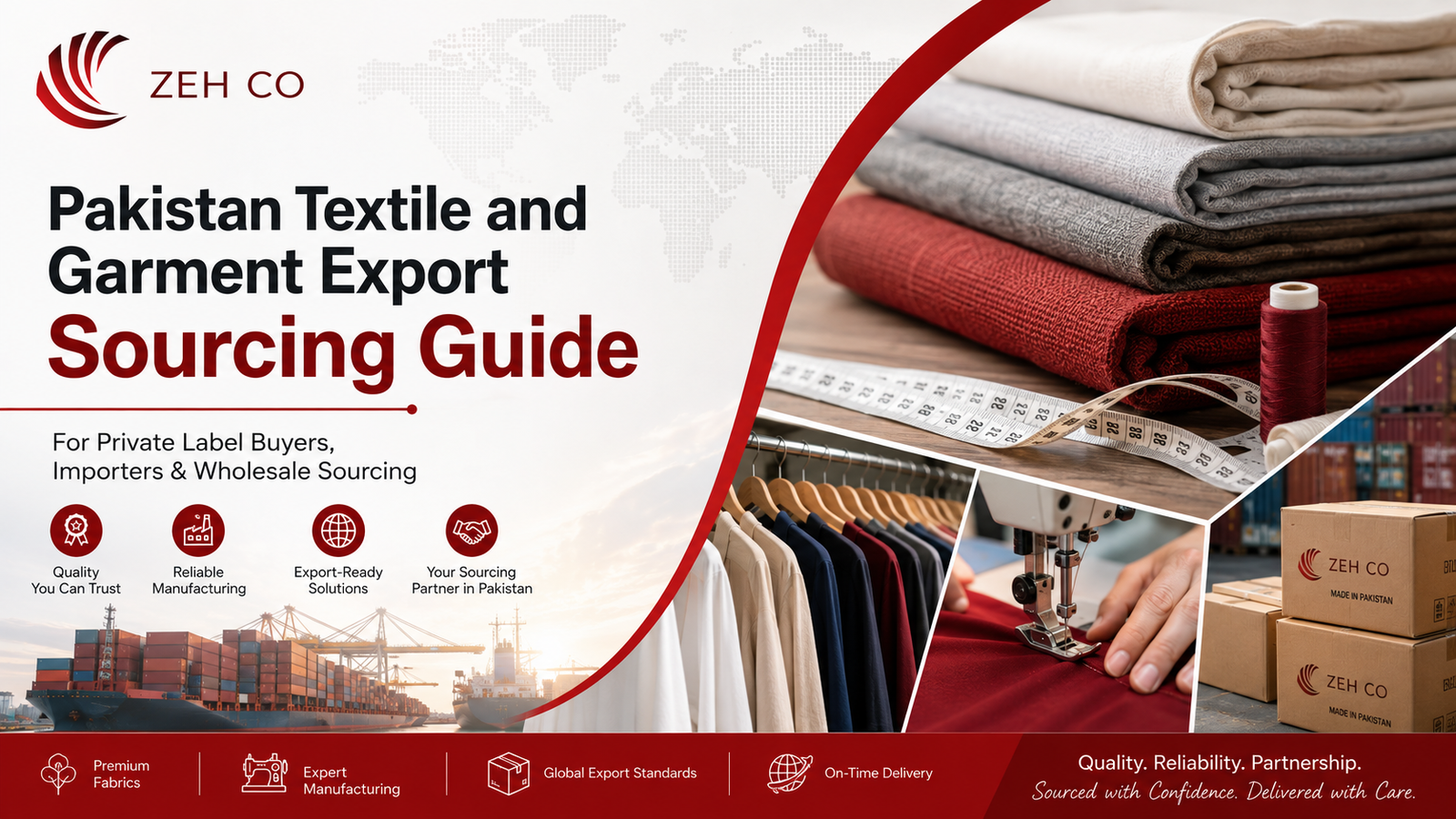
Pakistan textile export suppliers serve international apparel brands, wholesalers, importers, uniform companies, and private label businesses looking for competitive manufacturing options. Pakistan has a well-developed textile supply chain covering yarn, woven and knitted fabrics, dyeing, printing, stitching, finishing, packaging, and export documentation. For B2B buyers, the main advantage is the ability to source both textile materials and finished garments through coordinated production channels.
However, successful textile sourcing requires more than comparing the lowest prices. Buyers must evaluate fabric specifications, manufacturing capacity, quality systems, sampling procedures, labeling requirements, delivery schedules, and shipment terms. This guide explains the key commercial and technical factors international buyers should consider when sourcing textiles and garments from Pakistan.
Why Buyers Consider Pakistan Textile Export Suppliers
Pakistan is known for its cotton-based textile industry and its ability to manufacture products at different stages of the supply chain. International buyers can source raw or processed fabrics, home textiles, workwear, casual clothing, sportswear, fashion garments, uniforms, and selected footwear or textile accessories.
The country’s integrated production structure can help buyers reduce the number of suppliers involved in an order. Depending on the product, one sourcing partner may coordinate fabric procurement, dyeing, cutting, stitching, printing, embroidery, washing, finishing, inspection, and export packing.
Pakistan can be particularly suitable for buyers seeking:
- Bulk textile and garment production
- Private label and OEM manufacturing
- Custom fabric weights, colors, and finishes
- Branded labels, hangtags, and retail packaging
- Commercial uniforms and industrial workwear
- Repeat orders based on approved specifications
- FOB, CIF, or destination-based shipping arrangements
Textile and Garment Products Available for Export
Woven Fabrics
Woven textiles are commonly used for shirts, trousers, uniforms, jackets, workwear, bedding, and institutional products. Buyers should specify the fiber composition, yarn count, weave structure, fabric width, weight, construction, colorfastness, shrinkage tolerance, and finishing requirements.
Common woven fabric categories may include cotton, cotton-polyester blends, twill, canvas, poplin, denim, drill, and other constructions developed for fashion or industrial applications.
Knitted Fabrics
Knitted fabrics are widely used for T-shirts, polo shirts, sweatshirts, hoodies, activewear, underwear, and casual clothing. Important specifications include grams per square meter, fiber composition, knitting construction, stretch performance, recovery, shrinkage, pilling resistance, and dyeing method.
Buyers should also confirm whether the fabric will be supplied in rolls or converted into finished garments. A fabric quotation normally differs from a complete garment quotation because stitching, trims, labels, printing, packing, and wastage must be added.
Ready-Made Garments
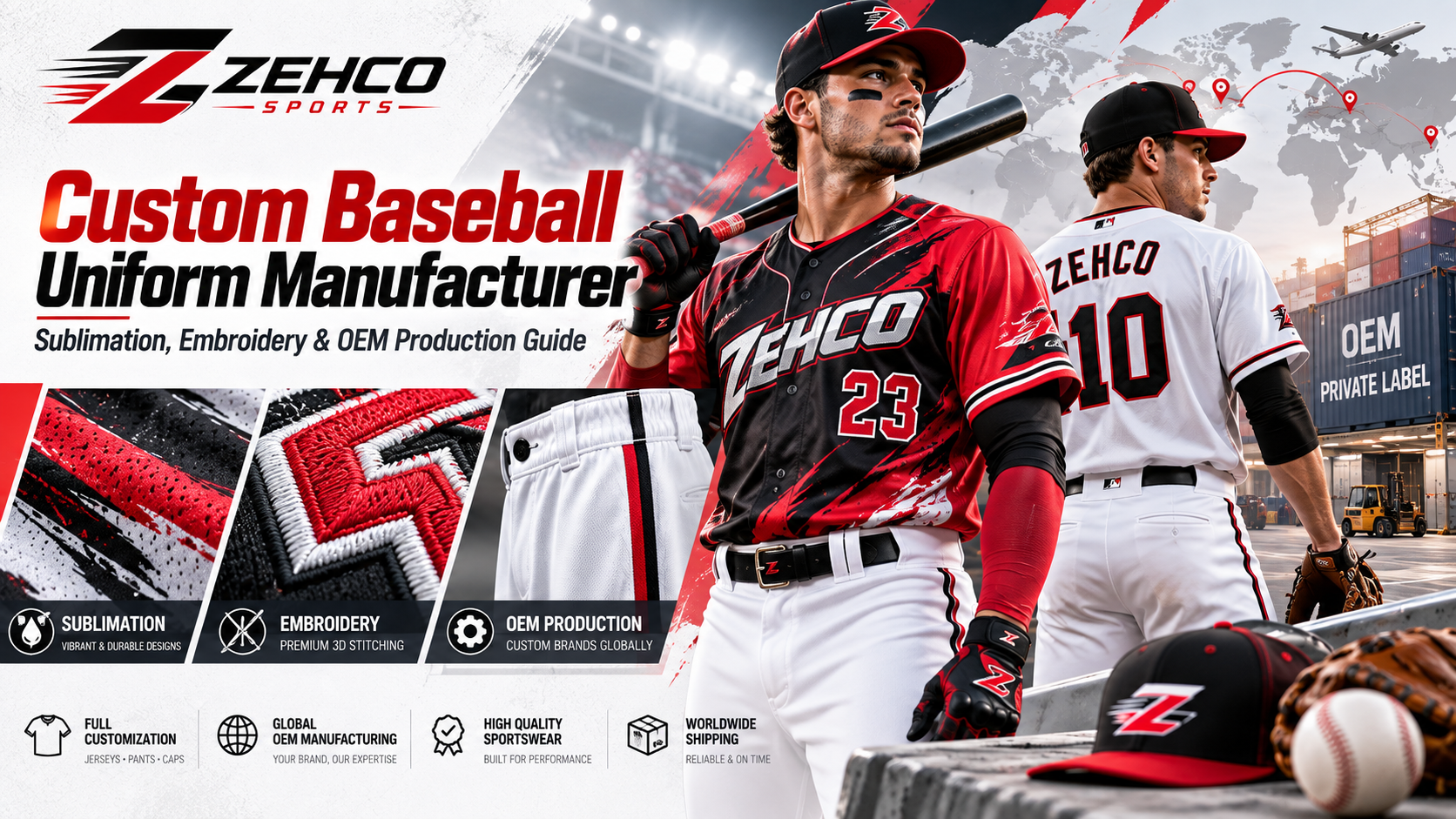
Pakistani manufacturers can produce ready-made garments for wholesale distributors, retailers, promotional companies, institutional buyers, and private label brands. Typical products include T-shirts, polo shirts, trousers, jackets, workwear, uniforms, hoodies, shirts, children’s clothing, and selected fashion garments.
For accurate pricing, buyers should provide a technical pack containing garment measurements, construction details, stitching instructions, fabric composition, artwork, color references, trims, labels, packing instructions, size ratios, and order quantities.
Private Label Clothing
Private label production allows buyers to sell garments under their own brand. The supplier manufactures the product according to the buyer’s approved design and applies the required brand elements. These may include woven labels, printed neck labels, care labels, size labels, hangtags, barcodes, polybags, cartons, and customized retail packaging.
Private label orders require careful approval because even small branding errors can make finished goods unsuitable for retail distribution. Buyers should approve every label, barcode, logo placement, packaging layout, and carton marking before bulk production begins.
How to Prepare an Effective Garment Inquiry
A detailed inquiry helps exporters calculate realistic prices and lead times. Requests such as “send your best price for T-shirts” are usually too general because garment costs depend on fabric, weight, construction, sizing, printing, packaging, quantity, and quality standards.
A professional inquiry should include:
- Product name and reference image
- Fabric composition and required weight
- Garment measurements or complete size chart
- Colors and Pantone references where applicable
- Printing, embroidery, washing, or finishing requirements
- Label, hangtag, and packaging specifications
- Quantity per design, color, and size
- Required quality tests or compliance documents
- Delivery destination and preferred shipping term
- Target delivery date
When a complete technical pack is not available, buyers can provide an existing sample for development. The supplier can review the sample and prepare a counter sample, but all materials, measurements, branding, and construction details should still be documented before production.
Understanding MOQ and Textile Pricing
Minimum order quantity depends on the product, fabric, color, production process, and customization level. A basic garment made from an available fabric may have a lower MOQ than a product requiring custom knitting, special dyeing, unique accessories, or several printed designs.
Garment prices are generally influenced by:
- Fabric type, composition, weight, and consumption
- Order quantity and size distribution
- Number of colors and designs
- Pattern complexity and stitching requirements
- Printing or embroidery coverage
- Garment washing and finishing
- Zippers, buttons, elastic, and other trims
- Private label and packaging requirements
- Testing, inspection, and certification costs
- Shipping term and delivery destination
International buyers should request a clear cost basis. Quotations should state whether prices are ex-factory, FOB Karachi, CIF destination port, or DDP where available. Buyers must also confirm whether sampling, testing, cartons, labeling, documentation, and inland transportation are included.
Sampling and Product Development
Sampling is one of the most important stages in textile and garment sourcing. A sample helps the buyer evaluate fabric feel, construction, fitting, color, artwork, finishing, and overall workmanship before approving bulk production.
Development Sample
A development sample is prepared to demonstrate the initial interpretation of the buyer’s design. It may use substitute fabric or trims when exact materials are not yet available. Buyers should not treat this sample as the final production standard unless all materials and measurements match the order specifications.
Fit Sample
A fit sample is used to check garment measurements, shape, balance, comfort, and size grading. The buyer should provide detailed comments for every measurement outside the accepted tolerance.
Pre-Production Sample
The pre-production sample should represent the final product as closely as possible. It normally includes the approved fabric, color, trims, printing, embroidery, stitching, labels, and packaging. Bulk production should begin only after written approval of this sample.
Quality Control for Textile and Garment Orders
Quality control should begin before production rather than only when the goods are ready for shipment. Fabric and accessory problems discovered late can lead to delays, rework, rejected goods, or commercial disputes.
A structured quality process may include:
- Inspection of fabric rolls before cutting
- Verification of fabric weight and composition
- Color and shade matching between production lots
- Shrinkage and colorfastness testing
- Measurement checks during stitching
- Printing and embroidery placement verification
- Inspection of seams, trims, buttons, and zippers
- Final garment measurement checks
- Needle, stain, damage, and loose-thread inspection
- Carton quantity and shipping mark verification
Buyers should define acceptable measurement tolerances and inspection standards in the purchase order. For larger orders, an independent pre-shipment inspection may be arranged before the balance payment or cargo dispatch.
Testing and Compliance Requirements
Testing requirements vary by product and destination market. Fashion garments, children’s clothing, workwear, and protective apparel may have different legal and buyer-specific requirements. Importers are responsible for confirming the regulations applicable in their target market.
Depending on the order, testing may cover fiber composition, colorfastness, dimensional stability, pilling resistance, fabric strength, seam strength, restricted substances, flammability, and performance after washing.
Buyers should identify required tests before sampling because compliance can affect fabric selection, dyes, printing chemicals, accessories, production cost, and lead time. Requesting new tests after bulk production has started can create avoidable delays.
Private Label Packaging and Export Preparation
Packaging protects garments during transportation and also supports retail presentation. Each garment may be folded according to the buyer’s instructions and packed in an individual polybag with a size sticker, barcode, warning text, or other required information.
Export cartons should be strong enough for international handling and clearly marked with the buyer’s name, purchase order number, product code, color, size ratio, carton number, gross weight, net weight, and destination.
Buyers should confirm whether environmentally preferred packaging is required. Recycled cartons, reduced plastic packaging, paper bands, and alternative packing materials may be considered, but their availability, strength, and cost must be evaluated before approval.
Shipping Textiles and Garments from Pakistan
Textile and garment orders can be shipped by sea, air, or courier depending on volume, delivery urgency, product value, and destination. Sea freight is generally suitable for commercial-volume orders, while air freight may be used for samples, urgent replenishment, high-value goods, or smaller shipments.
ZEH Co can discuss shipping arrangements under terms such as FOB Karachi, CIF, and DDP, depending on the destination, order structure, and service availability. Buyers should compare not only the product price but also freight, insurance, destination charges, customs duties, taxes, and local delivery expenses.
Common export documents may include a commercial invoice, packing list, certificate of origin, transport document, and other documents required by the destination country or letter of credit. Documentation requirements should be confirmed before shipment booking.
How to Evaluate a Pakistani Textile Supplier
A reliable supplier should demonstrate clear communication, organized sampling, accurate documentation, production visibility, and consistent quality control. Buyers should evaluate whether the supplier understands the technical requirements instead of focusing only on whether the quoted price is low.
Before placing a substantial order, consider reviewing:
- Company profile and export experience
- Available production categories
- Factory or production-partner capabilities
- Quality management procedures
- Sample quality and response to revisions
- Production and monthly capacity
- Previous product examples
- Inspection and testing arrangements
- Payment terms and commercial documentation
- Ability to meet the agreed delivery schedule
A trial order can help both parties verify quality, communication, packing, documentation, and delivery performance before moving to larger or recurring purchase volumes.
Common Sourcing Risks and How Buyers Can Reduce Them
One common risk is approving an order without a complete specification sheet. Verbal discussions and reference images are not enough to control measurements, fabric quality, accessories, labels, and packaging. Every important requirement should be included in the purchase order or technical pack.
Another risk is selecting a supplier solely on price. A quotation may appear cheaper because it is based on a lighter fabric, lower-quality trims, different packaging, wider measurement tolerances, or excluded testing. Buyers should compare quotations using identical specifications.
Delivery delays can also occur when buyers make repeated design changes after sampling or approve colors and accessories late. A production calendar should identify deadlines for sample approval, fabric confirmation, label approval, bulk production, inspection, and shipment.
Source Textiles and Garments Through ZEH Co
ZEH Co is a Pakistan-based B2B export company established in 2011, serving international importers, wholesale buyers, distributors, procurement teams, and private label businesses. The company can assist buyers with sourcing textiles, clothing, footwear, gloves, and related products according to commercial specifications.
ZEH Co supports buyers by coordinating product requirements, supplier communication, sampling, quality checks, packaging, export documentation, and international shipping arrangements. Available commercial terms may include FOB Karachi, CIF, and DDP, subject to the product and destination.
The company holds ISO 9001:2015 and ISO 22000 certifications and works with international buyers across markets including the UAE, China, Germany, Italy, the United Kingdom, the United States, Russia, South Korea, Vietnam, and Turkey.
Conclusion
A successful Pakistan textile export order depends on accurate product specifications, controlled sampling, realistic pricing, documented quality standards, compliant labeling, and organized shipping. Buyers who prepare a complete technical pack and approve a representative pre-production sample are better positioned to achieve consistent quality across bulk orders.
International importers, apparel distributors, uniform suppliers, and private label brands can work with ZEH Co to source Pakistani textiles and garments based on their required materials, designs, quantities, branding, packaging, and delivery terms. A detailed inquiry allows the export team to evaluate production options and prepare a commercially accurate sourcing proposal.