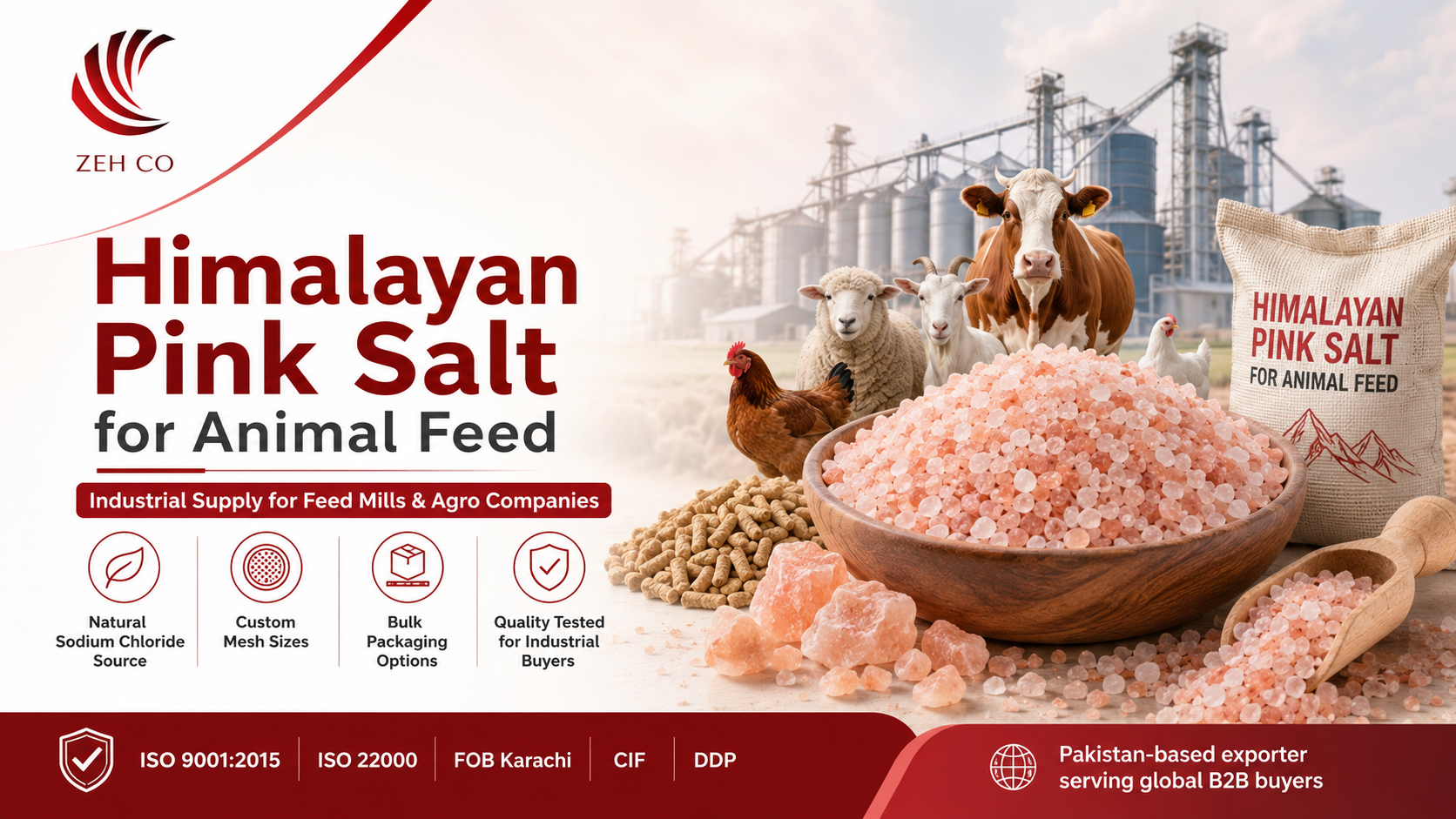
Himalayan pink salt for animal feed is increasingly considered by feed mills, livestock businesses and agricultural companies seeking a natural rock-salt ingredient for mineral premixes, compound feeds and livestock salt products. For industrial buyers, however, successful procurement depends on more than color or geographical origin. The salt must be supplied with defined chemical specifications, controlled particle sizes, suitable packaging, batch documentation and test results that satisfy the buyer’s feed formulation and destination-market requirements.
Feed manufacturers should evaluate Himalayan pink salt primarily as a source of sodium chloride rather than treating it as a complete trace-mineral supplement. Its natural appearance can support product differentiation, but nutritional inclusion rates must be determined by qualified animal nutritionists according to species, production stage, total dietary sodium, water quality and other ingredients in the finished ration.
Why Sodium Chloride Is Used in Commercial Animal Feed
Sodium and chloride are important dietary electrolytes used in properly formulated livestock and poultry diets. Commercial feed manufacturers commonly introduce sodium chloride through compound feed, mineral mixtures, concentrates, premixes or free-choice livestock salt products. The amount required cannot be standardized across every application because nutritional requirements differ between cattle, buffalo, sheep, goats, poultry, swine, horses, aquaculture species and other animals.
Industrial feed companies must also account for sodium and chloride already present in raw materials, additives and drinking water. Adding salt without reviewing the complete formula may create an excessive mineral concentration. For this reason, Himalayan pink salt should be incorporated according to the finished feed specification rather than added on the assumption that more salt will automatically improve animal performance.
Industrial Applications of Himalayan Pink Salt for Animal Feed
Compound Feed Manufacturing
Feed mills can use finely ground or controlled-granulation rock salt as a sodium chloride ingredient in complete feed formulations. Uniform particle size is particularly important because segregation can occur when very coarse salt is mixed with finely milled grains, protein meals and micro-ingredients. Buyers should select a mesh size that is compatible with their mixer design, batch size, conveying system and final feed form.
For pelleted feed, the salt must disperse consistently before conditioning and pelleting. Feed manufacturers should validate mixer performance and confirm that the ingredient does not introduce excessive moisture, foreign material or oversized crystals that could affect processing equipment or finished-feed uniformity.
Mineral Premixes and Concentrates
Himalayan pink salt may be used as a component of mineral mixtures and livestock concentrates when the formulation calls for sodium chloride. In these applications, consistency is more important than decorative appearance. Each shipment should meet agreed limits for sodium chloride content, moisture, insoluble matter, particle size and relevant contaminants.
Natural Himalayan salt may contain small quantities of other minerals, but their concentrations can vary. Feed companies should not use those naturally occurring traces as a replacement for accurately dosed zinc, copper, manganese, selenium, cobalt, iodine or other required nutrients. Any nutritional guarantee must be supported by testing and incorporated through an approved formulation process.
Livestock Lick Blocks
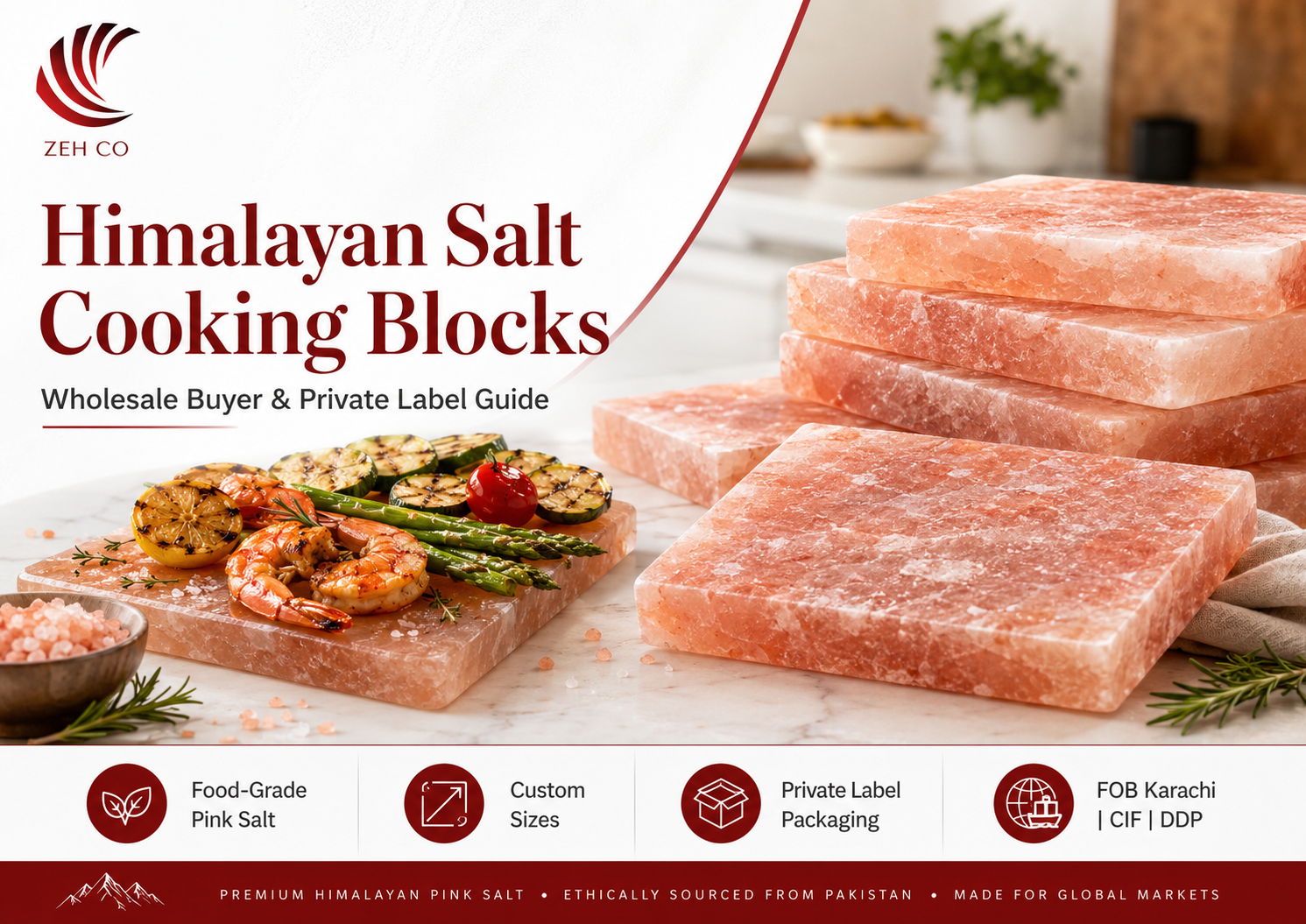
Rock salt can be processed into livestock licking blocks or incorporated into manufactured mineral blocks. These products may be intended for cattle, buffalo, sheep, goats, horses or other grazing animals, depending on the formulation. Industrial block producers generally require a defined crystal size, controlled moisture and predictable compaction characteristics.
A plain salt block is different from a trace-mineral block or medicated feed product. When additional minerals, additives or veterinary ingredients are included, the manufacturer must comply with the relevant formulation, registration, labelling and dosage rules in the destination market. The supplier and buyer should therefore agree whether the shipment is intended as raw salt, block-manufacturing material or a finished livestock product.
Total Mixed Rations for Ruminants
Dairy farms, beef operations and commercial livestock units may include salt in total mixed rations prepared under professional nutritional supervision. A consistent fine or granular grade helps distribute the ingredient throughout forage, silage, grain and protein components. The final inclusion rate should consider animal weight, milk production, environmental temperature, forage composition, water consumption and the sodium concentration of other feed materials.
Feed mills supplying ruminant farms should request complete formulation instructions rather than recommending one universal dosage. Access to clean drinking water is also an essential management consideration whenever dietary salt is provided.
Private-Label Livestock Mineral Products
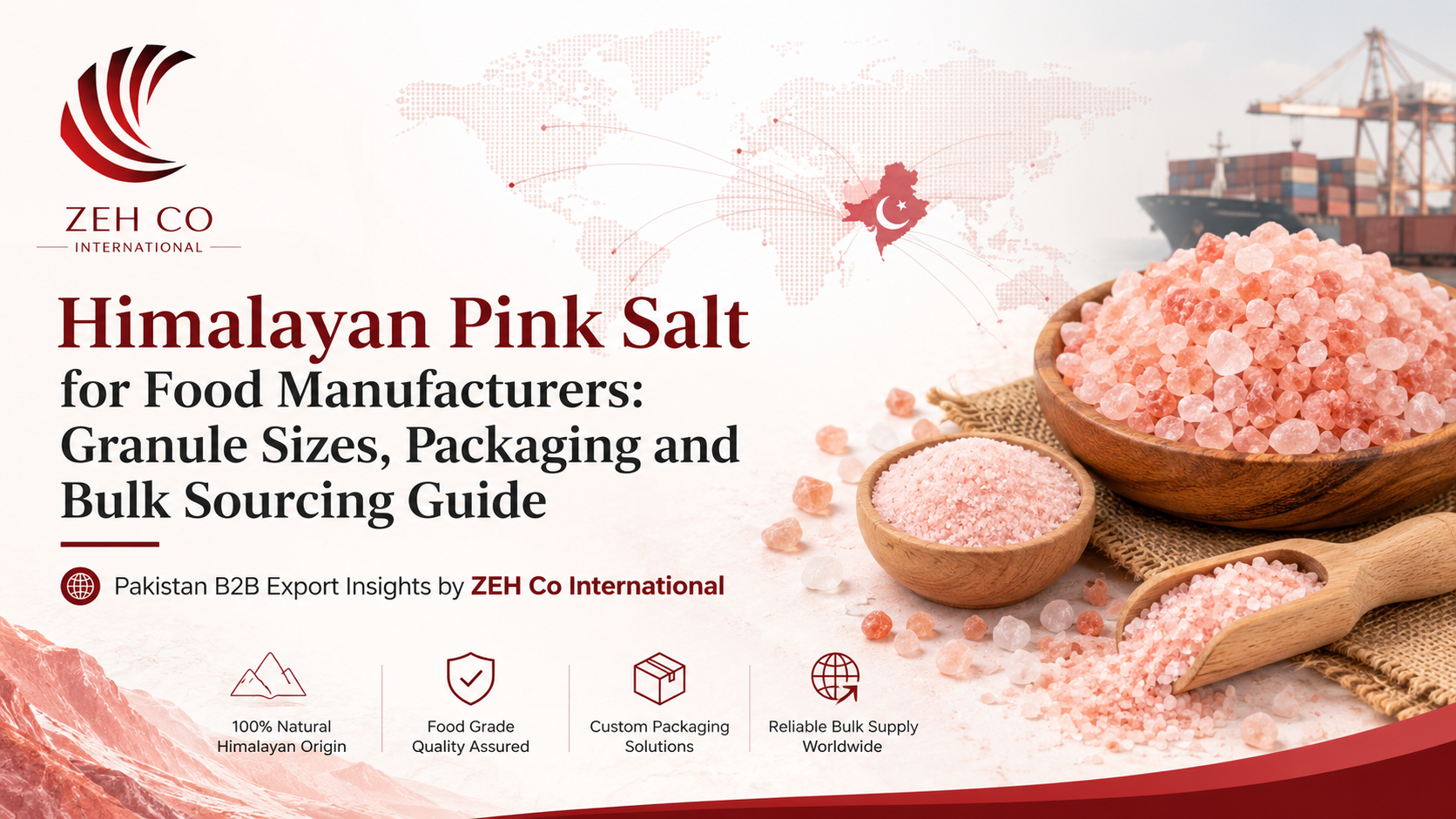
Agricultural brands and feed distributors may source Himalayan pink salt for private-label livestock mineral products. Depending on market requirements, the product may be packed as granules, coarse crystals, crushed salt, powdered salt or livestock blocks. Branding opportunities include retail bags, farm-use sacks, distributor packaging and bulk material for local repacking.
Private-label buyers should establish whether their product will be marketed as a feed material, complementary feed, mineral feed, salt lick or another regulated category. The classification affects permitted claims, mandatory guarantees, label wording and registration procedures.
Specifications Industrial Buyers Should Define
A professional purchase contract should include measurable specifications rather than relying on a general description such as “natural pink salt.” Requirements can differ by country and application, but feed and agro companies should normally review the following parameters:
- Sodium chloride content: The agreed minimum or typical NaCl concentration should be supported by laboratory analysis.
- Sodium and chloride values: These may be requested separately for formulation calculations and regulatory labelling.
- Moisture: Controlled moisture supports storage stability, flowability and accurate batching.
- Water-insoluble matter: A defined maximum helps control unwanted mineral residue, sand and other insoluble material.
- Particle size distribution: Buyers should specify powder, fine, granular, coarse or customized mesh requirements.
- Heavy metals: Testing may include lead, arsenic, cadmium and mercury according to the destination market and buyer protocol.
- Foreign material: The specification should prohibit visible contamination and unacceptable physical matter.
- Iodine status: The buyer must clearly state whether non-iodized, iodized or specially fortified salt is required.
- Anticaking agents: Any flow agent must be declared and acceptable for animal-feed use in the importing country.
- Color range: Natural pink salt can vary from pale pink to deeper reddish tones, so an approved reference sample may be useful.
The required specification should be agreed before production. A buyer seeking highly purified sodium chloride may need a more refined grade, while a livestock block manufacturer may prefer natural granular material with controlled physical characteristics. Defining the intended application prevents disputes over color, purity, mesh size and processing level.
Feed-Grade Quality Control and Laboratory Testing
Each commercial shipment should be traceable to a production batch and accompanied by an appropriate certificate of analysis. The test report should identify the analytical parameters, results, testing method where applicable, batch reference and date of analysis. Buyers may request testing from the supplier’s laboratory, an independent laboratory or both.
A risk-based testing plan is preferable to a generic certificate that does not reflect the destination market. For example, a European feed company may require testing aligned with European limits for undesirable substances, while buyers in the United States, Canada, the Gulf region or East Asia may use different feed-ingredient rules and documentation procedures.
Representative sampling is essential because natural mineral products can vary across deposits and production batches. Large feed companies may require pre-shipment samples, sealed retention samples and third-party inspection before container loading. The inspection plan should state how samples will be collected, divided, labelled and retained.
Processing Requirements for Industrial Feed Companies
Crushing, Grinding and Sieving
Raw rock salt must be processed into a particle size suitable for its intended industrial use. Crushing reduces large rocks, grinding produces finer grades and sieving separates material into defined size ranges. Feed manufacturers should request a particle-size specification expressed through sieve or mesh measurements instead of subjective terms such as “small” or “medium.”
Consistent sizing improves automated dosing and reduces ingredient separation during transport and mixing. Very fine salt may create dust and handling losses, while oversized crystals may not blend evenly or may obstruct certain feed-processing systems. The correct balance depends on the buyer’s equipment and product design.
Magnetic and Physical Contaminant Controls
Industrial processing should include controls designed to reduce the risk of foreign material entering the finished product. Depending on the production setup, this may involve inspection, sieving, magnets, metal-detection procedures and controlled product-contact surfaces. Feed companies should review these controls during supplier qualification or request a written process-flow description.
Segregated Storage
Salt intended for animal-feed applications should be stored away from industrial chemicals, fuels, pesticides, fertilizers and non-feed materials that could create cross-contamination. Warehouses should remain dry, clean and protected from pests, rainwater and excessive humidity. Bags should be placed on suitable pallets and kept away from wet floors and damaged walls.
Bulk Packaging Options for Feed Mills and Agro Companies
International buyers can select packaging according to consumption rate, warehouse infrastructure and local repacking plans. Common commercial options may include 25-kilogram bags, 50-kilogram bags and larger flexible bulk bags. Customized retail packaging may also be developed for agricultural distributors and livestock-product brands.
The packaging material should provide sufficient strength for the selected bag weight and transport route. Inner liners may be requested where additional moisture protection is needed. Labels and shipping marks can include product name, net weight, batch number, production date, country of origin, handling instructions and buyer-specific references.
Container-loading plans should consider bag dimensions, pallet requirements, weight distribution and destination-port restrictions. Buyers should confirm whether they need floor-loaded bags, palletized cargo or jumbo bags before the quotation is finalized.
Import Compliance and Documentation
Feed regulations are not identical across international markets. Before placing an order, the importer should verify whether natural rock salt is accepted under the intended feed-material category and whether the supplier, importer, manufacturing establishment or finished product requires registration.
Regulatory review should cover permitted feed ingredients, contaminant limits, nutritional guarantees, additives, anticaking agents, iodine claims, labelling language and product-use instructions. A salt product accepted for one market should not automatically be assumed to meet the requirements of another country.
Depending on the sales contract and importing-country requirements, shipment documents may include:
- Commercial invoice showing the agreed product description, price and Incoterm.
- Packing list stating bag quantities, net weight and gross weight.
- Certificate of origin confirming Pakistani origin.
- Certificate of analysis for the agreed chemical and physical parameters.
- Bill of lading or other transport document.
- Health, sanitary or feed-related certificates when required by the importing authority.
- Inspection certificate when third-party inspection is part of the contract.
- Material safety or technical data documentation when requested by the buyer’s compliance department.
How Major Feed Companies Should Qualify a Supplier
Large feed mills and agricultural groups should conduct supplier qualification before approving commercial volumes. The process may include reviewing the supplier’s legal identity, quality-management system, processing capacity, traceability procedure, contamination controls, laboratory program, complaint handling and export experience.
A trial order allows the buyer to evaluate particle-size consistency, unloading performance, warehouse stability and compatibility with existing feed formulations. The trial should use the same agreed specification and packaging system planned for routine shipments. Results can then be incorporated into a long-term supply agreement.
Buyers should also establish rules for specification deviations. The purchase contract should explain what happens when a batch falls outside the agreed NaCl level, moisture limit, particle-size range or contaminant requirement. Clear acceptance, rejection and claim procedures protect both parties.
Commercial Advantages of Sourcing from Pakistan
Pakistan has access to substantial natural rock-salt resources associated with the Salt Range. For industrial buyers, direct sourcing from Pakistan can provide access to multiple particle sizes, bulk packaging formats and customized processing options. Consolidated export planning can also support buyers purchasing salt alongside other agricultural or mineral products.
The main commercial advantage should be evaluated through total landed cost rather than unit price alone. Importers should compare product yield, testing expenses, packaging durability, inland transport, ocean freight, customs clearance and rejection risk. A slightly lower price may not create real savings when the material has inconsistent mesh size, poor documentation or unsuitable packaging.
Why Work with ZEH Co for Bulk Himalayan Salt Supply
ZEH Co is a Pakistan-based B2B exporter established in 2011 and serving international wholesale and industrial customers. The company can coordinate Himalayan salt orders according to agreed product specifications, particle sizes, packaging formats and shipment terms.
ZEH Co operates with ISO 9001:2015 and ISO 22000 certifications and offers export arrangements including FOB Karachi, CIF and DDP, subject to destination and commercial feasibility. Buyers can request quotations based on required grade, monthly quantity, packaging, testing protocol, destination port and delivery schedule.
For feed-industry inquiries, the buyer should provide the target animal category, intended manufacturing application, required NaCl level, mesh size, contaminant limits, iodine status, preferred bag weight and importing-country requirements. This information allows the supplier to propose an appropriate commercial specification instead of offering a generic salt grade.
Conclusion
Himalayan pink salt for animal feed can serve as a practical sodium chloride ingredient for compound feeds, mineral mixtures, livestock lick blocks, total mixed rations and private-label agricultural products. Its industrial value depends on controlled processing, reliable specifications, batch testing, regulatory compliance and consistent delivery—not on unsupported claims about natural trace minerals.
Feed mills and major agro companies should source against a written specification, verify suitability through their animal nutrition and compliance teams, and begin with representative samples or a commercial trial. With the correct quality controls and documentation, ZEH Co can support international buyers seeking bulk Himalayan pink salt from Pakistan for professionally formulated animal-feed applications.