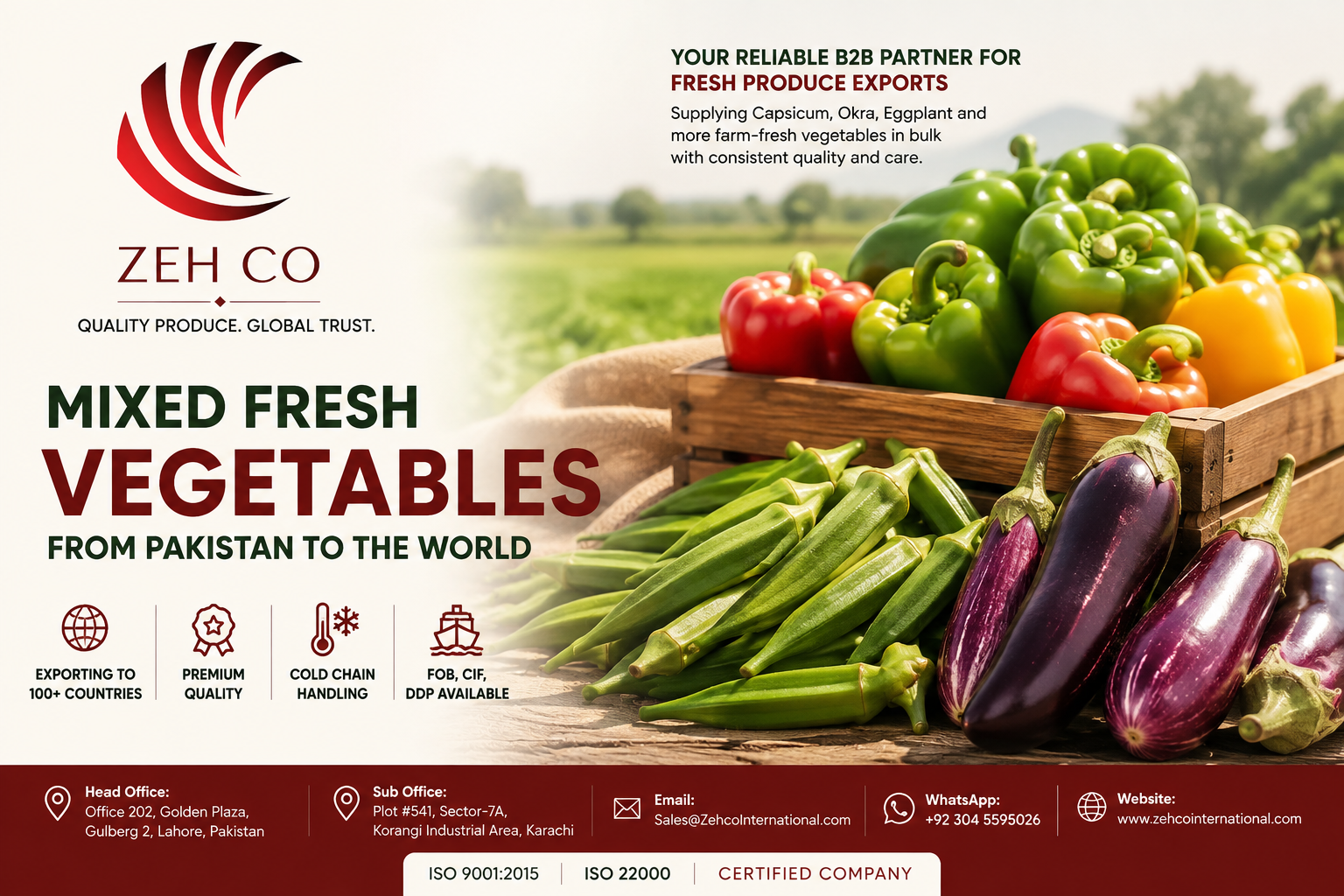
Mixed fresh vegetables export from Pakistan offers international importers a practical way to source multiple high-demand products through one coordinated supply program. Pakistan grows a wide range of vegetables across different agricultural regions, allowing wholesalers, supermarkets, food-service distributors, and ethnic grocery suppliers to purchase products such as capsicum, okra, and eggplant according to seasonal availability and market requirements. A properly managed mixed shipment can simplify procurement, reduce supplier coordination, and help buyers maintain a more diverse product inventory.
However, mixed vegetable sourcing requires more than placing several products in one container. Each vegetable has different quality characteristics, packaging requirements, shelf-life limitations, and temperature sensitivities. Importers must therefore work with an exporter that can manage product selection, grading, packing, documentation, and logistics as one controlled operation.
Why Consider Mixed Fresh Vegetables Export from Pakistan?
Pakistan has diverse agricultural zones that support the production of vegetables during different periods of the year. This gives international buyers access to products from several growing regions rather than depending on one cultivation area. When weather or harvesting conditions affect one location, exporters may be able to source from an alternative region while maintaining the agreed commercial specification.
Mixed vegetable orders are particularly useful for buyers who serve supermarkets, wholesale markets, hotels, restaurants, catering companies, and independent grocery stores. Instead of arranging separate suppliers for every product, the importer can consolidate several vegetables into one commercial order, one documentation package, and one logistics plan.
This sourcing model may also help buyers test market demand. An importer entering a new market can order several vegetable categories in commercially suitable quantities rather than committing the entire shipment to one product. Future orders can then be adjusted according to sales performance, customer feedback, and product shelf life after arrival.
Key Vegetables Available for Mixed Wholesale Orders
Fresh Capsicum
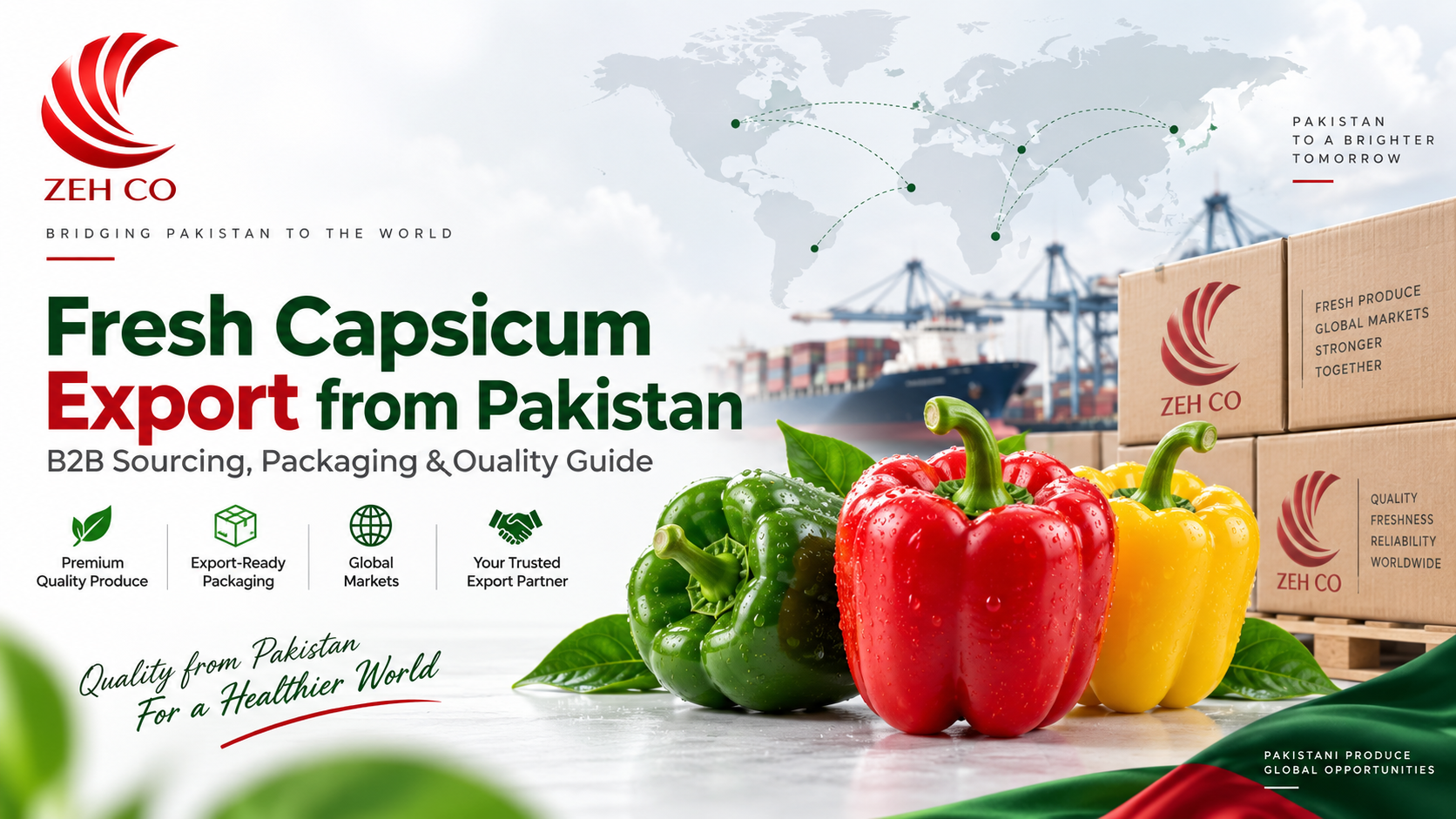
Fresh capsicum, also known as bell pepper or sweet pepper, is commonly supplied in green, red, and yellow varieties, depending on seasonal availability and buyer requirements. Importers should specify preferred colour, size range, firmness, maturity, and tolerance for minor surface marks before confirming an order.
Export-quality capsicum should be firm, clean, properly shaped, and free from serious bruising, decay, deep cuts, sun damage, or excessive softness. The product should be harvested at the correct maturity so that it can withstand grading, packing, transportation, and distribution after arrival.
Fresh Okra
Fresh okra is widely used in South Asian, Middle Eastern, African, Mediterranean, and international food-service markets. Buyers may request short, medium, or longer pods depending on local consumer preferences.
Good-quality okra should have a fresh green appearance, tender texture, uniform size, and minimal fibre development. Overmature pods may become hard and unsuitable for premium retail markets. Since okra can lose moisture quickly, efficient harvesting, sorting, packing, and dispatch are important for maintaining its appearance and commercial value.
Fresh Eggplant
Eggplant, also known as aubergine or brinjal, is available in different shapes, colours, and sizes. International buyers may request long purple varieties, round varieties, small cooking varieties, or other market-specific selections.
Export-grade eggplant should have smooth skin, suitable firmness, fresh green stems, and consistent colour. Products showing serious scratches, punctures, softness, decay, insect damage, or advanced seed development should be removed during grading. Because eggplant can be sensitive to rough handling and unsuitable storage temperatures, its packaging and logistics plan must be carefully managed.
Defining a Clear Product Specification
A successful wholesale order begins with a written specification for every vegetable included in the shipment. Descriptions such as “premium quality” or “export quality” are not detailed enough on their own. Buyers should define measurable and visually identifiable requirements.
A commercial specification may include:
- Product name and variety
- Preferred size or count range
- Colour and maturity level
- Acceptable shape and firmness
- Maximum tolerance for cosmetic defects
- Required net weight per carton
- Packaging material and ventilation requirements
- Label, barcode, language, or private-label instructions
- Quantity required for each vegetable
- Destination market and preferred delivery schedule
Importers should also provide reference photographs when their market requires a specific appearance. Photographs do not replace a written specification, but they can reduce misunderstandings regarding size, colour, shape, and presentation.
Grading and Quality-Control Procedures
Mixed vegetable shipments require separate grading lines or controlled sorting procedures because defects vary by product. Capsicum may be checked for firmness and skin condition, okra for tenderness and pod length, and eggplant for scratches, softness, and stem freshness.
Quality control should begin before packing. Damaged, diseased, overmature, undersized, or decayed vegetables should be removed. Products must then be grouped according to the buyer’s agreed size and grade standards.
For large orders, pre-shipment inspection can provide additional confidence. Inspection may include random carton checks, weight verification, visual examination, packaging review, label confirmation, and loading supervision. Where required, the buyer may appoint an independent inspection company, subject to agreed commercial terms.
Post-Harvest Handling and Freshness Management
The time between harvesting and temperature-controlled dispatch has a direct effect on vegetable quality. Products left in direct sunlight or exposed to high field temperatures can lose moisture and deteriorate faster during transportation.
After harvesting, vegetables should be moved to a shaded handling area, sorted carefully, and prepared for packing without unnecessary delay. Workers should avoid throwing, compressing, or overfilling the produce because mechanical damage may not become visible until later in the supply chain.
Each vegetable has its own temperature and humidity requirements. This creates an important challenge for mixed shipments. A single temperature setting may not be ideal for every product. Exporters and buyers should therefore select compatible products, use suitable packaging, and agree on a logistics plan based on the most sensitive item in the shipment.
Packaging Options for International Buyers
Packaging must protect vegetables while allowing adequate airflow. The correct carton strength, ventilation pattern, internal arrangement, and net weight depend on the product, shipment method, transit time, and destination market.
Common packaging options may include:
- Ventilated corrugated cartons
- Open-top cartons for suitable market channels
- Plastic crates for selected regional deliveries
- Protective liners or sheets where appropriate
- Dividers or cushioning for products vulnerable to bruising
- Retail-ready or private-label packaging for qualified orders
Overpacking should be avoided. Excessive weight can crush the lower layers of produce, restrict airflow, and increase product damage. Cartons should be weighed during packing to maintain consistency and reduce disputes over net product weight.
Labels can include the product name, country of origin, exporter details, packer information, net weight, lot number, packing date, storage instructions, and buyer branding where required. Importers should confirm destination-market labelling rules before production begins.
Mixed Loading and Carton Allocation
A mixed order should include a clear carton allocation plan. For example, the buyer may divide the shipment between capsicum, okra, and eggplant according to projected weekly demand. The final product ratio should reflect shelf life, sales speed, storage capacity, and customer preferences.
Cartons must be arranged to prevent heavier products from damaging lighter or more delicate vegetables. Loading teams should also consider ventilation channels and air circulation inside the vehicle or container. Poor pallet arrangement can create uneven cooling and increase the risk of warm spots.
Every product should be identifiable by carton markings, colour-coded labels, or pallet records. This helps the importer separate products quickly after arrival and verify quantities against the packing list.
Air, Sea, and Regional Transport Options
Air Freight
Air freight is suitable for urgent deliveries, premium vegetables, trial orders, and products with limited transit tolerance. It offers faster delivery but involves higher freight costs. Buyers should calculate the landed cost per kilogram before deciding whether the target market can support air-shipped produce.
Refrigerated Sea Freight
Refrigerated sea freight may offer a lower transport cost for larger quantities, but not every vegetable or route is suitable for a long sea journey. Product compatibility, container settings, packaging strength, pre-cooling, transit time, port handling, and destination clearance must all be evaluated before shipment.
Road and Regional Distribution
Road transport may be appropriate for selected regional trade routes and onward distribution from ports or airports. Refrigerated vehicles should be clean, suitable for food transport, and capable of maintaining the agreed temperature conditions throughout the journey.
Import Documentation and Regulatory Preparation
Import requirements vary by destination country and can change according to product type, pest-risk controls, and local food regulations. Buyers should confirm all current requirements with their customs broker, plant quarantine authority, or agriculture department before placing an order.
A typical fresh vegetable export documentation package may include:
- Commercial invoice
- Packing list
- Certificate of origin
- Phytosanitary certificate
- Bill of lading or air waybill
- Fumigation or treatment certificate when applicable
- Inspection certificate when contractually required
- Insurance documents for insured shipments
- Additional declarations required by the destination country
The importer must check whether an import permit, approved supplier registration, specific pest declaration, residue testing, traceability information, or special packaging statement is required. These requirements should be resolved before harvesting or packing begins.
FOB, CIF, and DDP Purchasing Options
ZEH Co can discuss different shipping terms according to the buyer’s destination and procurement structure. Under FOB Karachi, the buyer generally manages the main international freight after the cargo is placed on board according to the agreed Incoterm conditions.
Under CIF, the exporter arranges freight and insurance to the named destination port, while import clearance and local delivery normally remain the buyer’s responsibility. This can be convenient for importers who want the exporter to coordinate the main international shipment.
DDP may be considered for suitable destinations after reviewing import regulations, taxes, local delivery requirements, and product-clearance responsibilities. Since fresh produce involves time-sensitive border procedures, the feasibility of DDP should be evaluated individually for each market.
How Buyers Can Reduce Procurement Risk
International buyers can reduce risk by starting with a clearly specified trial shipment. A trial order allows both parties to evaluate product quality, packaging performance, arrival condition, documentation accuracy, and communication procedures before increasing volume.
Buyers should request current product photographs or videos from the packing stage rather than relying only on general catalogue images. They should also confirm the expected harvesting period, packing date, dispatch schedule, transit route, and estimated arrival window.
Payment terms, inspection procedures, claim timelines, and responsibility for third-party costs should be written into the sales agreement. Fresh produce naturally changes during transportation, so both buyer and exporter need a reasonable inspection and reporting process after arrival.
Planning a Wholesale Inquiry with ZEH Co
To receive a relevant quotation, importers should provide complete commercial details. A strong inquiry should include the destination city or port, required vegetables, quantity per product, preferred carton weight, size requirements, packaging format, delivery schedule, and requested Incoterm.
Buyers should also mention whether the products are intended for wholesale markets, supermarkets, food-service distribution, processing, or private-label retail. The intended sales channel affects grading, appearance, packaging, and price.
ZEH Co is a Pakistan-based B2B export company established in 2011. The company works with international importers, wholesale buyers, and procurement managers and offers FOB Karachi, CIF, and DDP arrangements where commercially and legally feasible. Its ISO 9001:2015 and ISO 22000 certifications support a structured approach to quality and food-supply management.
Conclusion
Mixed fresh vegetables export from Pakistan can help international buyers diversify their inventory, consolidate procurement, and source capsicum, okra, eggplant, and other vegetables through one coordinated supply channel. The commercial success of a mixed shipment depends on clear specifications, careful grading, compatible temperature requirements, strong packaging, accurate documentation, and realistic logistics planning.
ZEH Co supports B2B buyers by coordinating product sourcing, quality requirements, packaging, shipment preparation, and international trade documentation. Importers seeking a reliable mixed vegetable supply program should begin by sharing their destination, required products, order volume, packaging specifications, and preferred shipping terms for a customized wholesale quotation.