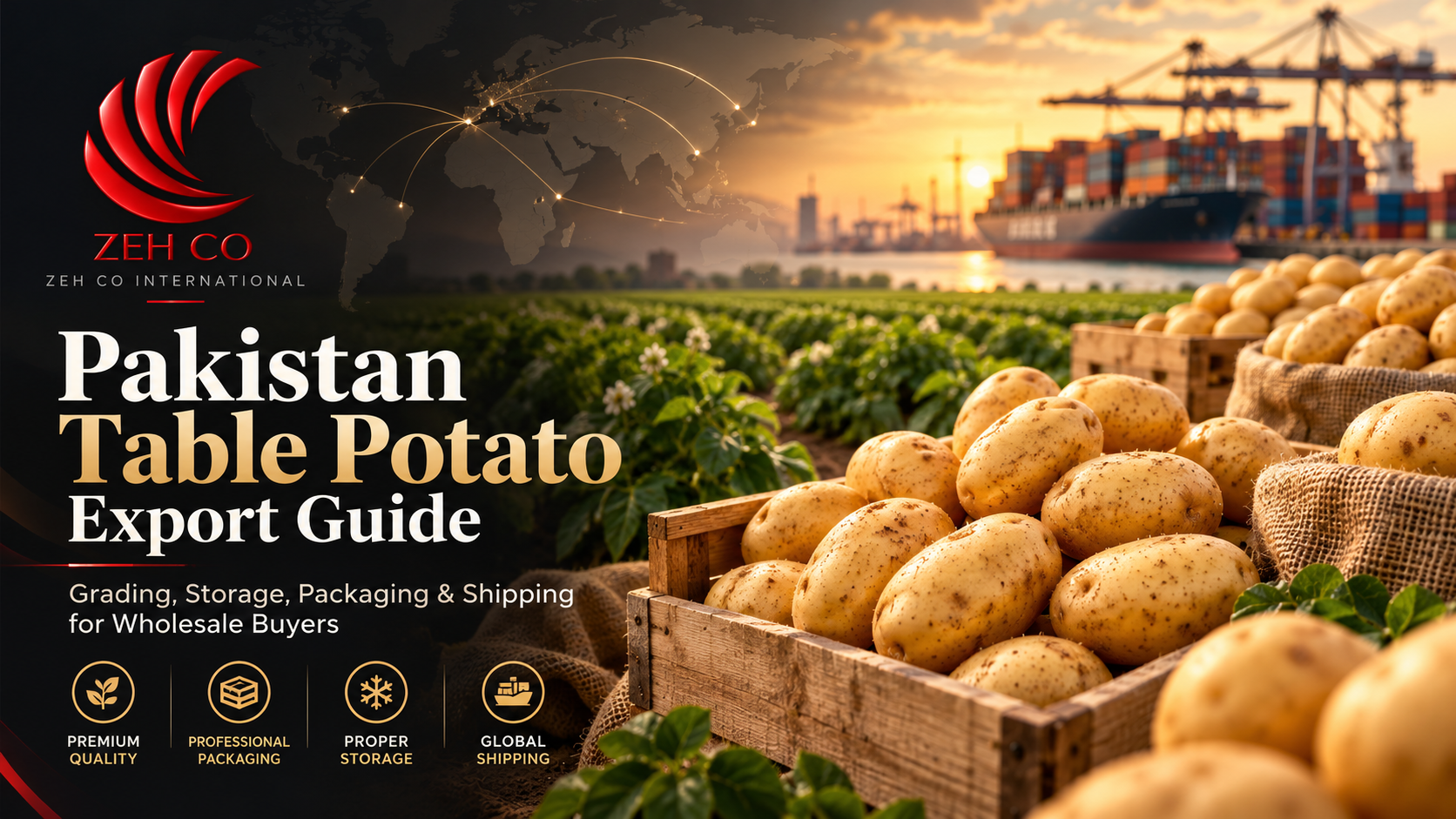
Pakistan table potato export offers international importers an opportunity to source fresh potatoes for wholesale distribution, retail markets, food service and selected processing applications. However, buying potatoes internationally requires more than comparing prices per metric ton. Importers must evaluate variety, tuber size, skin maturity, defects, storage history, packaging and the transport conditions needed to preserve commercial quality.
ZEH Co International works with international wholesale procurement enquiries and emphasizes clear product specifications, shipment planning and documentation. This guide explains the practical purchasing decisions that buyers should address before arranging a shipment of Pakistani table potatoes.
1. Identify the Destination Market and Intended Use
The first step in sourcing potatoes is defining their destination and commercial purpose. Potatoes intended for fresh retail sale may need an attractive appearance, consistent shape and clean skins. Wholesale food-service buyers may place greater emphasis on usable yield, reliable sizing and cooking performance. Potatoes for chips or French fries require separate processing characteristics, including dry matter and reducing-sugar performance, which should not be assumed from an ordinary table-potato quotation.
Buyers should also distinguish fresh table potatoes from certified seed potatoes. Seed potatoes involve different plant-health, certification and import requirements. A quotation for food-consumption potatoes does not establish suitability for planting.
Before confirming an order, verify that the importing country permits entry of potatoes from Pakistan and determine any applicable phytosanitary conditions, pest restrictions, import permits, labeling obligations and customs procedures.
2. Potato Varieties, Sizes and Commercial Grades
Variety and appearance
Potato varieties differ in shape, skin color, flesh color, texture, dry matter, cooking behavior and storage performance. Rather than requesting an unspecified mixed potato shipment, importers should identify the desired variety or obtain a representative sample for evaluation. The name of the variety should be confirmed against the actual procurement lot.
Size grading and defects
Commercial sizing is commonly based on tuber diameter or another agreed measurement. The exact bands must be written into the sales specification rather than described only as small, medium or large. Buyers should also define tolerances for undersized and oversized potatoes, irregular shapes and other visual defects.
Important inspection points include firmness, skin condition, mechanical damage, cuts, cracks, decay, pest damage, excessive soil, sprouting, greening and internal defects. The UNECE FFV-52 standard for early and ware potatoes can serve as a useful commercial reference where relevant, but its applicability and the destination market's legal requirements must be checked separately.
3. Harvesting, Skin Maturity and Packhouse Preparation
Successful potato export begins before the packing line. Harvest conditions influence bruising, soil contamination, skin damage and subsequent storage performance. Mature potatoes with adequately developed skins generally withstand handling better than very immature tubers.
After harvest, potatoes should be handled gently and protected from unnecessary impacts, prolonged direct sunlight and excessive heat. Where suitable for the crop and marketing schedule, controlled curing can help minor harvest wounds heal and improve skin resistance. Curing conditions depend on variety, maturity and the condition of the harvested crop.
At the packhouse, workers should remove rotten, badly damaged, green or otherwise unsuitable potatoes. Sorting equipment should minimize drop heights and pressure damage. Washing should only be included when requested and when the facility can manage water hygiene, drying and the associated shelf-life risks.
4. Storage Conditions and Sprouting Management
Potatoes remain living agricultural products after harvest. They continue to respire, lose moisture and may eventually sprout. For international trade, storage history can be as important as appearance at loading.
Table potatoes generally benefit from dark, ventilated, humidity-managed storage. Excessive heat can accelerate sprouting and deterioration, while insufficient humidity increases weight loss and shriveling. Condensation and free surface moisture encourage spoilage. Very low temperatures may also affect cooking characteristics through sugar accumulation.
Storage temperatures should therefore be selected according to variety, intended use and expected holding duration rather than applying one universal setting. Any sprout-suppression treatment must be disclosed and checked against the importing country's permitted substances and residue limits. Buyers should request information on harvest date, storage duration, treatment history and condition at dispatch.
5. Quality Assurance, Sampling and Inspection
A buyer should approve a written product specification before paying for a commercial shipment. This document should identify variety, origin, size range, skin and flesh characteristics, acceptable tolerances, packaging, net weight and destination-specific quality requirements.
Representative samples
Sample photographs and videos are useful for preliminary evaluation, but they should show the actual procurement lot wherever possible. Physical samples may help buyers inspect texture and cooking performance; however, sample transport and customs conditions must be checked, and a sample cannot guarantee the condition of a later commercial shipment.
Testing and inspection records
Depending on the market and buyer's requirements, the inspection plan may include visual grading, internal defect checks, net-weight verification, pesticide-residue testing, pest inspection and traceability records. A laboratory certificate or certificate of analysis should only be presented for tests actually performed on an identified sample or lot. A general company certificate must not be represented as a product-specific laboratory result.
Independent pre-shipment inspection can be considered for substantial orders. The parties should agree on the sampling method, permitted defect levels and what happens if the inspection fails.
6. Export Packaging, Labeling and Traceability
Potatoes may be supplied in ventilated sacks, mesh bags, cartons or other buyer-approved packaging. The right choice depends on destination rules, transport duration, handling methods, retail presentation and the buyer's preferred net weight.
Packaging must protect potatoes from avoidable crushing, moisture accumulation and light exposure while allowing adequate ventilation. Bag strength, closure quality, stacking arrangements and pallet compatibility should be tested against the intended logistics process.
Labels and shipment marks should contain the information required by the destination market and purchase contract. Depending on applicable requirements, this may include product description, country of origin, variety, net weight, packer or exporter identification and lot reference. Traceability should connect the shipment to its sourcing and packing records.
7. Inland Transport, Containers and Reefer Logistics
Export planning must include the journey from the producing or packing location to the departure port, not only the ocean voyage. Potatoes exposed to unsuitable temperatures during inland transport may lose quality before container loading begins.
For routes involving high ambient temperatures, long transit times or demanding shelf-life requirements, a refrigerated container may be appropriate. However, a reefer is not automatically necessary or sufficient for every potato shipment. The route, ventilation, load condition, seasonal weather and buyer's storage requirements must determine the equipment choice.
Before loading, verify container cleanliness, absence of contamination, packaging compatibility, temperature instructions, ventilation settings where applicable and sufficient airflow around the cargo. Temperature records can support a later investigation, but they do not replace physical inspection at destination.
Refrigeration settings should be agreed in writing with the buyer and logistics provider. A reefer container is designed principally to maintain cargo temperature; it should not be relied upon to rapidly cool a large load of warm potatoes.
8. Export Documents and Phytosanitary Compliance
International potato shipments typically require a commercial invoice, packing list, applicable transport document, customs declarations and other paperwork specified by the contract and importing country. A certificate of origin may be required by the buyer or destination authorities.
For plant-product exports from Pakistan, the Department of Plant Protection administers phytosanitary procedures. These procedures depend on the importing country's market access and plant-health conditions and may involve inspection, sampling, treatment where required and issuance of a phytosanitary certificate.
Buyers and exporters should confirm the latest requirements with the relevant authorities before committing to shipment. Import permission for one country does not imply permission for another. Product labeling, pesticide-residue limits, treatments and other market-entry requirements may also differ.
9. FOB, CIF and DDP Quotation Considerations
ZEH Co International can discuss commercially appropriate shipment arrangements, including FOB Karachi, CIF and feasible DDP structures, subject to route, regulatory and logistics confirmation.
Under an FOB quotation, the buyer should understand which costs and responsibilities transfer at the named loading port under the agreed Incoterms rules. A CIF quotation should clearly specify the destination port, freight and insurance arrangements. DDP should only be offered where import clearance, taxes, local delivery and importer-of-record responsibilities can be handled lawfully and practically.
The purchase agreement should identify the precise Incoterms version and named place, shipment window, payment terms, inspection conditions, documentary requirements and claims procedure. Freight and product quotations should not be confused with guarantees of final landed cost.
10. Common Risks and a Practical Buyer RFQ Checklist
Common procurement risks include mixed varieties, inconsistent sizing, immature skins, concealed bruising, green tubers, sprouting, excessive soil, poor ventilation, delays, temperature deviations and insufficient import documentation. These risks are best controlled through specifications, traceable lots, agreed inspections and realistic transport planning.
A complete request for quotation should include the following information:
- Destination country, port or delivery address and intended product use.
- Required potato variety, skin color, flesh color and size range.
- Acceptable grading tolerances and minimum condition standards.
- Required quantity, shipment schedule and preferred packaging weight.
- Preferred packing material, labeling and pallet requirements.
- Required tests, certificates, inspection method and traceability details.
- Preferred FOB, CIF or feasible DDP delivery term.
- Payment method, documentation deadlines and any special market-entry conditions.
Buyers should compare quotations on an equivalent specification and delivery basis. A lower headline price may not offer better value if product rejection, wastage or additional logistics costs are more likely.
Conclusion: Build a Reliable Pakistan Table Potato Export Program
A successful Pakistan table potato export program depends on more than availability and competitive pricing. The strongest procurement process aligns variety, sizing, harvesting condition, quality verification, storage, packaging and shipping arrangements with the receiving market's requirements.
ZEH Co International welcomes detailed wholesale enquiries for Pakistani agricultural products. Importers can submit their specifications, destination, expected volume and preferred delivery terms through https://zehcointernational.com/ to discuss sourcing feasibility and a suitable quotation.