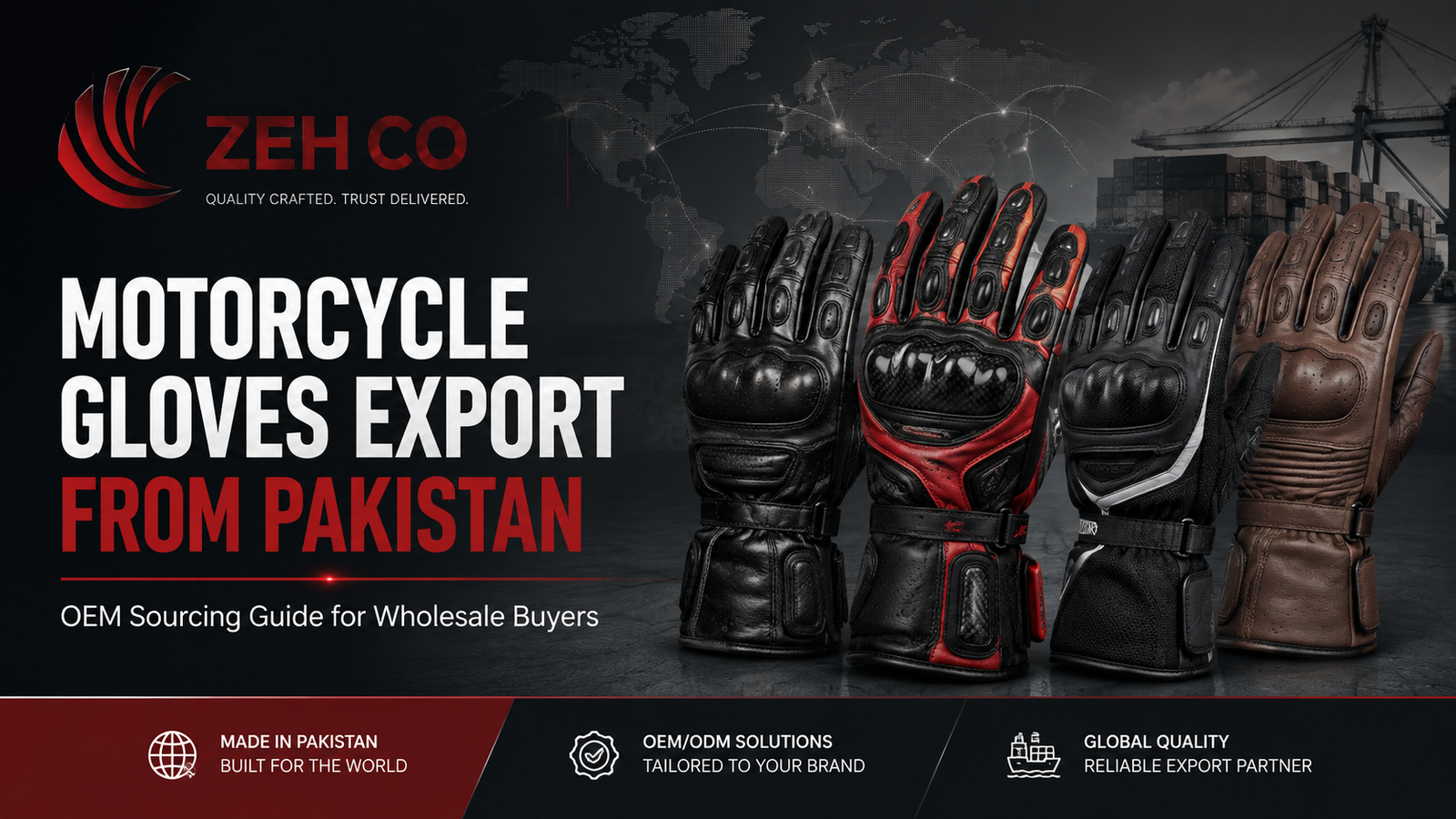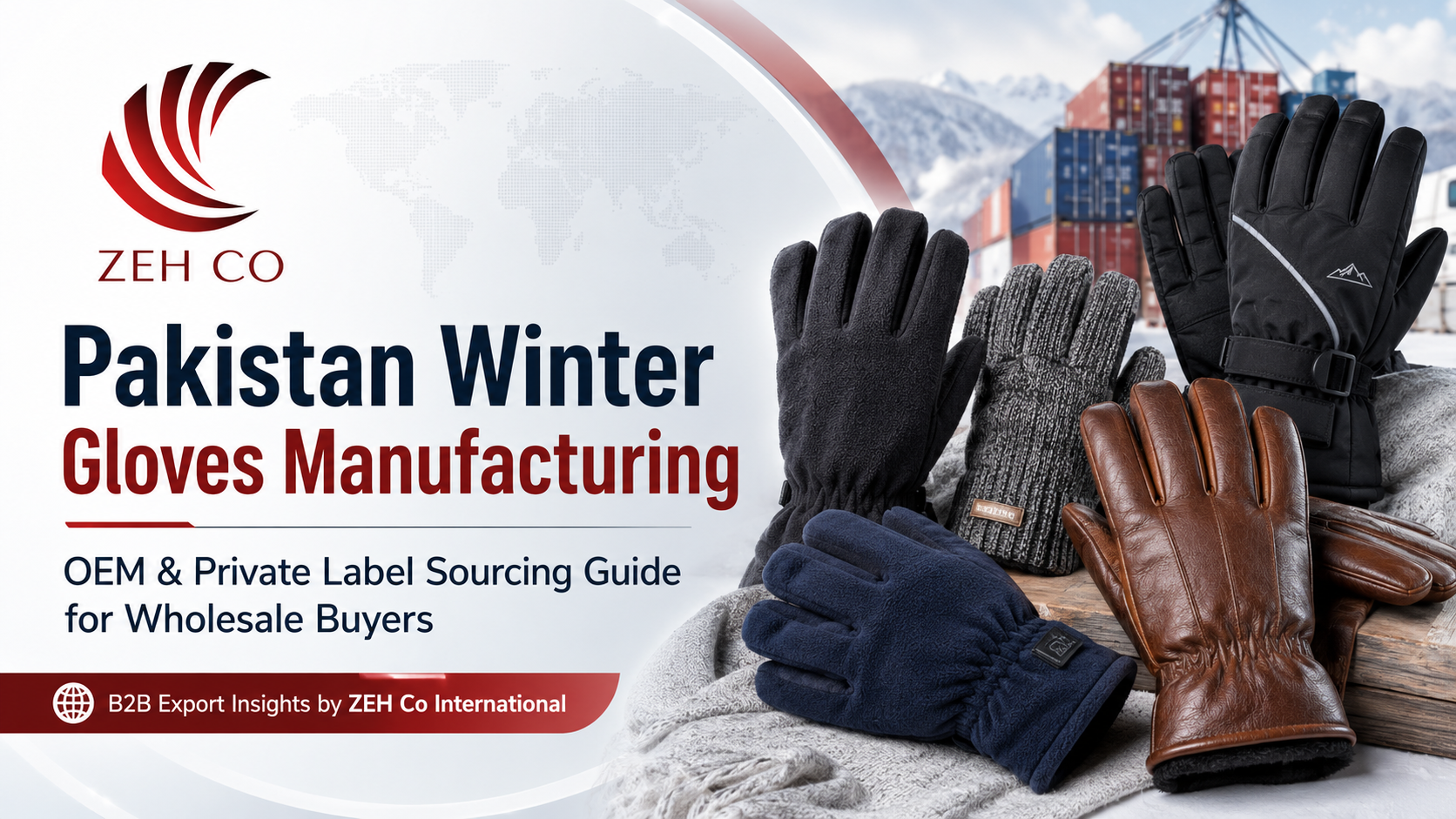
International distributors, outdoor retailers, workwear suppliers and private-label brands looking for a reliable Pakistan winter gloves manufacturer need more than a competitive unit price. Successful sourcing depends on material selection, insulation, sizing consistency, stitching quality, grip performance, branding, packaging and an export process suited to commercial orders. Pakistan's established textile, leather and stitching industries make the country a practical sourcing destination for buyers developing customized winter glove collections for retail, industrial, outdoor and promotional markets.
ZEH Co International works with international B2B buyers seeking export-oriented sourcing solutions from Pakistan. Buyers can discuss customized specifications, bulk quantities, private-label requirements and shipping arrangements according to the destination market. This guide explains the most important commercial considerations before placing a winter glove order.
Why Source from a Pakistan Winter Gloves Manufacturer?
Winter gloves combine several manufacturing capabilities within one product. Depending on the design, production may involve knitted fabrics, fleece, synthetic insulation, leather, artificial leather, waterproof membranes, elastic components, hook-and-loop closures, printed logos and specialized packaging. Pakistan has manufacturing infrastructure across textiles, garments, leather goods and gloves, allowing buyers to develop products using different material combinations.
For an international importer, this flexibility can be especially valuable when building a product line rather than purchasing a single standardized glove. A wholesale buyer may require economical fleece gloves for mass distribution, while an outdoor brand may prefer multi-layer insulated gloves with reinforced palms and custom branding. Industrial distributors may require warm work gloves offering both thermal comfort and improved grip.
The correct sourcing approach should therefore begin with the intended application rather than simply requesting "winter gloves."
Main Winter Glove Categories for B2B Buyers
Fleece Winter Gloves
Fleece gloves are commonly selected for general winter use because they are lightweight, comfortable and suitable for different retail price levels. They can be developed in multiple fabric weights and may include elastic wrists, reinforced palms, touchscreen-compatible fingertips or embroidered branding.
Retailers should specify the required fleece composition and weight, because two gloves that look similar in photographs can perform differently in warmth, durability and feel. Buyers targeting promotional or high-volume markets may prioritize cost efficiency, while branded outdoor collections may require denser fabric and additional finishing.
Knitted Thermal Gloves
Knitted winter gloves can be produced for everyday wear, promotional campaigns, uniforms and retail distribution. Material composition, knitting density, cuff construction and elasticity should be clearly defined before production.
Private-label buyers can differentiate knitted gloves through yarn colors, patterns, woven labels, embroidery, printed branding and custom packaging. Matching production colors to an approved reference is particularly important when gloves are part of a larger clothing collection.
Insulated Outdoor Gloves
Outdoor winter gloves generally use a multi-layer construction. A typical specification may include an outer shell, insulation layer, lining and reinforced palm. Depending on the target market, buyers may also request wind resistance, water resistance, adjustable wrist straps or extended cuffs.
The importer should avoid assuming that every insulated glove is waterproof. Water resistance depends on fabric treatment, membrane construction, seams and overall glove design. Any specific performance requirement should be documented and tested before commercial claims are printed on packaging.
Leather Winter Gloves
Leather winter gloves are suitable for fashion, driving, outdoor and premium retail applications. Different leather types, thicknesses and finishes create significantly different results in appearance and flexibility. Linings may include fleece or other thermal materials depending on the required product positioning.
For private-label leather gloves, buyers should approve leather color, surface finish, lining, stitching, logo technique and measurement specifications from physical samples before bulk production.
Winter Work Gloves
Cold-weather work gloves are developed for industries where workers need warmth while handling tools, materials or equipment. Applications can include construction, warehouses, logistics, agriculture and general outdoor work.
Requirements may include reinforced palms, grip materials, thermal lining and durable cuff construction. When gloves are marketed as protective equipment, importers should identify the standards and certification requirements applicable in their destination market instead of treating ordinary winter gloves as certified protective gloves.
Materials Buyers Should Specify Before Ordering
Material selection has a direct effect on price, warmth, durability, flexibility and product positioning. A professional purchase specification should identify each major component rather than listing only the finished glove name.
- Outer material: polyester, fleece, knitted textile, softshell, leather or another specified fabric.
- Insulation: type and required weight or construction.
- Lining: fleece, brushed textile or another comfort layer.
- Palm: matching fabric, leather, synthetic reinforcement or grip material.
- Cuff: elastic wrist, knitted cuff, extended cuff or adjustable closure.
- Accessories: buckles, clips, straps, hook-and-loop fasteners or connectors.
- Branding: embroidery, screen printing, heat-transfer logo, woven label or other approved method.
Providing a detailed specification reduces misunderstandings between the buyer and manufacturer and makes quotations easier to compare across suppliers.
OEM and Private Label Winter Glove Development
OEM manufacturing allows international buyers to develop gloves according to their own designs and commercial requirements. Instead of purchasing generic inventory, a buyer can specify materials, colors, sizes, features, labels and packaging.
Custom Logo Options
Branding methods depend on the glove material and desired appearance. Common possibilities can include embroidery, printing, heat-transfer applications, woven labels and branded patches. The appropriate technique should be selected after considering logo detail, placement, glove material and expected usage.
Importers should provide vector artwork whenever possible. Clear artwork reduces the risk of distorted logos, inaccurate proportions and inconsistent branding during production.
Custom Colors and Designs
Brands developing seasonal collections may require colors matched to specific references. Buyers should provide recognized color references or physical samples instead of relying solely on colors displayed on computer screens.
Two-material and multi-panel glove designs should also identify the color of every component, including shell fabric, palm, stitching, cuff, logo and accessories.
Private Label Packaging
Packaging can influence retail presentation almost as much as the glove itself. B2B buyers may request individual polybags, printed header cards, hangtags, barcode labels, size stickers, branded boxes or export cartons.
Importers should communicate barcode formats, carton markings and destination-specific labeling requirements before production. Retail chains often have detailed packaging instructions that must be integrated at the manufacturing stage.
Winter Glove Sizing and Fit Control
Sizing is one of the most important issues in glove manufacturing because small measurement differences can affect comfort and customer satisfaction. Labels such as S, M, L and XL are not sufficient without an approved measurement chart.
A professional glove specification should define relevant measurements such as hand circumference, total glove length, palm width, finger length and cuff dimensions where applicable. The exact measurement points should also be understood by both parties.
For international private-label programs, buyers should approve a pre-production size set before mass production. This is especially important when products will be distributed in markets where customers have different fit expectations.
Sampling Before Bulk Production
Sampling is one of the most valuable stages of B2B glove sourcing. A physical sample allows the buyer to evaluate materials, stitching, insulation, logo appearance, fit and overall construction before committing to commercial production.
A structured development process may include an initial prototype followed by an amended or pre-production sample when changes are required. Buyers should provide consolidated feedback rather than making isolated modifications at different stages, because repeated changes can affect both production planning and final specifications.
Important sample checks include:
- Overall glove dimensions and fit
- Material feel and thickness
- Stitching consistency
- Finger construction and mobility
- Lining placement
- Palm reinforcement or grip
- Logo size, color and position
- Cuff elasticity or closure strength
- Packaging presentation
Quality Control for Wholesale Winter Gloves
Bulk winter glove orders should be checked against approved samples and purchase specifications rather than visual appearance alone. Quality control should focus on consistency across production.
Stitching Inspection
Inspectors should check for open seams, skipped stitches, loose threads and irregular stitching. Areas exposed to greater movement or stress require particular attention.
Pair Matching
Left and right gloves must match in size, color, construction and branding. Pairing problems can create significant issues for retailers even when individual gloves are otherwise acceptable.
Logo and Label Verification
Private-label orders require careful verification of spelling, logo positioning, label information and packaging. A small branding error repeated across thousands of units can make otherwise usable products difficult to sell.
Quantity and Size Ratio Checks
Carton quantities and size assortments should match the purchase order. Importers selling through retail chains or distribution centers may require fixed size ratios per carton, making accurate packing especially important.
What Information Should Buyers Include in an RFQ?
A detailed request for quotation helps a supplier calculate price more accurately and avoids unnecessary exchanges. International buyers should provide as much of the following information as possible:
- Glove type and intended application
- Reference image or technical drawing
- Outer material specification
- Lining and insulation requirements
- Palm material or reinforcement
- Required sizes and size ratios
- Order quantity per design or color
- Logo artwork and branding method
- Packaging requirements
- Required destination country or port
- Target delivery period
- Any required testing or compliance documentation
Buyers requesting only a price for "10,000 winter gloves" may receive quotations based on completely different constructions. A detailed RFQ allows meaningful comparison between offers.
Understanding MOQ and Bulk Pricing
Minimum order quantities depend on the glove design, materials, customization and packaging. Customized colors, specially developed fabrics or unique accessories may require higher production quantities than standard materials.
Unit price can also change according to order volume, but buyers should evaluate the total landed cost rather than focusing exclusively on the factory price. Packaging, inland transport, export documentation, freight, duties and destination handling can all affect the commercial result.
For new product development, buyers may consider starting with a commercially practical quantity after approving samples and then increasing order volume when market demand is established.
FOB Karachi, CIF and DDP Shipping Options
International purchasing terms determine how responsibility and transportation costs are divided between buyer and seller. ZEH Co International can discuss different shipping arrangements according to the destination and transaction requirements.
FOB Karachi
FOB Karachi can be suitable for experienced importers that already work with their own freight forwarders. The buyer manages the main international freight after the goods are delivered according to the agreed FOB terms.
CIF
CIF arrangements may be useful for buyers who want the supplier to organize freight and insurance to the agreed destination port, subject to the exact contractual terms.
DDP
Where commercially and legally feasible, DDP can provide a more comprehensive delivered solution. Because customs duties, taxes, importer-of-record requirements and local regulations differ by destination, DDP feasibility and pricing should be confirmed individually for each shipment.
Planning Winter Glove Orders Around Seasonal Demand
Winter products are highly seasonal in many international markets. Importers should work backward from their required retail launch date rather than placing orders when cold weather has already begun.
The buying timeline should allow for sample development, revisions, production, inspection, export documentation, freight and customs clearance. Sea freight generally requires more planning than air freight but can be commercially preferable for larger orders.
Distributors serving multiple countries should also consider that winter seasons and buying cycles differ by region. A production calendar built around destination-market demand can reduce expensive last-minute shipments.
Compliance and Product Claims
Import regulations vary by destination and product category. Ordinary fashion winter gloves, industrial work gloves and regulated personal protective equipment may be subject to different requirements. Importers should identify the applicable rules before finalizing product specifications.
Manufacturers and buyers should also avoid unsupported performance claims such as "waterproof," "cut resistant," "impact protective" or references to a particular standard unless the product has been appropriately designed and, where required, tested or certified for that claim.
This distinction protects both the importer and end customer while helping ensure that product descriptions accurately represent actual performance.
Why Work with ZEH Co International for Glove Sourcing?
ZEH Co International is a Pakistan-based B2B export company established in 2011, serving international buyers across multiple product categories. The company works with importers, wholesalers, distributors and procurement teams seeking sourcing and export support from Pakistan.
For winter glove inquiries, buyers can discuss customized designs, private labels, materials, size specifications, packaging and bulk supply requirements. ZEH Co International supports international trade arrangements including FOB Karachi, CIF and DDP, depending on the destination and commercial requirements.
The company holds ISO 9001:2015 and ISO 22000 certifications and works with buyers across markets including the UAE, China, Germany, Italy, the United Kingdom, the United States, Russia, South Korea, Vietnam and Turkey.
International buyers can review additional company information and sourcing categories at https://zehcointernational.com/.
Conclusion: Choosing the Right Pakistan Winter Gloves Manufacturer
Selecting a Pakistan winter gloves manufacturer should involve more than comparing unit prices. Buyers should evaluate material specifications, insulation, sizing, stitching, customization capabilities, sample quality, packaging and export arrangements before approving bulk production.
A well-prepared technical specification and sample approval process can significantly reduce sourcing risk. Whether the requirement involves fleece gloves, knitted thermal gloves, insulated outdoor designs, leather winter gloves or cold-weather work gloves, defining the target market and required performance from the beginning helps create a product that is commercially suitable for wholesale or private-label distribution.
Importers, retailers, distributors and procurement companies interested in customized winter gloves from Pakistan can contact ZEH Co International with their required quantity, reference design, materials, sizes, branding requirements, packaging and destination. This information enables a more accurate B2B sourcing proposal and shipping quotation.